Loading...
Cleisthenes of Athens vs Lucius Junius Brutus
Lucius Junius Brutus leads by 4.2 pts · 2 figures compared
…
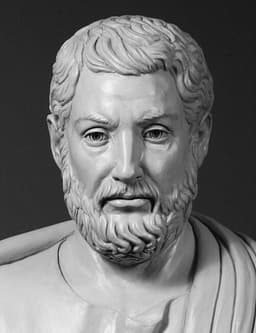
Cleisthenes of Athens
Politician · Ancient
68.5Total
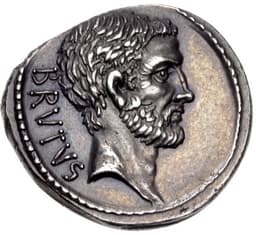
Lucius Junius Brutus
Politician · Ancient
72.7Total
Basic Information
Born
-570
-540
Died
-508
-509
Era
Ancient
Ancient
Nationality
Athens
Roman Republic
Occupation
Politician
Politician
Civilization
Western
Western
Score Comparison
Military (10%)
50.0
45.0
Political (20%)
62.7
72.0
Influence (20%)
80.0
75.0
Legacy (20%)
82.0
90.0
Leadership (15%)
62.0
71.0
Strategy (15%)
42.7
54.8
TOTAL
68.5
72.7
Cleisthenes of Athens — Complete Timeline
508 BC
Reform of the Athenian Tribes (Cleisthenes' Reforms)Reform
Cleisthenes reorganized the Athenian citizen body into ten new tribes based on demes (local districts), replacing the old four Ionian tribes. This broke the power of aristocratic clans and created a new political structure that formed the basis of Athenian democracy.
DemocracyPolitical ReformAthens
Impact: globalprogressive
Introduction of OstracismReform◆ Major
Cleisthenes introduced the practice of ostracism, allowing citizens to vote annually to exile a prominent figure for ten years. This mechanism was designed to prevent tyranny and remove threats to democracy. The first ostracism occurred in 487 BC.
DemocracyPolitical ReformExile
Impact: globalprogressive
Creation of the Council of 500 (Boule)Reform◆ Major
Cleisthenes established the Boule, a council of 500 citizens (50 from each tribe) chosen by lot. This body prepared legislation for the Assembly and oversaw daily administration. It replaced the aristocratic Areopagus as the main governing body, expanding citizen participation.
DemocracyPolitical ReformGovernment
Impact: globalprogressive
Exile of Isagoras and Spartan InterventionPolitical Action◆ Major
Cleisthenes' rival Isagoras called on Spartan king Cleomenes I to intervene in Athens. The Spartans expelled Cleisthenes and attempted to dissolve the Boule, but the Athenian people revolted, besieging the Acropolis and forcing the Spartans to withdraw. Cleisthenes was recalled.
Spartan InterventionDemocracyAthens
Impact: nationalconstructive
Lucius Junius Brutus — Complete Timeline
509 BC
Battle of Silva ArsiaWar◆ Major
Brutus led the Roman army against the forces of Tarquinius Superbus and his Etruscan allies at Silva Arsia. During the battle, Brutus and Arruns Tarquinius, the king's son, killed each other in single combat, but the Romans ultimately won the battle, securing the Republic's survival.
BattleSingle CombatFounding Myth
Impact: nationaltragic
Expulsion of the TarquinsPolitical Action
Lucius Junius Brutus led a revolt against the Tarquin monarchy after the rape of Lucretia by Sextus Tarquinius. He organized the Senate and the people to expel the royal family, ending the Roman Kingdom and establishing the Roman Republic with himself as one of the first consuls.
RevolutionFounding of RepublicOverthrow of Monarchy
Impact: globalprogressive
Execution of His SonsPolitical Action◆ Major
Brutus discovered that his own sons, Titus and Tiberius, had conspired to restore the Tarquins. As consul, he ordered their arrest, trial, and execution by beheading in the Forum, demonstrating his unwavering commitment to the Republic over family loyalty.
ExecutionConspiracyRepublican Virtue
Impact: nationaltragic
Oath of BrutusPolitical Action◆ Major
After the expulsion of the Tarquins, Brutus made the Roman people swear an oath never to allow a king to rule Rome again. This oath became a foundational principle of the Republic, reinforcing the commitment to liberty and opposition to tyranny.
OathRepublican IdeologyAnti-Monarchy
Impact: nationalprogressive
Expert Analysis
Lucius Junius Brutus vs Cleisthenes of Athens
# The Two Founders of Liberty
On a dusty Athenian road in 508 BC, a politician named Cleisthenes fled into exile as Spartan soldiers marched into his city. Half a world away and just one year later, a Roman consul named Lucius Junius Brutus stood before a tribunal and watched his own sons being led to their deaths. Both men were fighting for the same thing—freedom from tyranny—yet their paths could not have been more different. One would be remembered as the father of democracy, the other as the father of the Republic. One died in exile, the other fell in battle. What drove these two architects of liberty to such divergent fates?
Origins
Cleisthenes was born around 570 BC into the aristocratic Alcmaeonid family of Athens, a clan cursed by scandal and haunted by political exile. His great-grandfather had been responsible for a massacre of rebels, and the family had been driven from Athens more than once. This background shaped Cleisthenes profoundly: he understood power from the inside, but also knew what it meant to be an outcast. Athens in his youth was a cauldron of factionalism, torn between the old aristocratic families and a rising class of merchants and farmers who demanded a voice.
Lucius Junius Brutus, born around 540 BC, lived under the shadow of a very different tyranny—the Etruscan kings of Rome, the Tarquins. According to tradition, Brutus pretended to be mentally disabled to survive under the despotic rule of Tarquinius Superbus, feigning idiocy so the king would not see him as a threat. His very name, "Brutus," meant "dullard" in Latin, a mask he wore for years. While Cleisthenes was born into privilege and learned politics as a game of alliances, Brutus learned it as a game of survival, deception, and waiting.
Rise to Power
Cleisthenes entered the historical stage as a rival to Isagoras, a pro-Spartan aristocrat who held power in Athens around 510 BC. For a time, Cleisthenes was simply another player in the endless feuds of the Athenian elite. But he saw something others missed: the common people, the *demos*, were the real source of power. When Isagoras called in Spartan troops to crush him in 508 BC, Cleisthenes did not raise an army—he raised a political idea. He promised the people a share in government, and they rose in revolt, driving out the Spartans and their puppet.
Brutus's rise was more dramatic and violent. In 509 BC, when the king's son Sextus Tarquinius raped the noblewoman Lucretia, Brutus threw off his mask of idiocy. He pulled the dagger from Lucretia's body, held it aloft, and swore an oath that would echo through Roman history: never again would a king rule Rome. He led the revolt that expelled the Tarquins and was elected one of the first two consuls of the new Republic. His path to power was not gradual reform but sudden revolution.
Leadership & Governance
Here the two men diverged most sharply. Cleisthenes was a systematic reformer, a man who believed that institutions, not individuals, should govern. In a single year, 508 BC, he fundamentally remade Athens. He reorganized the citizen body into ten new tribes based on local districts called *demes*, breaking the power of the old aristocratic clans. He created the Council of 500, the *Boule*, chosen by lot from all citizens, which prepared legislation for the Assembly. He introduced ostracism, a peaceful mechanism to exile dangerous politicians without bloodshed. Cleisthenes understood that democracy required structures, not just leaders.
Brutus governed differently. As consul, his authority was personal and absolute within the bounds of the law. He commanded armies, presided over the Senate, and when he discovered that his own sons had conspired to restore the Tarquins, he ordered their execution with his own hand. The historian Livy records the scene: the lictors bound the boys, stripped them, and beat them with rods before beheading them, while Brutus watched, his face a mask of duty. For Brutus, liberty meant the supremacy of the law over all ties of blood. For Cleisthenes, liberty meant the participation of all citizens in making the law.
Triumph & Tragedy
Cleisthenes' greatest triumph was the survival of his reforms. Though he was exiled by the Spartan intervention in 508 BC, the democratic system he created outlasted him by two centuries. The tragedy is that he died in exile around 508 BC, never seeing the full flowering of the democracy he planted. His reforms were the seed, but others would harvest the fruit.
Brutus's triumph was the establishment of the Republic itself. In 509 BC, he led the Roman army against the Etruscan forces at the Battle of Silva Arsia, fighting to defend the newborn Republic. During the battle, he and the Etruscan commander, Arruns Tarquinius, charged each other and both fell dead, their spears piercing each other's shields. Brutus died a hero's death, but his tragedy was the personal cost of his principles. He had sacrificed his sons, his family, and finally his life for a republic he would not live to see flourish.
Character & Destiny
Cleisthenes was a pragmatist and a visionary. He saw that the old aristocratic order could not survive and chose to channel the people's energy into institutions rather than violence. His personality was that of a patient chess player, willing to lose a battle to win the war. He accepted exile rather than fight a civil war, trusting that his ideas would outlast his enemies.
Brutus was a fanatic in the best sense—a man of absolute conviction who believed that liberty was worth any price. His mask of idiocy suggests a man capable of immense self-control and deception, but his actions after the revolution reveal a steely, almost inhuman resolve. He did not compromise, did not negotiate, did not spare even his own blood. Where Cleisthenes built bridges, Brutus burned them.
Legacy
Cleisthenes is remembered as the "Father of Athenian Democracy," a title he earned not by conquering but by designing. His legacy score of 89.9 reflects the profound influence of his reforms on Western political thought. The Council of 500, the demes, ostracism—these became templates for later democracies. His political score of 66.6, while lower than his legacy, speaks to his understanding that power must be distributed, not seized.
Brutus's legacy score of 90.0 is built on a different foundation: the ideal of republican virtue. He became a symbol of self-sacrifice for the state, a figure invoked by later Romans and by revolutionaries from the Renaissance to the Enlightenment. His political score of 64.0 reflects the blunt instrument of his rule—effective but terrifying. The oath he made the Romans swear, never to tolerate a king, became the founding myth of the Republic.
Conclusion
Cleisthenes and Brutus both lived in an age when tyranny was the norm and liberty the exception. Both chose to fight, but they fought with different weapons. Cleisthenes used the architect's tools: new institutions, new tribes, new councils. Brutus used the soldier's tools: the sword, the oath, the execution. One died in exile, his reforms still fragile; the other died in battle, his republic still bleeding. Yet both succeeded in ways they could not have imagined. The democracy of Athens and the republic of Rome would both fall eventually, but the ideas they planted—that citizens should rule themselves, that no man is above the law—have never died. In the end, the question is not who was greater, but who was more necessary. And the answer, perhaps, is both.
Rankings
🥇
Lucius Junius BrutusLeader
Mil: 45.0Pol: 72.0Inf: 75.0
72.7
🥈
Cleisthenes of Athens
Mil: 50.0Pol: 62.7Inf: 80.0
68.5
+4.2 behind
How This Comparison Works
Algorithm
Each figure is scored on 6 dimensions (0—100 scale) based on structured historical data: Military (10%), Political (20%), Influence (20%), Legacy (20%), Leadership (15%), Strategy (15%). The weighted total produces the final ranking.
Data Sources
Scores are computed from structured sub-indicators in the database. Scale factors adjust for era (Ancient ×0.85, Modern ×1.0) and civilization size (Eastern ×1.05, Other ×0.80) to account for differences in population and military scale.
Maximum 3 Figures
Comparisons are limited to 2—3 figures to ensure readability and statistical meaningfulness.
Error Margins
±5 points per dimension — Sub-scores are derived from historical records with inherent uncertainty. Two figures within 5 points on a dimension should be considered roughly equivalent in that area.
Total Score Accuracy
±3 points overall — The weighted combination of 6 dimensions produces a total score with approximately ±3 points of uncertainty. Differences of less than 3 points are not statistically significant— the figures are effectively tied.
Known Limitations
- Historical records are incomplete and uneven across civilizations
- Figures from oral-tradition societies may be underrepresented
- Occupation labels can misclassify multi-role figures
- Scores measure capability and impact, not moral character
- Quantitative scoring is a comparison tool, not absolute truth
Capability Radar
Military (10%) — Battles & Warfare
Battles
22
10
Win Rate
27
10
Expansion
28
10
Political (20%) — Governance & Reform
Reform
95
90
Diplomacy
70
40
Economy
40
30
Influence (20%) — Cultural & Global Reach
Cultural
85
70
Global
80
70
Legacy (20%) — Historical Impact
Historical
90
80
Longevity
95
80
Leadership (15%) — Power & Stability
Tenure
30
30
Stability
60
40
Strategy (15%) — Tactics & Innovation
Strategy
35
10
Tactics
34
10
Reform
40
20
Similar Comparisons
Comments & Discussion
No comments yet. Be the first to share your thoughts!