Loading...
Cleisthenes vs Jia Xu
Cleisthenes leads by 26.9 pts · 2 figures compared
…
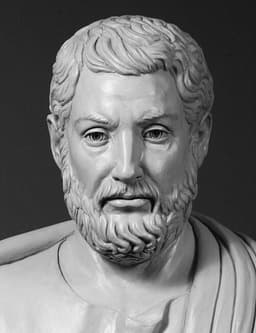
Cleisthenes
Politician · Ancient
78.3Total
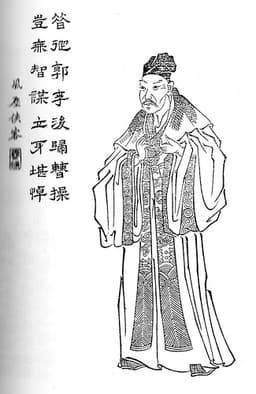
Jia Xu
Politician · Ancient
51.4Total
Basic Information
Born
-570
147
Died
-508
223
Era
Ancient
Ancient
Nationality
Greece
China
Occupation
Politician
Politician
Civilization
Western
Eastern
Score Comparison
Military (10%)
49.4
45.0
Political (20%)
62.7
39.4
Influence (20%)
92.0
56.4
Legacy (20%)
92.0
50.0
Leadership (15%)
72.0
67.0
Strategy (15%)
71.3
43.3
TOTAL
78.3
51.4
Cleisthenes — Complete Timeline
510 BC
Expulsion of the PeisistratidsPolitical Action◆ Major
Cleisthenes, with the support of the Alcmaeonid family and Spartan assistance, led the overthrow of the tyrant Hippias, son of Peisistratus. This ended the Peisistratid tyranny in Athens and opened the way for democratic reforms.
Tyranny OverthrownAthensSparta
Impact: nationalconstructive
508 BC
Reforms of CleisthenesReform
Cleisthenes reorganized the Athenian citizen body into ten new tribes based on demes, replacing the old four Ionian tribes. He established the Council of 500 (Boule) and introduced ostracism, creating a system of isonomia (equal rights) that is considered the foundation of Athenian democracy.
Athenian DemocracyConstitutional ReformAncient Greece
Impact: globalprogressive
507 BC
Introduction of OstracismReform◆ Major
Cleisthenes instituted ostracism, a procedure allowing Athenian citizens to vote annually to exile a prominent citizen deemed a threat to democracy for ten years. This mechanism aimed to prevent the rise of a new tyrant and stabilize the democratic system.
Athenian DemocracyPolitical MechanismExile
Impact: national
Jia Xu — Complete Timeline
192 AD
Advised Li Jue and Guo Si to attack Chang'anWar◆ Major
After Dong Zhuo's death, Jia Xu advised his subordinates Li Jue and Guo Si to gather their troops and attack Chang'an rather than disbanding. This led to the capture of the capital and the restoration of their power, though it plunged the region into further chaos.
Han DynastyWarlord EraChang'an
Impact: nationaldestructive
199 AD
Switched allegiance to Cao CaoPolitical Action
Jia Xu left Zhang Xiu's service and joined Cao Cao, bringing with him strategic advice. Cao Cao welcomed him and later relied on his counsel for major decisions.
Cao CaoAllegiance ChangeAdvisor
Impact: national
200 AD
Advised Cao Cao to attack Yuan Shao at GuanduWar◆ Major
When Cao Cao hesitated to engage Yuan Shao due to lack of supplies, Jia Xu argued that Cao Cao's strategic acumen and the morale of his troops outweighed Yuan Shao's numerical advantage. Cao Cao followed the advice and won the Battle of Guandu.
Battle of GuanduCao CaoMilitary Advice
Impact: regionalconstructive
208 AD
Opposed Cao Cao's plan to attack Sun QuanPolitical Action
After Cao Cao's defeat at Red Cliffs, Jia Xu advised against a hasty second invasion of Jiangdong, arguing that Cao Cao should consolidate his gains first. Cao Cao did not follow this advice and suffered further setbacks.
Red CliffsCao CaoStrategic Advice
Impact: regionalconstructive
215 AD
Advised Cao Cao to invade Hanzhong via the Qinling MountainsWar
Jia Xu recommended that Cao Cao launch a campaign against Zhang Lu in Hanzhong using a mountain route. The campaign succeeded, and Cao Cao gained control of Hanzhong.
Hanzhong CampaignCao CaoMilitary Strategy
Impact: regionalconstructive
Expert Analysis
Origins
Cleisthenes was born around 570 BCE into the powerful Alcmaeonid family in Athens. His father Megacles had been a prominent archon, and his family had a history of political involvement, including exile and conflict with tyrants. Cleisthenes grew up during the tyranny of Peisistratus and his sons, experiencing political instability firsthand. He likely received an aristocratic education in rhetoric, law, and warfare, preparing him for a political career.
Jia Xu (147–224 CE) was born in Wuwei Commandery (modern Gansu) during the late Eastern Han dynasty. His family was of modest official status. Jia Xu was known for his intelligence from a young age but lacked the connections of the aristocracy. He began his career as a minor official, but the collapse of central authority during the Yellow Turban Rebellion and subsequent warlord conflicts thrust him into a chaotic environment where his strategic acumen became his primary asset.
Rise to Power
Cleisthenes rose to prominence after the overthrow of the tyrant Hippias in 510 BCE. As a leading Alcmaeonid, he initially competed with Isagoras for influence. When Isagoras became archon with Spartan backing, Cleisthenes appealed to the common people for support, promising political reforms. In 508/507 BCE, he implemented his revolutionary reorganization of Athenian society, breaking the power of aristocratic clans by dividing Attica into demes (villages) and grouping them into ten tribes. This created a new political structure based on locality rather than kinship, weakening traditional elites and empowering citizens.
Jia Xu's rise was more circuitous. He first served as a minor advisor to Dong Zhuo, the warlord who controlled the Han emperor. After Dong Zhuo's assassination in 192 CE, his subordinates Li Jue and Guo Si were about to disband. Jia Xu advised them to instead attack the capital Chang'an, which they did successfully, seizing control of the emperor. This made Jia Xu a key advisor, but he later distanced himself from their violent rule. He then served Zhang Xiu, a minor warlord, before switching to Cao Cao around 199 CE. His strategic advice soon made him indispensable to Cao Cao.
Leadership & Governance
Cleisthenes' leadership manifested through institutional design. He created the Council of 500 (boule), chosen by lot from the ten tribes, which prepared legislation for the Assembly (ekklesia). He also introduced ostracism, allowing citizens to vote to exile a dangerous figure for ten years. These reforms distributed power widely and established accountability. Cleisthenes scored 72.0 in leadership, reflecting his ability to implement systemic change.
Jia Xu's leadership was that of a backstage influencer. He never held supreme command but shaped decisions through counsel. His political score of 39.4 reflects his lack of formal authority. He was cautious, often advising against risky moves, as when he opposed Cao Cao's second invasion of Jiangdong after Red Cliffs. His strategy score of 43.3 is modest because he focused on specific tactical advice rather than grand strategy.
Triumph & Tragedy
Cleisthenes' triumph was the establishment of Athenian democracy, which lasted nearly two centuries and became a model for later republics. His reforms ended aristocratic dominance and gave ordinary citizens a voice. However, his system had flaws: ostracism could be abused (as with Themistocles), and the exclusion of women, slaves, and metics limited participation. His military score of 49.4 reflects no notable military achievements.
Jia Xu's triumphs include his advice that saved Cao Cao at Guandu (200 CE) against Yuan Shao, where he urged a decisive attack despite supply issues. His advice to take Hanzhong via the Qinling Mountains also succeeded. However, his greatest failure was advising Li Jue and Guo Si to attack Chang'an, which led to years of chaos and destruction in the capital. He scored 45.0 in military and 51.4 total.
Character & Destiny
Cleisthenes was a reformer who believed in collective governance. His decision to ally with the demos rather than aristocrats showed pragmatism. He was exiled by Isagoras but returned, suggesting resilience. His character shaped his destiny: he died in obscurity but his reforms outlasted him.
Jia Xu was secretive and calculating. He avoided high office, fearing reprisals, and kept his family connections minimal. His caution preserved his life through turbulent times. He died naturally in 224 CE at age 77, rare for that era.
Legacy
Cleisthenes' legacy is immense: he is called the "father of Athenian democracy." His tribal system and council influenced later democratic institutions. His influence score of 92.0 and legacy of 92.0 reflect this. Modern democracies owe a debt to his innovations.
Jia Xu's legacy is more limited. He is remembered in Chinese history as a cunning advisor, but his influence is confined to the Three Kingdoms period. His total score of 51.4 indicates moderate impact.
Conclusion
Cleisthenes had greater impact. His institutional reforms created a political system that lasted centuries and inspired countless others. Jia Xu's advice, while often correct, affected only short-term military outcomes. With a total score of 78.3 against 51.4, Cleisthenes clearly shaped history more profoundly.
Rankings
🥇
CleisthenesLeader
Mil: 49.4Pol: 62.7Inf: 92.0
78.3
🥈
Jia Xu
Mil: 45.0Pol: 39.4Inf: 56.4
51.4
+26.9 behind
How This Comparison Works
Algorithm
Each figure is scored on 6 dimensions (0—100 scale) based on structured historical data: Military (10%), Political (20%), Influence (20%), Legacy (20%), Leadership (15%), Strategy (15%). The weighted total produces the final ranking.
Data Sources
Scores are computed from structured sub-indicators in the database. Scale factors adjust for era (Ancient ×0.85, Modern ×1.0) and civilization size (Eastern ×1.05, Other ×0.80) to account for differences in population and military scale.
Maximum 3 Figures
Comparisons are limited to 2—3 figures to ensure readability and statistical meaningfulness.
Error Margins
±5 points per dimension — Sub-scores are derived from historical records with inherent uncertainty. Two figures within 5 points on a dimension should be considered roughly equivalent in that area.
Total Score Accuracy
±3 points overall — The weighted combination of 6 dimensions produces a total score with approximately ±3 points of uncertainty. Differences of less than 3 points are not statistically significant— the figures are effectively tied.
Known Limitations
- Historical records are incomplete and uneven across civilizations
- Figures from oral-tradition societies may be underrepresented
- Occupation labels can misclassify multi-role figures
- Scores measure capability and impact, not moral character
- Quantitative scoring is a comparison tool, not absolute truth
Capability Radar
Military (10%) — Battles & Warfare
Battles
58
10
Win Rate
62
15
Expansion
59
5
Political (20%) — Governance & Reform
Reform
95
10
Diplomacy
70
70
Economy
40
10
Influence (20%) — Cultural & Global Reach
Cultural
85
30
Global
85
20
Legacy (20%) — Historical Impact
Historical
90
50
Longevity
95
40
Leadership (15%) — Power & Stability
Tenure
30
30
Stability
60
40
Strategy (15%) — Tactics & Innovation
Strategy
62
70
Tactics
67
60
Reform
72
5
Similar Comparisons
Comments & Discussion
No comments yet. Be the first to share your thoughts!