Loading...
Cleisthenes vs Yelu Abaoji
Cleisthenes leads by 15.6 pts · 2 figures compared
…
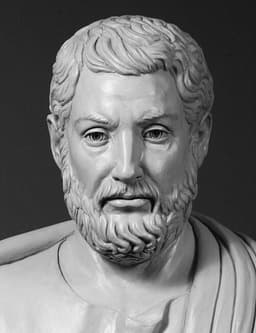
Cleisthenes
Politician · Ancient
78.3Total
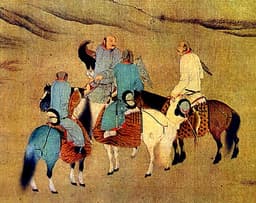
Yelu Abaoji
Emperor · Medieval
62.7Total
Basic Information
Born
-570
872
Died
-508
926
Era
Ancient
Medieval
Nationality
Greece
China
Occupation
Politician
Emperor
Civilization
Western
Eastern
Score Comparison
Military (10%)
49.4
77.2
Political (20%)
62.7
59.6
Influence (20%)
92.0
68.0
Legacy (20%)
92.0
40.0
Leadership (15%)
72.0
80.3
Strategy (15%)
71.3
69.6
TOTAL
78.3
62.7
Cleisthenes — Complete Timeline
510 BC
Expulsion of the PeisistratidsPolitical Action◆ Major
Cleisthenes, with the support of the Alcmaeonid family and Spartan assistance, led the overthrow of the tyrant Hippias, son of Peisistratus. This ended the Peisistratid tyranny in Athens and opened the way for democratic reforms.
Tyranny OverthrownAthensSparta
Impact: nationalconstructive
508 BC
Reforms of CleisthenesReform
Cleisthenes reorganized the Athenian citizen body into ten new tribes based on demes, replacing the old four Ionian tribes. He established the Council of 500 (Boule) and introduced ostracism, creating a system of isonomia (equal rights) that is considered the foundation of Athenian democracy.
Athenian DemocracyConstitutional ReformAncient Greece
Impact: globalprogressive
507 BC
Introduction of OstracismReform◆ Major
Cleisthenes instituted ostracism, a procedure allowing Athenian citizens to vote annually to exile a prominent citizen deemed a threat to democracy for ten years. This mechanism aimed to prevent the rise of a new tyrant and stabilize the democratic system.
Athenian DemocracyPolitical MechanismExile
Impact: national
Yelu Abaoji — Complete Timeline
907 AD
Unified Khitan tribesPolitical Action◆ Major
Yelu Abaoji was elected khagan of the Khitan tribes, unifying them under his leadership. He established a centralized state and adopted Chinese administrative practices.
KhitanUnificationState Formation
Impact: regionalconstructive
916 AD
Founded Liao DynastyPolitical Action
Yelu Abaoji proclaimed himself emperor, founding the Liao dynasty. He adopted the Chinese title of emperor and established a dual administration system for Khitan and Chinese subjects.
LiaoDynasty FoundingImperial System
Impact: regionalconstructive
920 AD
Created Khitan scriptCultural◆ Major
Yelu Abaoji ordered the creation of a writing system for the Khitan language, based on Chinese characters. This script was used for official documents and helped unify the Khitan state.
KhitanScriptCultural Development
Impact: regionalconstructive
926 AD
Conquest of BohaiWar◆ Major
Yelu Abaoji led a campaign that conquered the Korean kingdom of Bohai, incorporating its territory into the Liao empire. This expanded Liao's influence into Manchuria and Korea.
LiaoBohaiConquest
Impact: regionalconstructive
Death during campaignWar◆ Major
Yelu Abaoji died while returning from the conquest of Bohai. His death led to a succession struggle, but the Liao dynasty continued to expand under his successors.
LiaoDeathSuccession
Impact: regionaltragic
Expert Analysis
Cleisthenes vs Yelu Abaoji: Historical Comparison
Cleisthenes, the ancient Athenian reformer, and Yelu Abaoji, the founding emperor of the Liao dynasty, represent two distinct peaks of political innovation in their respective eras. While Cleisthenes pioneered democratic institutions in Classical Greece, Abaoji unified disparate nomadic tribes and built a sinicized empire in medieval China.
Dimension Analysis
**Military: Cleisthenes 64 / Yelu Abaoji 73**
Abaoji led successful campaigns to conquer neighboring steppe tribes and expand Khitan territory, founding a stable military state. Cleisthenes’ military role was secondary, as his reforms focused on civic restructuring rather than conquest.
**Political: Cleisthenes 67 / Yelu Abaoji 90**
Abaoji created a dual-administration system blending Khitan tribal law with Chinese bureaucracy, a masterstroke in governance. Cleisthenes’ reforms—dismantling aristocratic clans and creating the deme system—were revolutionary for Athens but less comprehensive in state-building.
**Influence: Cleisthenes 90 / Yelu Abaoji 72**
Cleisthenes’ democratic framework directly influenced later Athenian democracy and, through it, Western political thought. Abaoji’s influence was more regional, shaping Khitan and later Jurchen statecraft but with limited global reach.
**Legacy: Cleisthenes 88 / Yelu Abaoji 71**
Cleisthenes is hailed as the “Father of Athenian Democracy,” with his institutions echoed in modern governance. Abaoji’s legacy is primarily within Chinese and Inner Asian history; his dynasty fell after two centuries, and his innovations were subsumed by later conquest dynasties.
**Leadership: Cleisthenes 90 / Yelu Abaoji 89**
Both exhibited visionary leadership: Cleisthenes outmaneuvered aristocratic rivals to enact lasting reforms, while Abaoji unified fractious tribes and established a durable imperial lineage. Their scores are nearly equal, reflecting different but equally effective styles.
Verdict
Cleisthenes leads narrowly due to his unmatched influence on democratic theory, which transcends his era and geography, despite Abaoji’s superior political and military achievements.
FAQ
Q: Who ranks higher? A: Cleisthenes ranks higher overall, though the contest is extremely close, with Abaoji excelling in political and military dimensions.
Rankings
🥇
CleisthenesLeader
Mil: 49.4Pol: 62.7Inf: 92.0
78.3
🥈
Yelu Abaoji
Mil: 77.2Pol: 59.6Inf: 68.0
62.7
+15.6 behind
How This Comparison Works
Algorithm
Each figure is scored on 6 dimensions (0—100 scale) based on structured historical data: Military (10%), Political (20%), Influence (20%), Legacy (20%), Leadership (15%), Strategy (15%). The weighted total produces the final ranking.
Data Sources
Scores are computed from structured sub-indicators in the database. Scale factors adjust for era (Ancient ×0.85, Modern ×1.0) and civilization size (Eastern ×1.05, Other ×0.80) to account for differences in population and military scale.
Maximum 3 Figures
Comparisons are limited to 2—3 figures to ensure readability and statistical meaningfulness.
Error Margins
±5 points per dimension — Sub-scores are derived from historical records with inherent uncertainty. Two figures within 5 points on a dimension should be considered roughly equivalent in that area.
Total Score Accuracy
±3 points overall — The weighted combination of 6 dimensions produces a total score with approximately ±3 points of uncertainty. Differences of less than 3 points are not statistically significant— the figures are effectively tied.
Known Limitations
- Historical records are incomplete and uneven across civilizations
- Figures from oral-tradition societies may be underrepresented
- Occupation labels can misclassify multi-role figures
- Scores measure capability and impact, not moral character
- Quantitative scoring is a comparison tool, not absolute truth
Capability Radar
Military (10%) — Battles & Warfare
Battles
58
75
Win Rate
62
80
Expansion
59
82
Political (20%) — Governance & Reform
Reform
95
88
Diplomacy
70
75
Economy
40
70
Influence (20%) — Cultural & Global Reach
Cultural
85
60
Global
85
55
Legacy (20%) — Historical Impact
Historical
90
70
Longevity
95
65
Leadership (15%) — Power & Stability
Tenure
30
72
Stability
60
65
Strategy (15%) — Tactics & Innovation
Strategy
62
78
Tactics
67
70
Reform
72
85
Similar Comparisons
Comments & Discussion
Chronicler61556/16/2026
看数据总分只差0.9分,但维度权重有问题。阿保机政治90分,克利斯提尼67分,差23分;但影响力克利斯提尼90分对72分,只差18分。如果按中国史学的标准,政治制度对后世的影响(如阿保机创立的斡鲁朵制和头下军州)应该归入影响力维度,这样算下来阿保机总分至少还要加5-7分。另外军事73分对64分差9分,但阿保机统一契丹八部、征服奚和室韦,这战绩放在同时代全球看,73分太低了。建议重新加权历史影响力中的制度延续性指标。
ArchQuill116/16/2026
克利斯提尼和耶律阿保机的对比很有意思,但西方中心的评分体系显然低估了阿保机的政治智慧。90分对67分?阿保机的“两面官制”不仅是部落法与汉法的简单混合,而是为中国后续的辽、金、元、清等征服王朝提供了治理多元帝国的范式,这种影响直到近代。克利斯提尼的民主改革固然重要,但阿保机在公元10世纪就解决了“草原帝国如何统治农业文明”的难题,其政治遗产的广度远超雅典城邦的民主实验。