Loading...
Cleopatra Selene II vs Polemon I of Pontus
Cleopatra Selene II leads by 2.7 pts · 2 figures compared
…

Cleopatra Selene II
Emperor · Ancient
41.4Total
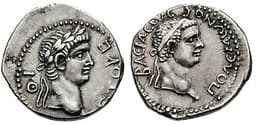
Polemon I of Pontus
Emperor · Ancient
38.7Total
Basic Information
Born
-40
-40
Died
6
-8
Era
Ancient
Ancient
Nationality
Mauretania
Pontus
Occupation
Emperor
Emperor
Civilization
Other
Western
Score Comparison
Military (10%)
37.6
50.0
Political (20%)
35.1
26.4
Influence (20%)
45.5
44.0
Legacy (20%)
35.8
34.2
Leadership (15%)
45.0
41.5
Strategy (15%)
52.6
39.6
TOTAL
41.4
38.7
Cleopatra Selene II — Complete Timeline
25 BC
Marriage to Juba IIPolitical Action◆ Major
Cleopatra Selene II married Juba II, king of Mauretania, in a union arranged by Augustus. The marriage combined the Ptolemaic and Numidian royal lines, creating a powerful client kingdom loyal to Rome. She became queen consort and co-ruler of Mauretania.
Marriage AllianceRoman Client KingdomPtolemaic Dynasty
Impact: regionalconstructive
Co-Rulership of MauretaniaPolitical Action◆ Major
Cleopatra Selene II ruled jointly with Juba II, wielding significant influence. She promoted Hellenistic culture and Egyptian traditions in the Mauretanian court. Her rule helped stabilize the region and fostered a blend of Roman, Greek, and Egyptian influences.
Co-RulershipHellenistic CultureEgyptian Influence
Impact: regionalconstructive
20 BC
Construction of CaesareaCultural◆ Major
Cleopatra Selene II oversaw the construction and beautification of Caesarea (modern Cherchell), the capital of Mauretania. She commissioned buildings, gardens, and a lighthouse modeled after the Pharos of Alexandria. The city became a major cultural and commercial center.
Urban DevelopmentArchitectureCapital City
Impact: regionalconstructive
Polemon I of Pontus — Complete Timeline
36 BC
Appointed King of Pontus by Mark AntonyPolitical Action◆ Major
Mark Antony appointed Polemon I as king of Pontus, a client kingdom of Rome. This appointment placed Polemon in a position of power within the Roman sphere of influence in Anatolia.
AppointmentClient KingdomRoman Influence
Impact: regional
31 BC
Supported Mark Antony in the Final War of the Roman RepublicWar◆ Major
Polemon I supported Mark Antony against Octavian in the civil war. After Antony's defeat at the Battle of Actium, Polemon's kingdom was spared by Octavian, who confirmed him as king.
Roman Civil WarActiumClient King
Impact: regional
25 BC
Expanded Pontic Kingdom into ColchisWar
Polemon I expanded his kingdom by conquering Colchis on the eastern Black Sea coast. This expansion increased his territory and influence, though it required Roman approval.
ExpansionColchisPontus
Impact: regional
8 BC
Killed in Battle Against the AspurgianiWar◆ Major
Polemon I was killed in battle against the Aspurgiani, a tribe in the Bosporan region. His death ended his reign and led to Roman reorganization of the Pontic kingdom.
Death in BattleBosporan WarEnd of Reign
Impact: regionaltragic
Expert Analysis
Origins
**Cleopatra Selene II** (40 BCE – 6 CE) was born in Alexandria to Cleopatra VII and Mark Antony, the most powerful couple of the late Roman Republic. As a Ptolemaic princess, she was raised in the opulent court of Egypt, educated in Greek philosophy, rhetoric, and statecraft. After the defeat at Actium (31 BCE) and her parents' suicides, she was taken to Rome by Octavian and paraded in his triumph. She was then raised in the household of Octavian's sister, Octavia Minor, where she received a Roman education alongside other client royalty.
**Polemon I** (c. 65 BCE – 8 BCE) was likely born into a noble family in Anatolia, possibly of Greek or Persian descent. Little is known of his early life, but he emerged as a local dynast in the turbulent period following the collapse of the Pontic kingdom. He first appears in historical records as a supporter of the Roman general Publius Canidius Crassus in his campaigns in Armenia and the Caucasus (36 BCE). His military acumen and loyalty to Mark Antony secured his appointment as king of Pontus in 36 BCE.
Rise to Power
Cleopatra Selene II's rise was initially passive, dependent on her parents' power. After their fall, she was a hostage in Rome but her Ptolemaic bloodline made her valuable. In 25 BCE, Augustus arranged her marriage to Juba II, the Roman-educated king of Mauretania. This union combined two client kingdoms and created a stable buffer state in North Africa. Cleopatra Selene II became co-ruler, wielding authority equal to Juba II. She used her position to revive Ptolemaic traditions, minting coins with her image and Egyptian symbols.
Polemon I's rise was more direct. After being appointed king of Pontus by Mark Antony in 36 BCE, he demonstrated his value by expanding his territory. In 35 BCE, he campaigned against the Parthians and later conquered Colchis on the eastern Black Sea coast, annexing it into his kingdom. He married Dynamis, daughter of Pharnaces II, to legitimize his rule over the Bosporan kingdom. During the Final War of the Roman Republic, Polemon I supported Antony but switched sides to Octavian after Actium (31 BCE). Octavian confirmed his rule, allowing him to remain king until his death.
Leadership & Governance
Cleopatra Selene II governed Mauretania as a Hellenistic queen, blending Greek, Egyptian, and Roman elements. She oversaw the construction of Caesarea (modern Cherchell), a capital city modeled on Alexandria, with a lighthouse, amphitheater, and temples dedicated to Isis and Serapis. She promoted agriculture and trade, and her rule saw economic prosperity. Her political score of 35.1 reflects her limited autonomy as a client queen, but she scored 52.6 in strategy for her ability to maintain influence within Roman constraints.
Polemon I ruled as a Roman client king with military focus. His military score of 50.0 indicates his effectiveness in expanding and defending his territory. He fought campaigns against the Aspurgiani tribe in the Bosporus and maintained order in Pontus. However, his political score of 26.4 suggests he was less adept at navigating Roman politics; his initial support for Antony nearly cost him his kingdom. His governance was based on personal loyalty to Rome rather than institutional reform.
Triumph & Tragedy
Cleopatra Selene II's greatest triumph was the successful co-rulership of Mauretania, where she revived Ptolemaic culture and left a lasting architectural legacy. Her construction of Caesarea was a major achievement, and her strategic marriage secured her family's future. Her tragedy was the loss of her parents and kingdom as a child, and the limitations of being a client queen. She never achieved the independence of her mother, and her influence was confined to a Roman-approved sphere. She died in 6 CE, possibly in a political purge or natural causes.
Polemon I's triumph was his expansion of Pontus into Colchis and his survival after Actium. He retained his throne despite backing the losing side, a testament to his military value to Octavian. His tragedy was his death in battle against the Aspurgiani in 8 BCE, a campaign that he may have initiated recklessly. His kingdom was subsequently reorganized by Rome, and his dynasty did not endure.
Character & Destiny
Cleopatra Selene II was pragmatic and culturally astute, using her heritage to carve out a role within Roman hegemony. She scored 45.0 in leadership, reflecting her ability to command respect as a co-ruler. Her character was shaped by resilience: from captive to queen, she adapted to Roman power while preserving Ptolemaic identity. Her destiny was to be a bridge between civilizations, but ultimately limited by her dependency on Augustus.
Polemon I was ambitious and militaristic, with a leadership score of 41.5. He took risks, such as supporting Antony and later switching sides, and expanding into Colchis. His character was that of a warrior-king, but his judgment was flawed: his final campaign led to his death. His destiny was to be a tool of Roman policy, and his kingdom was absorbed after his demise.
Legacy
Cleopatra Selene II's legacy is cultural and symbolic. She is remembered as a Ptolemaic queen who maintained Egyptian traditions in Mauretania, influencing North African art and architecture. Her city Caesarea became a major Roman center. Her legacy score of 35.8 reflects her limited direct impact, but she is a figure of interest in studies of Roman client kingship and gender. Her influence score of 45.5 indicates her symbolic importance.
Polemon I's legacy is more obscure. He is known primarily as a client king who expanded Pontus, but his kingdom did not last. His military campaigns are recorded only in brief references. His influence score of 44.0 is similar to Cleopatra Selene II's, but his long-term impact is minimal. He is a footnote in the history of the Roman East.
Conclusion
Cleopatra Selene II had a greater overall impact than Polemon I. Her total score of 41.4 vs. 38.7 reflects her superior political strategy and cultural legacy. While Polemon I was a capable military commander (50.0 vs. 37.6), Cleopatra Selene II's ability to govern effectively within Roman constraints and to perpetuate Ptolemaic culture gave her a more enduring influence. Her construction of Caesarea and her role as a female ruler in a Roman client kingdom are historically significant. Polemon I's achievements were temporary; his kingdom collapsed after his death. Therefore, Cleopatra Selene II is the more historically significant figure.
Rankings
🥇
Cleopatra Selene IILeader
Mil: 37.6Pol: 35.1Inf: 45.5
41.4
🥈
Polemon I of Pontus
Mil: 50.0Pol: 26.4Inf: 44.0
38.7
+2.7 behind
How This Comparison Works
Algorithm
Each figure is scored on 6 dimensions (0—100 scale) based on structured historical data: Military (10%), Political (20%), Influence (20%), Legacy (20%), Leadership (15%), Strategy (15%). The weighted total produces the final ranking.
Data Sources
Scores are computed from structured sub-indicators in the database. Scale factors adjust for era (Ancient ×0.85, Modern ×1.0) and civilization size (Eastern ×1.05, Other ×0.80) to account for differences in population and military scale.
Maximum 3 Figures
Comparisons are limited to 2—3 figures to ensure readability and statistical meaningfulness.
Error Margins
±5 points per dimension — Sub-scores are derived from historical records with inherent uncertainty. Two figures within 5 points on a dimension should be considered roughly equivalent in that area.
Total Score Accuracy
±3 points overall — The weighted combination of 6 dimensions produces a total score with approximately ±3 points of uncertainty. Differences of less than 3 points are not statistically significant— the figures are effectively tied.
Known Limitations
- Historical records are incomplete and uneven across civilizations
- Figures from oral-tradition societies may be underrepresented
- Occupation labels can misclassify multi-role figures
- Scores measure capability and impact, not moral character
- Quantitative scoring is a comparison tool, not absolute truth
Capability Radar
Military (10%) — Battles & Warfare
Battles
40
10
Win Rate
43
10
Expansion
41
15
Political (20%) — Governance & Reform
Reform
25
10
Diplomacy
35
35
Economy
30
15
Influence (20%) — Cultural & Global Reach
Cultural
20
10
Global
10
10
Legacy (20%) — Historical Impact
Historical
20
15
Longevity
15
10
Leadership (15%) — Power & Stability
Tenure
30
30
Stability
25
20
Strategy (15%) — Tactics & Innovation
Strategy
50
10
Tactics
51
10
Reform
55
5
Similar Comparisons
Comments & Discussion
No comments yet. Be the first to share your thoughts!