Loading...
This comparison has not been analyzed yet.
One-time AI generation (~1 minute). Scores and timeline are already available below.
Commodus vs Pepi II Neferkare
Pepi II Neferkare leads by 8.1 pts · 2 figures compared
…

Commodus
Emperor · Ancient
37.5Total
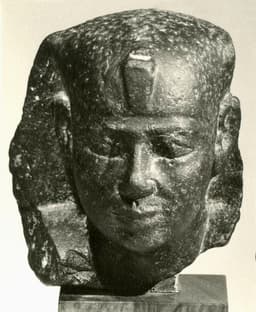
Pepi II Neferkare
Emperor · Ancient
45.6Total
Basic Information
Born
161
-2260
Died
192
-2170
Era
Ancient
Ancient
Nationality
Roman Empire
Old Kingdom Egypt
Occupation
Emperor
Emperor
Civilization
Western
Middle Eastern
Score Comparison
Military (10%)
22.6
10.2
Political (20%)
35.0
32.1
Influence (20%)
44.0
44.8
Legacy (20%)
35.0
52.0
Leadership (15%)
38.1
74.0
Strategy (15%)
45.0
45.0
TOTAL
37.5
45.6
Commodus — Complete Timeline
180 AD
End of the Marcomannic WarsWar◆ Major
Commodus, upon becoming sole emperor, quickly made peace with the Marcomanni and Quadi tribes, abandoning his father Marcus Aurelius's plans to annex territory beyond the Danube. This decision was seen as a retreat from expansionist policy.
Peace TreatyDanube FrontierAbandonment
Impact: regional
190 AD
Renaming of Rome to Colonia CommodianaPolitical Action
Commodus renamed Rome as Colonia Commodiana, the Roman legions as Commodianae, and the months of the year after his own names. This megalomaniacal act further strained his relationship with the Senate and traditional institutions.
MegalomaniaRenamingEccentricity
Impact: nationaldestructive
192 AD
Assassination of CommodusPolitical Action
Commodus was strangled in his bath by the wrestler Narcissus, following a conspiracy involving his mistress Marcia and the praetorian prefect Laetus. His death ended the Nerva-Antonine dynasty and triggered the Year of the Five Emperors.
AssassinationEnd of DynastyCrisis
Impact: globaltragic
Gladiatorial Combat in the ArenaCultural◆ Major
Commodus fought as a gladiator in the Colosseum, killing animals and disabled opponents. He claimed to be the reincarnation of Hercules and demanded divine honors. This behavior alienated the Senate and military, contributing to his downfall.
GladiatorEccentricityDecadence
Impact: nationaldestructive
Pepi II Neferkare — Complete Timeline
2260 BC
Accession to the thronePolitical Action◆ Major
Pepi II became pharaoh of Egypt at approximately age 6, succeeding his half-brother Merenre I. His reign began the longest documented rule of any monarch in history, lasting 94 years into the early 22nd century BC.
AccessionOld KingdomDynasty VI
Impact: national
2250 BC
Construction of pyramid complex at SaqqaraCultural
Pepi II built his pyramid complex at South Saqqara, named 'Neferkare is Established'. The pyramid, though smaller than earlier ones, included a mortuary temple and causeway. Its construction drained state resources during a period of declining central authority.
PyramidArchitectureOld Kingdom
Impact: national
2240 BC
Expedition to NubiaWar◆ Major
Pepi II ordered military campaigns into Nubia to secure trade routes and resources. These expeditions extended Egyptian control southward and brought back gold, ivory, and slaves, but also faced resistance from local tribes.
Nubian CampaignTradeMilitary
Impact: regional
2230 BC
Correspondence with HarkhufCultural
Pepi II, as a child pharaoh, wrote a letter to the explorer Harkhuf expressing excitement about bringing a dancing dwarf from Punt. This letter, preserved in Harkhuf's tomb, provides insight into the young king's personality and Egypt's trade with distant lands.
CorrespondenceTradePunt
Impact: national
2200 BC
Decline of central authorityPolitical Action◆ Major
During Pepi II's later reign, the power of the pharaoh weakened as provincial nomarchs gained autonomy. The central government's inability to control the provinces contributed to the fragmentation of the Old Kingdom after his death.
DecentralizationOld Kingdom CollapsePolitical
Impact: nationaldestructive
This comparison has not been analyzed yet.
One-time AI generation (~1 minute). Scores and timeline are already available below.
Rankings
🥇
Pepi II NeferkareLeader
Mil: 10.2Pol: 32.1Inf: 44.8
45.6
🥈
Commodus
Mil: 22.6Pol: 35.0Inf: 44.0
37.5
+8.1 behind
How This Comparison Works
Algorithm
Each figure is scored on 6 dimensions (0—100 scale) based on structured historical data: Military (10%), Political (20%), Influence (20%), Legacy (20%), Leadership (15%), Strategy (15%). The weighted total produces the final ranking.
Data Sources
Scores are computed from structured sub-indicators in the database. Scale factors adjust for era (Ancient ×0.85, Modern ×1.0) and civilization size (Eastern ×1.05, Other ×0.80) to account for differences in population and military scale.
Maximum 3 Figures
Comparisons are limited to 2—3 figures to ensure readability and statistical meaningfulness.
Error Margins
±5 points per dimension — Sub-scores are derived from historical records with inherent uncertainty. Two figures within 5 points on a dimension should be considered roughly equivalent in that area.
Total Score Accuracy
±3 points overall — The weighted combination of 6 dimensions produces a total score with approximately ±3 points of uncertainty. Differences of less than 3 points are not statistically significant— the figures are effectively tied.
Known Limitations
- Historical records are incomplete and uneven across civilizations
- Figures from oral-tradition societies may be underrepresented
- Occupation labels can misclassify multi-role figures
- Scores measure capability and impact, not moral character
- Quantitative scoring is a comparison tool, not absolute truth
Capability Radar
Military (10%) — Battles & Warfare
Battles
10
5
Win Rate
10
5
Expansion
5
5
Political (20%) — Governance & Reform
Reform
5
10
Diplomacy
5
10
Economy
5
10
Influence (20%) — Cultural & Global Reach
Cultural
10
15
Global
10
10
Legacy (20%) — Historical Impact
Historical
20
30
Longevity
10
90
Leadership (15%) — Power & Stability
Tenure
40
95
Stability
5
10
Strategy (15%) — Tactics & Innovation
Strategy
5
5
Tactics
5
5
Reform
5
5
Similar Comparisons
Comments & Discussion
No comments yet. Be the first to share your thoughts!