Loading...
This comparison has not been analyzed yet.
One-time AI generation (~1 minute). Scores and timeline are already available below.
Constantius II vs Vologases I of Parthia
Constantius II leads by 3.1 pts · 2 figures compared
…

Constantius II
Emperor · Ancient
58.4Total
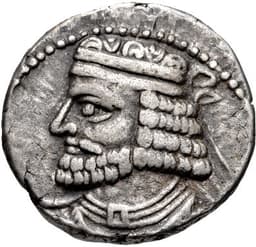
Vologases I of Parthia
Emperor · Ancient
55.3Total
Basic Information
Born
317
25
Died
361
78
Era
Ancient
Ancient
Nationality
Roman Empire
Parthian Empire
Occupation
Emperor
Emperor
Civilization
Western
Middle Eastern
Score Comparison
Military (10%)
60.0
52.5
Political (20%)
68.0
68.0
Influence (20%)
52.5
52.5
Legacy (20%)
47.5
45.0
Leadership (15%)
74.0
68.0
Strategy (15%)
60.7
52.5
TOTAL
58.4
55.3
Constantius II — Complete Timeline
344 AD
Battle of SingaraWar
Constantius II led Roman forces against the Sassanid Persians under Shapur II at Singara in Mesopotamia. The battle was indecisive, with heavy losses on both sides. Constantius failed to achieve a decisive victory, prolonging the Roman-Persian conflict.
Roman-Persian WarsBattleSassanid Empire
Impact: regional
351 AD
Defeat of Magnentius at Mursa MajorWar◆ Major
Constantius II defeated the usurper Magnentius at the Battle of Mursa Major. The victory was costly, with tens of thousands of Roman soldiers killed. It allowed Constantius to reunify the Roman Empire under his sole rule.
Civil WarBattleUsurpation
Impact: regionaldestructive
355 AD
Appointment of Julian as CaesarPolitical Action◆ Major
Constantius II appointed his cousin Julian as Caesar (junior emperor) and sent him to govern Gaul. This decision was intended to stabilize the western provinces but ultimately led to Julian's rebellion and civil war.
Imperial AppointmentSuccessionRoman Empire
Impact: regional
360 AD
Siege of BezabdeWar
Constantius II attempted to recapture the fortress of Bezabde from the Persians. The siege failed, and Constantius was unable to dislodge Shapur II's forces. This failure exposed the eastern frontier to further Persian incursions.
Roman-Persian WarsSiegeSassanid Empire
Impact: regional
361 AD
Death on campaign against JulianOther◆ Major
While marching east to confront the usurper Julian, Constantius II fell ill and died of a fever at Mopsuestia in Cilicia. On his deathbed, he reportedly named Julian as his successor, ending the civil war without battle.
DeathCivil WarSuccession
Impact: regional
Vologases I of Parthia — Complete Timeline
51 AD
Accession to Parthian ThronePolitical Action◆ Major
Vologases I became king of Parthia after the death of Gotarzes II. He was a member of the Arsacid dynasty and sought to stabilize the empire after years of civil war.
SuccessionDynastic RestorationStabilization
Impact: national
54 AD
Installation of Tiridates I as King of ArmeniaPolitical Action◆ Major
Vologases I installed his brother Tiridates I as king of Armenia, asserting Parthian influence over the region. This act directly challenged Roman authority and led to the Roman-Parthian War of 58-63.
Armenian QuestionDynastic PolicyRoman Challenge
Impact: regional
58 AD
War with Rome under CorbuloWar◆ Major
Vologases I fought a war against Roman forces led by Gnaeus Domitius Corbulo over control of Armenia. The conflict included sieges and battles, with both sides suffering heavy losses.
Roman-Parthian WarsCorbuloArmenian Campaign
Impact: regional
63 AD
Treaty of RhandeiaPolitical Action
Vologases I negotiated the Treaty of Rhandeia with Rome, which recognized Tiridates I as king of Armenia under Roman suzerainty. The treaty ended the war and established a compromise that lasted for decades.
DiplomacyPeace TreatyArmenian Settlement
Impact: regionalconstructive
70 AD
Suppression of Hyrcanian RebellionWar
Vologases I faced a rebellion in the eastern province of Hyrcania, which he suppressed with difficulty. The revolt weakened Parthian control over its eastern territories and diverted resources from the Roman frontier.
RebellionEastern CampaignInternal Conflict
Impact: national
This comparison has not been analyzed yet.
One-time AI generation (~1 minute). Scores and timeline are already available below.
Rankings
🥇
Constantius IILeader
Mil: 60.0Pol: 68.0Inf: 52.5
58.4
🥈
Vologases I of Parthia
Mil: 52.5Pol: 68.0Inf: 52.5
55.3
+3.1 behind
How This Comparison Works
Algorithm
Each figure is scored on 6 dimensions (0—100 scale) based on structured historical data: Military (10%), Political (20%), Influence (20%), Legacy (20%), Leadership (15%), Strategy (15%). The weighted total produces the final ranking.
Data Sources
Scores are computed from structured sub-indicators in the database. Scale factors adjust for era (Ancient ×0.85, Modern ×1.0) and civilization size (Eastern ×1.05, Other ×0.80) to account for differences in population and military scale.
Maximum 3 Figures
Comparisons are limited to 2—3 figures to ensure readability and statistical meaningfulness.
Error Margins
±5 points per dimension — Sub-scores are derived from historical records with inherent uncertainty. Two figures within 5 points on a dimension should be considered roughly equivalent in that area.
Total Score Accuracy
±3 points overall — The weighted combination of 6 dimensions produces a total score with approximately ±3 points of uncertainty. Differences of less than 3 points are not statistically significant— the figures are effectively tied.
Known Limitations
- Historical records are incomplete and uneven across civilizations
- Figures from oral-tradition societies may be underrepresented
- Occupation labels can misclassify multi-role figures
- Scores measure capability and impact, not moral character
- Quantitative scoring is a comparison tool, not absolute truth
Capability Radar
Military (10%) — Battles & Warfare
Battles
65
60
Win Rate
55
55
Expansion
40
40
Political (20%) — Governance & Reform
Reform
55
45
Diplomacy
50
70
Economy
45
50
Influence (20%) — Cultural & Global Reach
Cultural
40
40
Global
35
35
Legacy (20%) — Historical Impact
Historical
55
50
Longevity
40
40
Leadership (15%) — Power & Stability
Tenure
75
70
Stability
30
55
Strategy (15%) — Tactics & Innovation
Strategy
70
60
Tactics
60
65
Reform
50
30
Similar Comparisons
Comments & Discussion
No comments yet. Be the first to share your thoughts!