Loading...
Analysis will be generated on first visit.
Scores and timeline are available below. The page will refresh automatically when ready.
Count von Taaffe vs Julius Caesar
Julius Caesar leads by 20.3 pts · 2 figures compared
…

Count von Taaffe
Politician · Modern
63.0Total
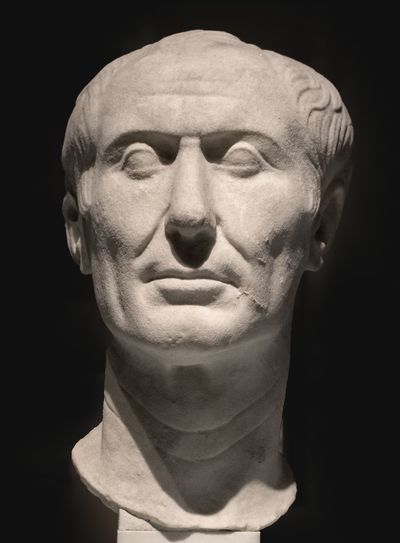
Julius Caesar
General · Ancient
83.3Total
Basic Information
Born
1833
-100
Died
1895
-44
Era
Modern
Ancient
Nationality
Austria
Roman Republic
Occupation
Politician
General
Civilization
Western
Western
Score Comparison
Military (10%)
37.5
88.0
Political (20%)
74.5
78.0
Influence (20%)
74.6
85.0
Legacy (20%)
61.8
82.0
Leadership (15%)
78.8
82.0
Strategy (15%)
35.3
88.0
TOTAL
63.0
83.3
Rankings
🥇
Julius CaesarLeader
Mil: 88.0Pol: 78.0Inf: 85.0
83.3
🥈
Count von Taaffe
Mil: 37.5Pol: 74.5Inf: 74.6
63.0
+20.3 behind
How This Comparison Works
Algorithm
Each figure is scored on 6 dimensions (0—100 scale) based on structured historical data: Military (10%), Political (20%), Influence (20%), Legacy (20%), Leadership (15%), Strategy (15%). The weighted total produces the final ranking.
Data Sources
Scores are computed from structured sub-indicators in the database. Scale factors adjust for era (Ancient ×0.85, Modern ×1.0) and civilization size (Eastern ×1.05, Other ×0.80) to account for differences in population and military scale.
Maximum 3 Figures
Comparisons are limited to 2—3 figures to ensure readability and statistical meaningfulness.
Error Margins
±5 points per dimension — Sub-scores are derived from historical records with inherent uncertainty. Two figures within 5 points on a dimension should be considered roughly equivalent in that area.
Total Score Accuracy
±3 points overall — The weighted combination of 6 dimensions produces a total score with approximately ±3 points of uncertainty. Differences of less than 3 points are not statistically significant— the figures are effectively tied.
Known Limitations
- Historical records are incomplete and uneven across civilizations
- Figures from oral-tradition societies may be underrepresented
- Occupation labels can misclassify multi-role figures
- Scores measure capability and impact, not moral character
- Quantitative scoring is a comparison tool, not absolute truth
Capability Radar
Military (10%) — Battles & Warfare
Battles
28
95
Win Rate
30
92
Expansion
34
97
Political (20%) — Governance & Reform
Reform
55
90
Diplomacy
60
85
Economy
50
82
Influence (20%) — Cultural & Global Reach
Cultural
30
88
Global
30
94
Legacy (20%) — Historical Impact
Historical
40
95
Longevity
30
96
Leadership (15%) — Power & Stability
Tenure
65
75
Stability
55
60
Strategy (15%) — Tactics & Innovation
Strategy
39
94
Tactics
41
96
Reform
46
88
Analysis will be generated on first visit.
Scores and timeline are available below. The page will refresh automatically when ready.
Count von Taaffe — Complete Timeline
1879 AD
Appointment as Minister-President of CisleithaniaPolitical Action◆ Major
Taaffe was appointed Minister-President of the Austrian half of the empire by Emperor Franz Joseph. He began a 14-year tenure, the longest of any Austrian prime minister in the dual monarchy era.
AppointmentGovernmentLong Tenure
Impact: national
Formation of the Iron Ring CoalitionPolitical Action◆ Major
Taaffe formed the Iron Ring, a coalition of conservative German clericals, Czech conservatives, and Polish nobles. This alliance gave him a stable parliamentary majority and allowed him to govern without liberal opposition.
CoalitionPoliticsConservatism
Impact: nationalconstructive
1880 AD
Language Ordinances for BohemiaReform◆ Major
Taaffe issued ordinances making Czech equal to German in the external service of the Bohemian administration. This was a concession to Czech nationalists but angered German nationalists, contributing to ethnic tensions.
Language ReformBohemiaNationalism
Impact: regionalconstructive
1883 AD
Social Reforms (Taaffe Era)Reform◆ Major
Taaffe's government enacted social reforms including accident and health insurance for workers, limits on working hours, and the establishment of labor courts. These measures aimed to undercut socialist appeal.
Social ReformLaborWelfare
Impact: nationalconstructive
1893 AD
Resignation as Minister-PresidentPolitical Action◆ Major
Taaffe resigned after his coalition collapsed over the failure of his electoral reform bill. His attempt to introduce universal suffrage was opposed by both German liberals and Czech nationalists, ending his long tenure.
ResignationElectoral ReformCoalition Collapse
Impact: national
Similar Comparisons
Comments & Discussion
No comments yet. Be the first to share your thoughts!