Loading...
Curtis LeMay vs Jean Lannes
Curtis LeMay leads by 6.5 pts · 2 figures compared
…

Curtis LeMay
General · Modern
61.9Total
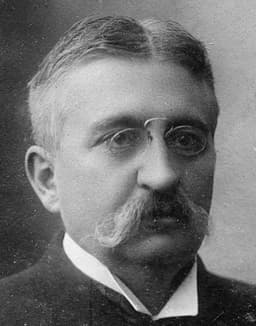
Jean Lannes
General · Modern
55.4Total
Basic Information
Born
1906
1769
Died
1990
1809
Era
Modern
Modern
Nationality
United States
France
Occupation
General
General
Civilization
Western
Western
Score Comparison
Military (10%)
78.5
78.5
Political (20%)
45.1
35.1
Influence (20%)
65.0
59.0
Legacy (20%)
55.0
56.0
Leadership (15%)
62.0
50.7
Strategy (15%)
80.3
58.8
TOTAL
61.9
55.4
Curtis LeMay — Complete Timeline
1942 AD
Assumed Command of the 305th Bombardment GroupOther◆ Major
LeMay took command of the 305th Bombardment Group in England in 1942. He implemented rigorous training and formation tactics that reduced bomber losses to German fighters, establishing his reputation as an innovative and demanding commander in the Eighth Air Force.
World War IIStrategic Bombing
Impact: national
1945 AD
Led the Firebombing of TokyoOther◆ Major
On March 9-10, 1945, LeMay ordered 334 B-29 bombers to conduct a low-altitude incendiary raid on Tokyo. The attack destroyed 16 square miles of the city, killed an estimated 100,000 civilians, and burned out over one million residents, marking a shift to area bombing of Japanese cities.
World War IIStrategic BombingCivilian Casualties
Impact: globaldestructive
1948 AD
Appointed Commander of Strategic Air CommandOther◆ Major
LeMay was appointed commander of the Strategic Air Command (SAC) in October 1948. He transformed SAC from a poorly organized force into a highly efficient nuclear deterrent, instituting rigorous training, 24-hour alert status, and a professional culture that defined Cold War air power.
Cold WarNuclear Deterrence
Impact: global
1961 AD
Became Chief of Staff of the United States Air ForceOther◆ Major
LeMay served as Chief of Staff of the U.S. Air Force from June 1961 to February 1965. He advocated for expanded bombing campaigns in the Vietnam War, including the bombing of North Vietnam, and clashed with civilian leadership over strategy, particularly during the Cuban Missile Crisis.
Cold WarVietnam WarMilitary Leadership
Impact: national
1968 AD
Ran for Vice President with George WallacePolitical Action
LeMay was the vice presidential running mate for American Independent Party candidate George Wallace in the 1968 presidential election. His controversial suggestion that nuclear weapons could be used in Vietnam damaged the campaign, which ultimately won 13.5% of the popular vote.
PoliticsPresidential Election
Impact: nationaldestructive
Jean Lannes — Complete Timeline
1800 AD
Battle of MontebelloWar
Lannes commanded a division that defeated an Austrian force at Montebello. His aggressive attack routed the Austrians, capturing 2,000 prisoners. This victory cleared the way for Napoleon's advance to the Battle of Marengo.
Napoleonic WarsBattleItalian Campaign
Impact: regional
1805 AD
Battle of AusterlitzWar◆ Major
Lannes commanded the French left wing, holding the Pratzen Heights against Russian attacks. His corps pinned down the Russian right, allowing Napoleon to crush the center. This victory was a masterpiece of tactical deception and sealed the fate of the Third Coalition.
Napoleonic WarsBattleDecisive Victory
Impact: global
1806 AD
Battle of JenaWar◆ Major
Lannes' corps led the French assault on the Prussian center at Jena. His troops stormed the heights and routed the Prussian army. This victory, combined with Davout's at Auerstedt, led to the complete collapse of Prussia within weeks.
Napoleonic WarsBattlePrussian Campaign
Impact: regional
1809 AD
Siege of SaragossaWar◆ Major
Lannes took command of the French siege of Saragossa after his predecessor was killed. He used systematic bombardment and house-to-house fighting to capture the city after two months. The siege was one of the bloodiest of the Peninsular War, with heavy civilian casualties.
Peninsular WarSiegeBrutality
Impact: regionaldestructive
Battle of Aspern-EsslingWar◆ Major
Lannes commanded the French center, holding the village of Essling against Austrian attacks. He was mortally wounded by a cannonball while rallying his troops. His death was a severe blow to Napoleon, who lost his closest friend and one of his best marshals.
Napoleonic WarsBattleDeath
Impact: regionaltragic
Expert Analysis
Origins
Curtis LeMay was born on November 15, 1906, in Columbus, Ohio, to a working-class family. His father was a laborer, and LeMay worked his way through Ohio State University, earning a degree in civil engineering in 1928. He joined the U.S. Army Air Corps in 1929, learning to fly from the ground up. Jean Lannes was born on April 10, 1769, in Lectoure, France, to a peasant family. He apprenticed as a dyer before joining the French Revolutionary Army in 1792 as a volunteer. Lannes' rise was based on battlefield bravery; he was promoted to sergeant within a year and later to colonel after leading a charge at the Battle of Lodi in 1796.
Rise to Power
LeMay's rise began in World War II. In 1942, he assumed command of the 305th Bombardment Group in England, where he implemented rigorous training and formation tactics that reduced bomber losses. His success led to command of the 3rd Air Division and later the 20th Air Force in the Pacific. By 1945, he was a major general. Lannes rose through the ranks under Napoleon. He distinguished himself at the Battle of Montebello in 1800, where his division defeated an Austrian force, capturing 2,000 prisoners. Napoleon made him a Marshal of the Empire in 1804, and he became one of Napoleon's closest friends and most trusted commanders.
Leadership & Governance
LeMay's leadership style was data-driven and ruthless. He transformed the Strategic Air Command (SAC) into a highly efficient nuclear deterrent force, emphasizing readiness and precision. He demanded strict discipline and efficiency, often clashing with political leaders. Lannes led by example, charging into battle with his troops. He was known for his aggressive tactics and personal courage. At the Siege of Saragossa in 1809, he used systematic bombardment and house-to-house fighting to crush resistance, a brutal but effective method. Both men were uncompromising in their military objectives, but LeMay operated at a strategic level while Lannes excelled in tactical command.
Triumph & Tragedy
LeMay's greatest triumph was the firebombing of Tokyo on March 9-10, 1945, which destroyed 16 square miles of the city and killed an estimated 100,000 civilians, crippling Japanese war production. His greatest failure was his advocacy for expanded bombing in Vietnam as Air Force Chief of Staff, which proved ineffective and controversial. He also ran as George Wallace's vice presidential candidate in 1968, a political disaster that tarnished his legacy. Lannes' triumph was at the Battle of Austerlitz in 1805, where he commanded the French left wing, holding the Pratzen Heights and pinning the Russian right, enabling Napoleon's decisive victory. His tragedy came at Aspern-Essling in 1809, where he was mortally wounded by a cannonball while rallying his troops, dying days later. Lannes also faced controversy for his harsh siege methods at Saragossa.
Character & Destiny
LeMay was cold, calculating, and unapologetic about using overwhelming force. He famously said, "If you kill enough of them, they'll stop fighting." His character drove him to embrace strategic bombing despite moral costs, shaping his legacy as a controversial figure. Lannes was fiery, loyal, and fearless. Napoleon called him "the Roland of the army." His impulsiveness led him to the front lines, which ultimately caused his death. Both men were shaped by their eras: LeMay by the Cold War and nuclear strategy, Lannes by the Napoleonic Wars and personal loyalty to a charismatic leader.
Legacy
LeMay's legacy is mixed. He is credited with building the U.S. Air Force's strategic bombing capability, influencing Cold War deterrence. His firebombing tactics set precedents for area bombing, but also raised ethical questions that persist. His military score is 78.5, leadership 62.0, strategy 80.3. Lannes is remembered as one of Napoleon's finest marshals, his tactics studied in military academies. His legacy is more traditional, focused on battlefield leadership. He scored 78.5 military, 50.7 leadership, 58.8 strategy. LeMay's influence (65.0) and legacy (55.0) are higher than Lannes' (59.0 and 56.0), reflecting broader strategic impact.
Conclusion
Curtis LeMay had greater historical impact due to his role in shaping strategic bombing and nuclear deterrence, which influenced global warfare for decades. While Lannes was a superb tactical commander, LeMay's decisions affected millions and defined modern air power. LeMay's total score of 61.9 surpasses Lannes' 55.4, and his strategy score of 80.3 dwarfs Lannes' 58.8. Despite Lannes' personal bravery and loyalty, LeMay's strategic and organizational contributions to military history are more enduring. Therefore, Curtis LeMay is the more consequential figure.
Rankings
🥇
Curtis LeMayLeader
Mil: 78.5Pol: 45.1Inf: 65.0
61.9
🥈
Jean Lannes
Mil: 78.5Pol: 35.1Inf: 59.0
55.4
+6.5 behind
How This Comparison Works
Algorithm
Each figure is scored on 6 dimensions (0—100 scale) based on structured historical data: Military (10%), Political (20%), Influence (20%), Legacy (20%), Leadership (15%), Strategy (15%). The weighted total produces the final ranking.
Data Sources
Scores are computed from structured sub-indicators in the database. Scale factors adjust for era (Ancient ×0.85, Modern ×1.0) and civilization size (Eastern ×1.05, Other ×0.80) to account for differences in population and military scale.
Maximum 3 Figures
Comparisons are limited to 2—3 figures to ensure readability and statistical meaningfulness.
Error Margins
±5 points per dimension — Sub-scores are derived from historical records with inherent uncertainty. Two figures within 5 points on a dimension should be considered roughly equivalent in that area.
Total Score Accuracy
±3 points overall — The weighted combination of 6 dimensions produces a total score with approximately ±3 points of uncertainty. Differences of less than 3 points are not statistically significant— the figures are effectively tied.
Known Limitations
- Historical records are incomplete and uneven across civilizations
- Figures from oral-tradition societies may be underrepresented
- Occupation labels can misclassify multi-role figures
- Scores measure capability and impact, not moral character
- Quantitative scoring is a comparison tool, not absolute truth
Capability Radar
Military (10%) — Battles & Warfare
Battles
85
85
Win Rate
90
90
Expansion
80
80
Political (20%) — Governance & Reform
Reform
45
20
Diplomacy
30
25
Economy
20
15
Influence (20%) — Cultural & Global Reach
Cultural
55
45
Global
70
40
Legacy (20%) — Historical Impact
Historical
75
60
Longevity
60
50
Leadership (15%) — Power & Stability
Tenure
60
30
Stability
25
20
Strategy (15%) — Tactics & Innovation
Strategy
92
75
Tactics
95
88
Reform
88
40
Similar Comparisons
Comments & Discussion
No comments yet. Be the first to share your thoughts!