Loading...
Analysis will be generated on first visit.
Scores and timeline are available below. The page will refresh automatically when ready.
Cyril Ramaphosa vs Napoleon Bonaparte
Napoleon Bonaparte leads by 18.6 pts · 2 figures compared
…

Cyril Ramaphosa
Politician · Modern
63.8Total
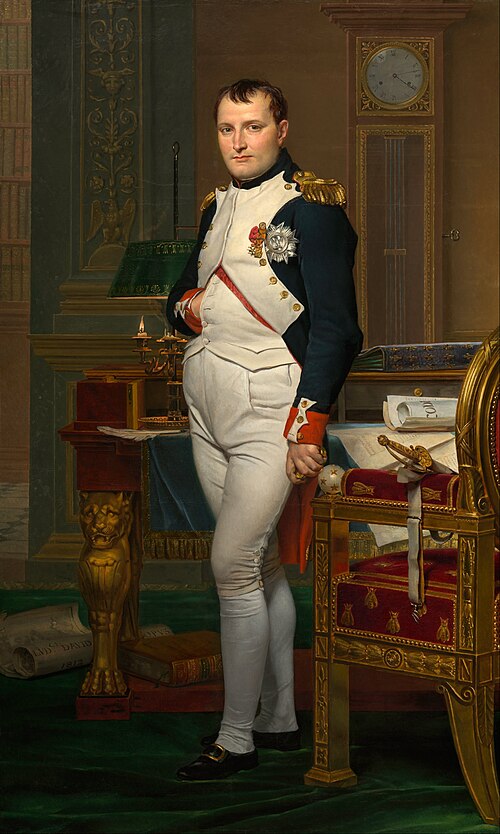
Napoleon Bonaparte
General · Modern
82.4Total
Basic Information
Born
1952
1769
Died
—
1821
Era
Modern
Modern
Nationality
South Africa
France
Occupation
Politician
General
Civilization
Other
Western
Score Comparison
Military (10%)
30.2
94.0
Political (20%)
72.0
75.0
Influence (20%)
73.5
82.0
Legacy (20%)
62.3
78.0
Leadership (15%)
72.0
80.0
Strategy (15%)
56.4
93.0
TOTAL
63.8
82.4
Rankings
🥇
Napoleon BonaparteLeader
Mil: 94.0Pol: 75.0Inf: 82.0
82.4
🥈
Cyril Ramaphosa
Mil: 30.2Pol: 72.0Inf: 73.5
63.8
+18.6 behind
How This Comparison Works
Algorithm
Each figure is scored on 6 dimensions (0—100 scale) based on structured historical data: Military (10%), Political (20%), Influence (20%), Legacy (20%), Leadership (15%), Strategy (15%). The weighted total produces the final ranking.
Data Sources
Scores are computed from structured sub-indicators in the database. Scale factors adjust for era (Ancient ×0.85, Modern ×1.0) and civilization size (Eastern ×1.05, Other ×0.80) to account for differences in population and military scale.
Maximum 3 Figures
Comparisons are limited to 2—3 figures to ensure readability and statistical meaningfulness.
Error Margins
±5 points per dimension — Sub-scores are derived from historical records with inherent uncertainty. Two figures within 5 points on a dimension should be considered roughly equivalent in that area.
Total Score Accuracy
±3 points overall — The weighted combination of 6 dimensions produces a total score with approximately ±3 points of uncertainty. Differences of less than 3 points are not statistically significant— the figures are effectively tied.
Known Limitations
- Historical records are incomplete and uneven across civilizations
- Figures from oral-tradition societies may be underrepresented
- Occupation labels can misclassify multi-role figures
- Scores measure capability and impact, not moral character
- Quantitative scoring is a comparison tool, not absolute truth
Capability Radar
Military (10%) — Battles & Warfare
Battles
24
95
Win Rate
23
90
Expansion
27
95
Political (20%) — Governance & Reform
Reform
60
95
Diplomacy
65
80
Economy
55
85
Influence (20%) — Cultural & Global Reach
Cultural
40
85
Global
50
90
Legacy (20%) — Historical Impact
Historical
45
95
Longevity
30
90
Leadership (15%) — Power & Stability
Tenure
55
85
Stability
45
70
Strategy (15%) — Tactics & Innovation
Strategy
33
95
Tactics
31
98
Reform
39
92
Analysis will be generated on first visit.
Scores and timeline are available below. The page will refresh automatically when ready.
Cyril Ramaphosa — Complete Timeline
1982 AD
Led NUM and Played Key Role in Anti-Apartheid StrugglePolitical Action◆ Major
Ramaphosa co-founded the National Union of Mineworkers (NUM) and became its General Secretary. He led strikes and negotiations, becoming a prominent figure in the anti-apartheid movement and the Congress of South African Trade Unions (COSATU).
Union LeadershipAnti-ApartheidSouth Africa
Impact: nationalconstructive
1994 AD
Chaired the Constitutional AssemblyPolitical Action
Ramaphosa chaired the Constitutional Assembly that drafted South Africa's post-apartheid constitution. The constitution, adopted in 1996, established a democratic framework and bill of rights.
ConstitutionDemocracySouth Africa
Impact: nationalconstructive
2018 AD
Elected President of South AfricaPolitical Action◆ Major
Cyril Ramaphosa was elected President of South Africa by the National Assembly after Jacob Zuma resigned. He had previously served as Deputy President and was seen as a reformist leader.
ElectionSouth AfricaSuccession
Impact: nationalconstructive
Launched 'Thuma Mina' PresidencyPolitical Action◆ Major
Ramaphosa launched his presidency with the 'Thuma Mina' (Send Me) initiative, emphasizing anti-corruption and economic revival. He pledged to restore the credibility of state institutions and attract investment.
PresidencySouth AfricaReform
Impact: nationalconstructive
Farm Attacks and Land Reform DebatePolitical Action◆ Major
Ramaphosa's government pursued land reform, including a constitutional amendment to allow expropriation without compensation. The policy sparked intense debate and was criticized by some as threatening property rights.
Land ReformSouth AfricaPolicy
Impact: national
2020 AD
COVID-19 Pandemic ResponsePolitical Action◆ Major
Ramaphosa's government implemented one of the strictest lockdowns in the world to combat COVID-19. The response included a massive economic stimulus package and social grants, but also faced criticism for enforcement and economic damage.
Pandemic ResponsePublic HealthSouth Africa
Impact: national
Similar Comparisons
Comments & Discussion
No comments yet. Be the first to share your thoughts!