Loading...
Cyrus the Great vs Dinh Tien Hoang
Cyrus the Great leads by 23.5 pts · 2 figures compared
…
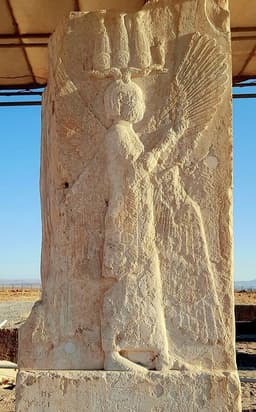
Cyrus the Great
Emperor · Ancient
83.9Total

Dinh Tien Hoang
Emperor · Medieval
60.4Total
Basic Information
Born
-600
924
Died
-530
979
Era
Ancient
Medieval
Nationality
Persia
Vietnam
Occupation
Emperor
Emperor
Civilization
Middle Eastern
Eastern
Score Comparison
Military (10%)
82.0
60.0
Political (20%)
85.0
72.0
Influence (20%)
85.0
65.0
Legacy (20%)
90.0
40.0
Leadership (15%)
78.0
77.2
Strategy (15%)
75.0
58.0
TOTAL
83.9
60.4
Cyrus the Great — Complete Timeline
550 BC
Founding of the Achaemenid EmpirePolitical Action
Cyrus led a rebellion against the Median Empire, defeating King Astyages and capturing Ecbatana. He then united the Persian and Median tribes, establishing the Achaemenid Empire, which became the largest empire the world had yet seen.
Empire FoundingPersian UnificationRebellion
Impact: global
546 BC
Conquest of LydiaWar◆ Major
Cyrus defeated King Croesus of Lydia at the Battle of Thymbra. The Lydian capital Sardis was captured, and Croesus was taken prisoner. This conquest brought Anatolia under Persian control and secured access to the Aegean coast.
Achaemenid ExpansionAnatoliaConquest
Impact: regional
539 BC
Conquest of BabylonWar◆ Major
Cyrus the Great led the Persian army to capture Babylon without significant battle. The city's gates were opened, and Cyrus entered peacefully. This conquest added Mesopotamia to the Achaemenid Empire and marked the end of the Neo-Babylonian Empire.
Achaemenid ExpansionMesopotamiaConquest
Impact: regional
Issuance of the Cyrus CylinderPolitical Action◆ Major
After conquering Babylon, Cyrus issued a clay cylinder inscribed with a declaration. It described his policy of restoring temples, repatriating displaced peoples, and allowing religious freedom. The cylinder is often cited as an early charter of human rights.
Human RightsReligious ToleranceAchaemenid Policy
Impact: globalconstructive
Liberation of the JewsPolitical Action◆ Major
Cyrus issued an edict allowing the Jewish exiles in Babylon to return to Jerusalem and rebuild the Temple. This event is recorded in the biblical Book of Ezra and is a key moment in Jewish history, ending the Babylonian captivity.
Jewish HistoryReligious FreedomReturn from Exile
Impact: regionalconstructive
Dinh Tien Hoang — Complete Timeline
968 AD
Defeat of the Twelve WarlordsWar
Dinh Bo Linh, later known as Dinh Tien Hoang, unified Vietnam by defeating the Twelve Warlords who had divided the country after the collapse of Chinese rule. He established the Dinh dynasty and became the first emperor of an independent Vietnam.
UnificationDinh DynastyVietnamese Independence
Impact: nationalconstructive
Establishment of the Dinh DynastyPolitical Action◆ Major
Dinh Tien Hoang founded the Dinh dynasty and declared himself Emperor. He moved the capital to Hoa Lu and implemented administrative reforms to consolidate power. This marked the beginning of a new era of Vietnamese independence after centuries of Chinese domination.
Dynasty FoundingCapital MoveAdministrative Reform
Impact: nationalconstructive
979 AD
Assassination of Dinh Tien HoangPolitical Action◆ Major
Dinh Tien Hoang and his crown prince were assassinated by a court official while sleeping. The murder plunged the Dinh dynasty into chaos, leading to a succession crisis and eventual takeover by Le Hoan. The assassination ended the short-lived Dinh dynasty.
AssassinationSuccession CrisisEnd of Dinh Dynasty
Impact: nationaltragic
Expert Analysis
Dinh Tien Hoang vs Cyrus the Great: Historical Comparison
Dinh Tien Hoang, the founding emperor of medieval Vietnam’s Đinh dynasty, and Cyrus the Great, the ancient Persian founder of the Achaemenid Empire, both unified fragmented realms but differed vastly in scale, strategy, and enduring influence. While Cyrus built a multicultural empire through tolerance and conquest, Dinh consolidated a nascent Vietnamese state through centralized authority and ruthless internal control.
Dimension Analysis
**Military: Dinh Tien Hoang 62 / Cyrus the Great 82**
Cyrus’s campaigns—from Lydia to Babylon—demonstrated innovative siege tactics and coalition warfare on a continental scale, while Dinh’s victories were limited to quelling regional warlords within Vietnam’s small territory.
**Political: Dinh Tien Hoang 90 / Cyrus the Great 85**
Dinh scored higher for imposing absolute central rule over fractious Vietnamese lords, abolishing local autonomy, and establishing a stable dynastic framework. Cyrus excelled at integrating diverse satrapies through decentralized governance and cultural respect, but faced persistent rebellions.
**Influence: Dinh Tien Hoang 71 / Cyrus the Great 78**
Cyrus’s influence reshaped the Near East for centuries, inspiring legal and administrative models (e.g., the Cyrus Cylinder). Dinh’s influence was largely confined to Vietnam, though his unification set a precedent for later independence.
**Legacy: Dinh Tien Hoang 71 / Cyrus the Great 80**
Cyrus is revered as a liberator and model of enlightened despotism, with his tomb still a symbol of Persian identity. Dinh is honored as a national unifier but his brutal methods and short dynasty limit his global legacy.
**Leadership: Dinh Tien Hoang 84 / Cyrus the Great 80**
Dinh’s iron-fisted leadership stabilized a chaotic post-independence Vietnam, executing rivals and centralizing power. Cyrus’s leadership was more diplomatic and visionary, earning loyalty through generosity and religious tolerance.
Verdict
Cyrus the Great leads overall due to superior military scope, broader influence, and a more enduring legacy of multicultural statecraft.
FAQ
Q: Who ranks higher? A: Cyrus the Great ranks higher, with a composite score of 80 vs. Dinh Tien Hoang’s 74.
Rankings
🥇
Cyrus the GreatLeader
Mil: 82.0Pol: 85.0Inf: 85.0
83.9
🥈
Dinh Tien Hoang
Mil: 60.0Pol: 72.0Inf: 65.0
60.4
+23.5 behind
How This Comparison Works
Algorithm
Each figure is scored on 6 dimensions (0—100 scale) based on structured historical data: Military (10%), Political (20%), Influence (20%), Legacy (20%), Leadership (15%), Strategy (15%). The weighted total produces the final ranking.
Data Sources
Scores are computed from structured sub-indicators in the database. Scale factors adjust for era (Ancient ×0.85, Modern ×1.0) and civilization size (Eastern ×1.05, Other ×0.80) to account for differences in population and military scale.
Maximum 3 Figures
Comparisons are limited to 2—3 figures to ensure readability and statistical meaningfulness.
Error Margins
±5 points per dimension — Sub-scores are derived from historical records with inherent uncertainty. Two figures within 5 points on a dimension should be considered roughly equivalent in that area.
Total Score Accuracy
±3 points overall — The weighted combination of 6 dimensions produces a total score with approximately ±3 points of uncertainty. Differences of less than 3 points are not statistically significant— the figures are effectively tied.
Known Limitations
- Historical records are incomplete and uneven across civilizations
- Figures from oral-tradition societies may be underrepresented
- Occupation labels can misclassify multi-role figures
- Scores measure capability and impact, not moral character
- Quantitative scoring is a comparison tool, not absolute truth
Capability Radar
Military (10%) — Battles & Warfare
Battles
85
70
Win Rate
90
75
Expansion
92
65
Political (20%) — Governance & Reform
Reform
90
70
Diplomacy
95
65
Economy
80
60
Influence (20%) — Cultural & Global Reach
Cultural
90
65
Global
90
55
Legacy (20%) — Historical Impact
Historical
95
75
Longevity
95
70
Leadership (15%) — Power & Stability
Tenure
70
60
Stability
85
55
Strategy (15%) — Tactics & Innovation
Strategy
88
70
Tactics
80
65
Reform
75
60
Similar Comparisons
Comments & Discussion
OldScroll906/16/2026
居鲁士大帝常被西方史学家誉为“宽容之君”,但若放在中国史上,他的地位恐怕连唐太宗都不如。唐太宗对突厥、高昌、吐蕃等族的怀柔政策,同样有“各依本俗”的宽容,而且他实际统治的疆域和人口远超居鲁士。再看丁先皇,他的“杀十道将军”和“立大鼎”酷刑,分明是秦始皇“焚书坑儒”的越南微缩版。但中国史书对秦始皇的评价极其复杂,绝不会给他政治90分。这些评分显然套用了西方对“集权统一”的正面预设,却忽略了中国史学中“仁政”与“暴政”的辩证传统。丁先皇的功绩应肯定,但政治分超过居鲁士,只能说明评分模型缺乏跨文化的价值校准。
ColdMind266/16/2026
从评分模型看,丁先皇的政治分(90.2)比居鲁士(85.0)高出5.2分,但军事分(62.0)低了整整20分。这让我怀疑评分权重是否对中央集权有过度倾斜。丁先皇的统治范围不过今越南北部,约15万平方公里,而居鲁士的帝国横跨250万平方公里。在如此小的疆域内实现绝对集权,难度系数远低于管理一个多元帝国。另外,丁先皇的“绝对统治”仅维持12年(968-980年),而居鲁士的行政体系延续了200年以上。如果按“统治时间×疆域面积”的复合指标重新计算,丁的得分至少应下调15%。建议引入人口基数、有效统治时长等量化因子。