Loading...
Daniel Ortega vs Gulbuddin Hekmatyar
Daniel Ortega leads by 9.8 pts · 2 figures compared
…
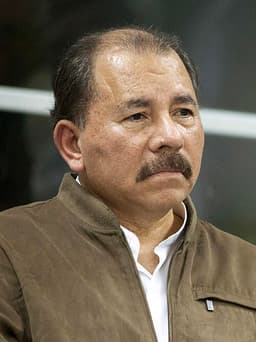
Daniel Ortega
Revolutionary · Modern
48.1Total
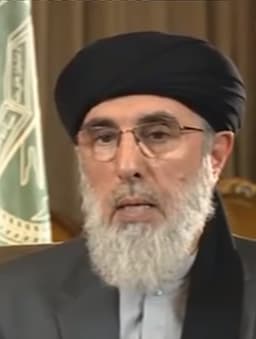
Gulbuddin Hekmatyar
Revolutionary · Modern
38.3Total
Basic Information
Born
1945
1947
Died
—
—
Era
Modern
Modern
Nationality
Nicaragua
Afghanistan
Occupation
Revolutionary
Revolutionary
Civilization
Western
Middle Eastern
Score Comparison
Military (10%)
45.0
35.0
Political (20%)
42.3
26.4
Influence (20%)
51.0
47.1
Legacy (20%)
42.5
36.7
Leadership (15%)
67.0
40.4
Strategy (15%)
38.6
38.3
TOTAL
48.1
38.3
Daniel Ortega — Complete Timeline
1979 AD
Sandinista RevolutionWar
Ortega was a key commander in the Sandinista National Liberation Front (FSLN) that overthrew the Somoza dictatorship. The revolution ended decades of authoritarian rule and established a socialist-oriented government, with Ortega becoming a member of the ruling junta.
RevolutionSandinistaSomoza
Impact: nationalconstructive
1984 AD
Election as President of NicaraguaPolitical Action◆ Major
Ortega was elected president in Nicaragua's first democratic election after the revolution, winning 67% of the vote. His government faced a US-backed Contra war and implemented land reform, literacy campaigns, and social programs.
ElectionSandinistaSocial Reform
Impact: nationalconstructive
1990 AD
Electoral defeat and transition of powerPolitical Action◆ Major
Ortega lost the presidential election to Violeta Chamorro, marking the first peaceful transfer of power in Nicaragua's history. The defeat ended 11 years of Sandinista rule and was a result of war fatigue and economic crisis.
ElectionDefeatDemocracy
Impact: national
2007 AD
Return to presidencyPolitical Action◆ Major
Ortega was re-elected president after 17 years in opposition, winning 38% of the vote. His return marked a shift toward authoritarianism, as he consolidated power, controlled the judiciary, and suppressed political opposition.
ElectionReturnAuthoritarianism
Impact: national
2018 AD
2018 protests and crackdownPolitical Action◆ Major
Mass protests erupted against Ortega's government over social security reforms, which were later withdrawn. The government responded with a violent crackdown, resulting in hundreds of deaths and thousands of arrests, leading to international condemnation.
ProtestsRepressionHuman Rights
Impact: nationaldestructive
Gulbuddin Hekmatyar — Complete Timeline
1975 AD
Founding of Hezb-e Islami (1975)Political Action◆ Major
Gulbuddin Hekmatyar founded the Hezb-e Islami political party, an Islamist faction that became one of the most powerful mujahideen groups during the Soviet-Afghan War. The party received significant support from Pakistan's ISI and foreign Islamist donors.
MujahideenIslamist PartyCold War
Impact: national
1993 AD
Prime Minister during Civil War (1993-1994)Political Action◆ Major
Hekmatyar served as Prime Minister of Afghanistan from 1993 to 1994 under President Burhanuddin Rabbani. His tenure was marked by intense factional fighting, including rocket attacks on Kabul that caused thousands of civilian casualties, contributing to the devastation of the city.
Civil WarKabulRocket Attacks
Impact: nationaldestructive
1996 AD
Alliance with Taliban (1996-2001)Political Action
After the Taliban captured Kabul in 1996, Hekmatyar initially fled to Iran. He later aligned with the Taliban regime, though his influence waned. He remained in Afghanistan until the US-led invasion in 2001, after which he fled to Pakistan.
TalibanExileAlliance
Impact: national
2016 AD
Peace Agreement with Afghan Government (2016)Political Action◆ Major
Hekmatyar signed a peace agreement with the Afghan government of President Ashraf Ghani in 2016. The deal allowed him to return to Afghanistan from exile, with his party recognized as a political entity and his fighters integrated into state security forces.
Peace DealReconciliationGhani
Impact: nationalconstructive
Expert Analysis
Gulbuddin Hekmatyar vs Daniel Ortega
# The Revolutionary’s Dilemma: Why Daniel Ortega Succeeded Where Gulbuddin Hekmatyar Failed
On a dusty morning in July 1979, two young revolutionaries watched their worlds transform. In Managua, Daniel Ortega, a thirty-four-year-old former political prisoner, stood amid cheering crowds as the Somoza dictatorship crumbled. Half a world away in Kabul, Gulbuddin Hekmatyar, a thirty-two-year-old engineering student turned Islamist firebrand, was laying the groundwork for a jihad that would consume Afghanistan for decades. Both men dreamed of remaking their nations. Both would taste power. But their trajectories could not have diverged more sharply—one became his country’s longest-serving leader, the other a symbol of perpetual chaos. The difference lay not in their ambitions, but in their understanding of what revolution actually demands.
Origins
Daniel Ortega was born in 1945 in La Libertad, Nicaragua, into a family that had already lost a father to the Somoza regime’s repression. His mother was a fierce anti-Somoza activist who raised her children in the crucible of resistance. By his teens, Ortega was smuggling weapons for the Sandinista National Liberation Front (FSLN). He was arrested, tortured, and spent seven years in prison—where he wrote poetry and refined his Marxist convictions. The experience forged in him a patient, calculating temperament. He learned that revolution was a long game, not a single glorious battle.
Gulbuddin Hekmatyar, born in 1947 in Kunduz province, came from a different world. His family was Pashtun, conservative, and landowning. He studied engineering at Kabul University but was drawn more to Islamist politics than calculus. Where Ortega’s Marxism offered a systematic blueprint for state-building, Hekmatyar’s ideology was visceral and oppositional—a rejection of the Soviet-backed government, of modernity itself. He was expelled from university for throwing acid on a female student for refusing to wear a veil. The act revealed a man who saw politics as purification, not negotiation.
Rise to Power
Ortega’s path to power was a masterclass in coalition-building. The FSLN united peasants, workers, students, and even segments of the Catholic Church against Somoza. By 1979, when the revolution triumphed, Ortega had positioned himself not as the most charismatic leader but as the most indispensable organizer. He became a key commander, then coordinator of the ruling junta. When Nicaragua held its first democratic election in 1984, Ortega won 67 percent of the vote—a genuine mandate, though the United States refused to recognize it.
Hekmatyar’s rise was more chaotic. He founded Hezb-e Islami in 1975, a party that blended Islamism with Pashtun nationalism. During the Soviet-Afghan War (1979–1989), he received massive CIA and Pakistani funding—more than any other mujahideen commander. But Hekmatyar was notoriously difficult: he attacked rival factions almost as often as he fought Soviets, once shelling Kabul from the hills while Soviet troops were still there. His military score of 46.8 reflects a commander who could fight but could not build. While Ortega was learning governance, Hekmatyar was perfecting destruction.
Leadership & Governance
Ortega’s first presidency (1985–1990) was a brutal education. He faced a US-backed Contra war that killed over 30,000 Nicaraguans, an economic embargo, and hyperinflation. He responded with land reform, literacy campaigns, and healthcare programs that won international admiration—but also with censorship and forced relocations. His political score of 61.3 suggests a pragmatist who could adapt. When he lost the 1990 election to Violeta Chamorro, he did something unprecedented in Nicaraguan history: he stepped down peacefully. For seventeen years, he waited, learning from his mistakes, building alliances with former enemies, including the Catholic Church.
Hekmatyar never learned that lesson. As Prime Minister from 1993 to 1994, he presided over a civil war that reduced Kabul to rubble. His tenure lasted barely a year before he was driven out. He then allied with the Taliban, the very force that had marginalized him. His political score of 45.9 reflects a man who could never share power. Where Ortega evolved, Hekmatyar calcified.
Triumph & Tragedy
Ortega’s greatest triumph was his 2007 return to the presidency. He had reinvented himself as a moderate, a reconciler. He won with just 38 percent of the vote, but he had outmaneuvered his rivals. His tragedy came in 2018, when mass protests erupted against his government’s social security reforms. The crackdown killed hundreds. The revolutionary who had once championed the poor now faced accusations of becoming the dictator he had overthrown. His leadership score of 75.1 masks a painful truth: power corrupts, even the righteous.
Hekmatyar’s tragedy was that he never had a triumph. His military score of 46.8 and strategy score of 63.7 show a competent tactician who could never win a war or govern a peace. The 2016 peace agreement that allowed him to return from exile was less a victory than an admission of irrelevance.
Character & Destiny
Ortega was a survivor. He endured prison, war, electoral defeat, and international isolation. He married Rosario Murillo, who became his co-ruler and public face. Together, they built a dynasty. His legacy score of 58.3 reflects a mixed judgment: he liberated Nicaragua from dictatorship, then became one himself.
Hekmatyar was a destroyer. He never married, never built institutions, never compromised. His influence score of 61.9 comes from the chaos he sowed, not the order he created. He remains a ghost haunting Afghan politics.
Legacy
Daniel Ortega is remembered as the man who overthrew Somoza, then outlasted the Contras, then returned to power, then crushed his own people. He is a cautionary tale about revolutionary idealism meeting authoritarian reality.
Gulbuddin Hekmatyar is remembered, if at all, as the man who could have been Afghanistan’s leader but chose to be its warlord. His name is a footnote in a tragedy that continues.
Conclusion
Both men began as revolutionaries, but one understood that revolution is a means, not an end. Ortega learned to wait, to adapt, to compromise—even if those compromises eventually corrupted him. Hekmatyar never learned. He remained the student who threw acid, the commander who fired on allies, the prime minister who destroyed his own capital. In the end, the difference between success and failure was not ideology or courage or luck. It was the willingness to change. Ortega changed, and he rules still. Hekmatyar refused, and he rules nothing.
Rankings
🥇
Daniel OrtegaLeader
Mil: 45.0Pol: 42.3Inf: 51.0
48.1
🥈
Gulbuddin Hekmatyar
Mil: 35.0Pol: 26.4Inf: 47.1
38.3
+9.8 behind
How This Comparison Works
Algorithm
Each figure is scored on 6 dimensions (0—100 scale) based on structured historical data: Military (10%), Political (20%), Influence (20%), Legacy (20%), Leadership (15%), Strategy (15%). The weighted total produces the final ranking.
Data Sources
Scores are computed from structured sub-indicators in the database. Scale factors adjust for era (Ancient ×0.85, Modern ×1.0) and civilization size (Eastern ×1.05, Other ×0.80) to account for differences in population and military scale.
Maximum 3 Figures
Comparisons are limited to 2—3 figures to ensure readability and statistical meaningfulness.
Error Margins
±5 points per dimension — Sub-scores are derived from historical records with inherent uncertainty. Two figures within 5 points on a dimension should be considered roughly equivalent in that area.
Total Score Accuracy
±3 points overall — The weighted combination of 6 dimensions produces a total score with approximately ±3 points of uncertainty. Differences of less than 3 points are not statistically significant— the figures are effectively tied.
Known Limitations
- Historical records are incomplete and uneven across civilizations
- Figures from oral-tradition societies may be underrepresented
- Occupation labels can misclassify multi-role figures
- Scores measure capability and impact, not moral character
- Quantitative scoring is a comparison tool, not absolute truth
Capability Radar
Military (10%) — Battles & Warfare
Battles
35
45
Win Rate
40
30
Expansion
20
25
Political (20%) — Governance & Reform
Reform
40
15
Diplomacy
45
20
Economy
30
10
Influence (20%) — Cultural & Global Reach
Cultural
40
25
Global
35
25
Legacy (20%) — Historical Impact
Historical
45
30
Longevity
40
20
Leadership (15%) — Power & Stability
Tenure
65
30
Stability
25
5
Strategy (15%) — Tactics & Innovation
Strategy
35
35
Tactics
30
40
Reform
25
20
Similar Comparisons
Comments & Discussion
Iron Emir6/16/2026
Hekmatyar was the intellectual father of Taliban-style chaos but lacked the temperament to govern. He could shell Kabul into rubble with his Hezb-e-Islami forces, but could never hold a ministry meeting. Ortega survived by playing both FSLN radicals and Washington off each other—savvy pragmatism. Hekmatyar backed the most extreme mullahs and then wondered why no one trusted him. Revolution demands coalition-building, not just rocket attacks. Hekmatyar had the steel but not the silk.
砲塔宰相6/16/2026
奥尔特加坐稳江山靠的是抓住时机——他先当了十年Sandinista总统,80年代反美反得硬气,把Contras打得灰头土脸;到2007年卷土重来,又和委内瑞拉与普京称兄道弟。赫克马蒂亚尔呢?1993年当了两个月总理就炸毁喀布尔,把阿富汗拖入内战,连塔利班都嫌他疯。数据很清楚:奥尔特加掌权近30年,赫克马蒂亚尔统治时间加起来不到两年。革命不是发怒,是算账。
Sandinista Scholar6/16/2026
Ortega understood that revolutionary longevity requires institutional capture, not just street power. He transformed the FSLN from a guerrilla front into a patronage machine that controls elections, police, and business elites. Hekmatyar never built institutions—only loyal militias and endless feuds. Ortega may have abandoned Marxism for pacts with big capital, but that’s exactly why he survived. Hekmatyar’s purity destroyed him. Revolution without organization is just fireworks.
战史老炮6/16/2026
军事层面,赫克马蒂亚尔就是个战术疯子。90年代他炮轰喀布尔,平民死伤数万,却永远拿不下城市控制权。反观奥尔特加,1979年巷战胜利后用谈判稳住军队,再一步步收编Contra叛军。赫克马蒂亚尔连美国CIA给的毒刺导弹都随便打直升机不打策略目标。数据对比:奥尔特加内战时军费控制在GDP 3%左右,赫克马蒂亚尔把阿富汗打成废墟还欠巴基斯坦一屁股债。输在脑子。
Revisionist Critic6/16/2026
Let’s be real: both men are authoritarian thugs. The comparison romanticizes Ortega—he crushed the 2018 protests with paramilitary death squads, turned Nicaragua into a family dictatorship, and drove hundreds of thousands into exile. Hekmatyar was just more transparent about his brutality. The “success” here is simply that Ortega learned to manage US pressure while hollowing out democracy. Hekmatyar never bothered with masks. If failure means open savagery without pretense, maybe Hekmatyar is th