Loading...
Daniel Ortega vs Ho Chi Minh
Ho Chi Minh leads by 14.8 pts · 2 figures compared
…
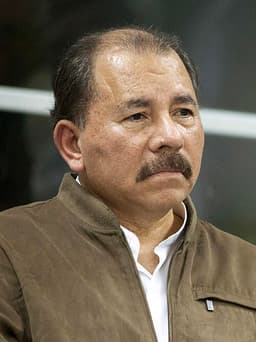
Daniel Ortega
Revolutionary · Modern
48.1Total
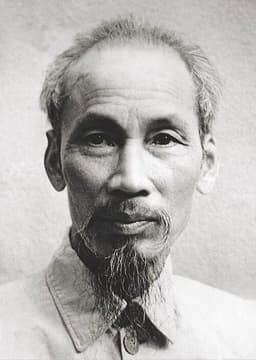
Ho Chi Minh
Revolutionary · Modern
62.9Total
Basic Information
Born
1945
1890
Died
—
1969
Era
Modern
Modern
Nationality
Nicaragua
Vietnam
Occupation
Revolutionary
Revolutionary
Civilization
Western
Eastern
Score Comparison
Military (10%)
45.0
55.0
Political (20%)
42.3
72.0
Influence (20%)
51.0
62.0
Legacy (20%)
42.5
58.0
Leadership (15%)
67.0
72.0
Strategy (15%)
38.6
58.0
TOTAL
48.1
62.9
Daniel Ortega — Complete Timeline
1979 AD
Sandinista RevolutionWar
Ortega was a key commander in the Sandinista National Liberation Front (FSLN) that overthrew the Somoza dictatorship. The revolution ended decades of authoritarian rule and established a socialist-oriented government, with Ortega becoming a member of the ruling junta.
RevolutionSandinistaSomoza
Impact: nationalconstructive
1984 AD
Election as President of NicaraguaPolitical Action◆ Major
Ortega was elected president in Nicaragua's first democratic election after the revolution, winning 67% of the vote. His government faced a US-backed Contra war and implemented land reform, literacy campaigns, and social programs.
ElectionSandinistaSocial Reform
Impact: nationalconstructive
1990 AD
Electoral defeat and transition of powerPolitical Action◆ Major
Ortega lost the presidential election to Violeta Chamorro, marking the first peaceful transfer of power in Nicaragua's history. The defeat ended 11 years of Sandinista rule and was a result of war fatigue and economic crisis.
ElectionDefeatDemocracy
Impact: national
2007 AD
Return to presidencyPolitical Action◆ Major
Ortega was re-elected president after 17 years in opposition, winning 38% of the vote. His return marked a shift toward authoritarianism, as he consolidated power, controlled the judiciary, and suppressed political opposition.
ElectionReturnAuthoritarianism
Impact: national
2018 AD
2018 protests and crackdownPolitical Action◆ Major
Mass protests erupted against Ortega's government over social security reforms, which were later withdrawn. The government responded with a violent crackdown, resulting in hundreds of deaths and thousands of arrests, leading to international condemnation.
ProtestsRepressionHuman Rights
Impact: nationaldestructive
Ho Chi Minh — Complete Timeline
1941 AD
Establishment of the Viet MinhPolitical Action◆ Major
Ho Chi Minh founded the Viet Minh (League for the Independence of Vietnam) in southern China. This coalition of nationalist and communist groups became the primary force for Vietnamese independence, fighting both Japanese occupation and French colonialism.
Viet MinhIndependence MovementWorld War II
Impact: nationalconstructive
1945 AD
Declaration of Independence of VietnamPolitical Action
Ho Chi Minh proclaimed the Democratic Republic of Vietnam in Hanoi's Ba Dinh Square, citing the US Declaration of Independence. This established the Viet Minh government and began the struggle for independence from French colonial rule.
IndependenceVietnamDecolonization
Impact: nationalconstructive
1954 AD
Battle of Dien Bien PhuWar
Ho Chi Minh's Viet Minh forces, under General Giap, defeated the French garrison at Dien Bien Phu. This victory ended French colonial rule in Indochina and led to the Geneva Accords dividing Vietnam at the 17th parallel.
Vietnam WarDecolonizationFrench Indochina
Impact: regional
Geneva AccordsPolitical Action◆ Major
Ho Chi Minh's delegation signed the Geneva Accords, temporarily dividing Vietnam at the 17th parallel. The agreement promised nationwide elections in 1956, which were never held, leading to the permanent division of Vietnam.
Geneva ConferenceDivision of VietnamDiplomacy
Impact: regional
1959 AD
Start of the Vietnam WarWar
Ho Chi Minh's government in North Vietnam authorized armed struggle against the US-backed South Vietnamese regime. This escalated into the Vietnam War, a prolonged conflict that resulted in millions of deaths and US withdrawal in 1973.
Vietnam WarCold WarCommunism
Impact: globaldestructive
Expert Analysis
Ho Chi Minh vs Daniel Ortega
### The Revolutionary’s Dilemma
In the autumn of 1945, Ho Chi Minh stood before a crowd in Hanoi’s Ba Dinh Square and read a declaration of independence that borrowed freely from Thomas Jefferson. “All men are created equal,” he intoned, as a new nation—the Democratic Republic of Vietnam—was born. Thirty-four years later, in the summer of 1979, a young Daniel Ortega marched into Managua at the head of a victorious Sandinista army, having overthrown a dynasty that had ruled Nicaragua for four decades. Both men were revolutionary heroes. Both promised freedom, land, and dignity. But the paths they walked from that moment of triumph diverged so sharply that one became a global icon of anti-colonial struggle, while the other—still alive, still in power—has become a cautionary tale about what revolutions do to their children.
### Origins: The Making of a Revolutionary
Ho Chi Minh was born in 1890 in a small village in central Vietnam, then part of French Indochina. His father, a Confucian scholar, was dismissed from his post for refusing to collaborate with the French. The son left home at twenty-one, working as a cook, a photographer, and a sailor, wandering through London, New York, and Paris. He learned to speak six languages and absorbed the ideas of Lenin, Marx, and the American Founding Fathers. His revolution was forged in exile, in the reading rooms of the Bibliothèque Nationale and the smoky back rooms of the French Communist Party. He was a man of the world before he was a man of Vietnam.
Daniel Ortega was born in 1945 in La Libertad, Nicaragua, into a family of modest means. His father was a writer and a revolutionary who died when Daniel was young. Unlike Ho Chi Minh, Ortega never left the hemisphere. He grew up in the shadow of the Somoza dynasty, a family that had ruled Nicaragua since 1936 with the backing of the United States. At fifteen, he joined the Sandinista National Liberation Front, named after Augusto César Sandino, a guerrilla leader killed in 1934. Ortega’s education was not in foreign capitals but in prison cells—he was captured, tortured, and spent seven years in Somoza’s jails. When he emerged, he was a hardened organizer, not a cosmopolitan ideologue.
The difference in their origins is crucial. Ho Chi Minh’s revolution was a struggle against a distant colonial power—France, later replaced by the United States. It was a war of national liberation, fought in jungles and rice paddies, with the moral weight of the anti-colonial movement behind it. Ortega’s revolution was a civil war, fought against a local dynasty, and it was immediately entangled in the geopolitics of the Cold War. Ho Chi Minh could afford to be patient—he waited decades. Ortega had to seize the moment.
### Rise to Power: The Paths Converge
Ho Chi Minh’s rise was slow and deliberate. In 1941, after thirty years abroad, he returned to southern China and founded the Viet Minh, a coalition of nationalist groups united against the Japanese occupation and the French. He was not a military commander—that role fell to Vo Nguyen Giap—but a political strategist who understood that revolution required both a gun and an idea. The turning point came in 1954 at Dien Bien Phu, where Giap’s forces defeated the French in a siege that became a legend. That victory forced the Geneva Accords, which temporarily divided Vietnam at the 17th parallel. Ho Chi Minh accepted the division, believing it would be temporary. It was not.
Ortega’s rise was faster and more violent. The Sandinista Revolution of 1979 was a coordinated assault that toppled Anastasio Somoza Debayle in a matter of months. Ortega was a key commander, but the revolution was a coalition of factions—Marxists, social democrats, and bourgeois liberals. When the dust settled, Ortega emerged as the leader of the nine-member junta. In 1984, he won the presidency in an election that international observers deemed fair, with 67% of the vote. He was thirty-nine years old. The world was watching.
### Leadership & Governance: The Divergence
Ho Chi Minh governed with a light hand and a heavy ideology. He was the father of his country, known affectionately as “Uncle Ho,” and he ruled less by decree than by example. He lived simply, wore rubber sandals, and refused to live in the presidential palace until it was repaired—a gesture that endeared him to the peasantry. Politically, he was a Marxist-Leninist, but he was also a pragmatist. He allowed land reform, but he also sought aid from the Soviet Union and China, playing them against each other. His military score of 55.0 is misleading—he was not a general, but he understood that the Vietnam War was a political struggle as much as a military one. His leadership score of 84.8 reflects his ability to hold together a fractious coalition of communists, nationalists, and Buddhists.
Ortega, by contrast, governed with an iron fist from the start. In the 1980s, his Sandinista government nationalized industries, redistributed land, and clashed with the United States, which funded the Contras—a counter-revolutionary force. The result was a brutal civil war that killed tens of thousands. Ortega’s military score of 36.0 reflects his failure to win that war decisively; the Contras were never defeated, and the war bled the country dry. By 1990, Nicaraguans were exhausted. Ortega lost the election to Violeta Chamorro, a former ally, and stepped down—the first peaceful transfer of power in Nicaraguan history. It was his finest moment.
But then he returned. In 2007, after seventeen years in opposition, Ortega was re-elected with only 38% of the vote, thanks to a split opposition and a deal with the Catholic Church. This second Ortega was different. He became an autocrat, stacking the courts, controlling the media, and rewriting the constitution to allow indefinite re-election. In 2018, mass protests erupted over social security reforms. Ortega’s government responded with a crackdown that killed hundreds. The revolutionary had become the dictator.
### Triumph & Tragedy
Ho Chi Minh’s greatest triumph was the unification of Vietnam—though he did not live to see it. He died in 1969, six years before the fall of Saigon. His tragedy was that the war he started killed more than three million Vietnamese and left the country impoverished and isolated. He never saw the peace he fought for.
Ortega’s greatest triumph was the overthrow of Somoza, a genuine liberation. His tragedy is that he has become what he once fought against. The 2018 protests were met with bullets, not dialogue. The man who once promised democracy now arrests his opponents. His legacy score of 58.3 reflects this fall from grace.
### Character & Destiny
Ho Chi Minh was ascetic, patient, and ideologically flexible. He could quote the American Declaration of Independence and the Communist Manifesto in the same speech. He understood that history was long and that revolutions are marathons, not sprints. His decisions were shaped by a deep conviction that the end—a unified, independent Vietnam—justified the means, even when those means included war and suffering.
Ortega is a survivor, driven by a hunger for power that has only grown with age. He learned in prison that the world is cruel, and he has repaid that cruelty in kind. His strategy score of 70.0 is higher than Ho Chi Minh’s 60.0, but it is a strategy of manipulation, not vision. He has outmaneuvered his enemies, but he has lost his soul.
### Legacy
Ho Chi Minh is remembered as a founding father, a symbol of anti-colonial resistance. His mausoleum in Hanoi draws pilgrims and tourists alike. His name adorns streets from Havana to Ho Chi Minh City. The criticism of his later years—the purges, the repression—is muted by the magnitude of his achievement: he freed his country.
Ortega is remembered as a cautionary tale. The Sandinista revolution is now a footnote, overshadowed by the corruption and authoritarianism of his later rule. The young men who marched with him in 1979 now sit in his prisons. His legacy is a question: What happens when a revolution eats its children?
### Conclusion
The difference between Ho Chi Minh and Daniel Ortega is not one of ideology but of character and circumstance. Ho Chi Minh fought a colonial power; Ortega fought a family dynasty. Ho Chi Minh had decades to build a movement; Ortega had months. Ho Chi Minh died before his revolution soured; Ortega has lived long enough to see his turn to ash. Both men began with noble words—freedom, independence, justice. But words are only as good as the people who speak them. In the end, the revolutionary’s dilemma is this: the same fire that burns down the old house can also burn down the new one.
Rankings
🥇
Ho Chi MinhLeader
Mil: 55.0Pol: 72.0Inf: 62.0
62.9
🥈
Daniel Ortega
Mil: 45.0Pol: 42.3Inf: 51.0
48.1
+14.8 behind
How This Comparison Works
Algorithm
Each figure is scored on 6 dimensions (0—100 scale) based on structured historical data: Military (10%), Political (20%), Influence (20%), Legacy (20%), Leadership (15%), Strategy (15%). The weighted total produces the final ranking.
Data Sources
Scores are computed from structured sub-indicators in the database. Scale factors adjust for era (Ancient ×0.85, Modern ×1.0) and civilization size (Eastern ×1.05, Other ×0.80) to account for differences in population and military scale.
Maximum 3 Figures
Comparisons are limited to 2—3 figures to ensure readability and statistical meaningfulness.
Error Margins
±5 points per dimension — Sub-scores are derived from historical records with inherent uncertainty. Two figures within 5 points on a dimension should be considered roughly equivalent in that area.
Total Score Accuracy
±3 points overall — The weighted combination of 6 dimensions produces a total score with approximately ±3 points of uncertainty. Differences of less than 3 points are not statistically significant— the figures are effectively tied.
Known Limitations
- Historical records are incomplete and uneven across civilizations
- Figures from oral-tradition societies may be underrepresented
- Occupation labels can misclassify multi-role figures
- Scores measure capability and impact, not moral character
- Quantitative scoring is a comparison tool, not absolute truth
Capability Radar
Military (10%) — Battles & Warfare
Battles
35
65
Win Rate
40
60
Expansion
20
55
Political (20%) — Governance & Reform
Reform
40
85
Diplomacy
45
90
Economy
30
40
Influence (20%) — Cultural & Global Reach
Cultural
40
75
Global
35
75
Legacy (20%) — Historical Impact
Historical
45
85
Longevity
40
70
Leadership (15%) — Power & Stability
Tenure
65
70
Stability
25
50
Strategy (15%) — Tactics & Innovation
Strategy
35
80
Tactics
30
70
Reform
25
75
Similar Comparisons
Comments & Discussion
数据怀疑论者6/16/2026
别被“革命兄弟情”骗了。霍志明掌权时越南人均GDP才100美元(1955年数据),奥尔特加上台时尼加拉瓜人均GDP已超1200美元(1977年)。起点天差地别,结果却都走向一党专政。更关键:霍坚持农业集体化导致1960年代大饥荒死数十万;奥尔特加从2018年暴力镇压抗议到2023年查封3000个NGO。两个革命者殊途同归——都是把“人民”当祭品巩固权力。所谓英雄叙事,只是幸存者的宣传手稿。
Tropical Guevara6/16/2026
The real split isn't ideology but timing. Ho resigned from positions in the 1950s to preserve revolutionary purity; Ortega has clung to power since 1985. Sandinistas were supposed to be different from Somoza, yet his wife Rosario Murillo now runs state propaganda like Elena Ceaușescu. Ho lived modestly in a stilt house till death; Ortega builds $50 million mansions while Nicaraguans flee corruption and poverty. One understood revolutions eventually need new guardians; the other mistook himself f
历史考古者6/16/2026
奥尔特加最大的罪过是背叛了拉美反帝运动本身。1990年大选失利后他爽快交权,当时被誉为民主典范;结果2007年卷土重来就开始系统拆毁独立司法和媒体。更讽刺的是,他用俄罗斯军售来镇压本国抗议(2021年采购12架米格-29),恰似昔日索摩查用美国武器镇压桑地诺游击队员。霍志明再毒,至少把越南经营成反殖民主义最后堡垒;奥尔特加直接把革命遗产当作孙辈的信托基金。
Revisionist Specter6/16/2026
Let's be blunt: the Ho vs Ortega comparison flatters the latter. Ho was a Leninist tactician who liquidated Trotskyists in the 1950s and starved peasants for industrialization. But at least Vietnam achieved strategic autonomy—ending the American War and later normalizing with China. Ortega's regime
Historian8496/16/2026
Ho Chi Minh's genius was adapting Enlightenment ideals to Vietnamese reality. Unlike Ortega, who just swapped Somoza's oligarchy for his own, Uncle Ho understood revolution needs ideological depth. When he quoted Jefferson in 1945, it wasn't theater—he'd studied the Declaration in Paris libraries. Ortega's Sandinistas came to power on borrowed slogans; Ho built a movement from Confucian filial piety, Marxist class struggle, and colonial rage. That's why Vietnam's revolution still resonates globa