Loading...
Daniel Ortega vs Shamil Basayev
Daniel Ortega leads by 5.0 pts · 2 figures compared
…
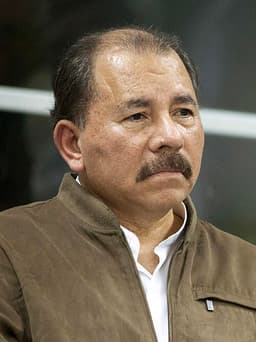
Daniel Ortega
Revolutionary · Modern
48.1Total
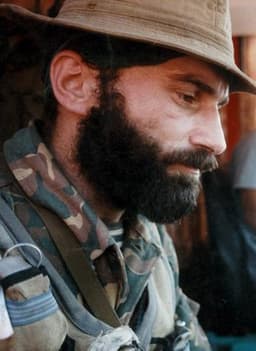
Shamil Basayev
Revolutionary · Modern
43.1Total
Basic Information
Born
1945
1965
Died
—
—
Era
Modern
Modern
Nationality
Nicaragua
Chechnya
Occupation
Revolutionary
Revolutionary
Civilization
Western
Western
Score Comparison
Military (10%)
45.0
40.0
Political (20%)
42.3
35.0
Influence (20%)
51.0
45.5
Legacy (20%)
42.5
35.0
Leadership (15%)
67.0
57.1
Strategy (15%)
38.6
51.7
TOTAL
48.1
43.1
Daniel Ortega — Complete Timeline
1979 AD
Sandinista RevolutionWar
Ortega was a key commander in the Sandinista National Liberation Front (FSLN) that overthrew the Somoza dictatorship. The revolution ended decades of authoritarian rule and established a socialist-oriented government, with Ortega becoming a member of the ruling junta.
RevolutionSandinistaSomoza
Impact: nationalconstructive
1984 AD
Election as President of NicaraguaPolitical Action◆ Major
Ortega was elected president in Nicaragua's first democratic election after the revolution, winning 67% of the vote. His government faced a US-backed Contra war and implemented land reform, literacy campaigns, and social programs.
ElectionSandinistaSocial Reform
Impact: nationalconstructive
1990 AD
Electoral defeat and transition of powerPolitical Action◆ Major
Ortega lost the presidential election to Violeta Chamorro, marking the first peaceful transfer of power in Nicaragua's history. The defeat ended 11 years of Sandinista rule and was a result of war fatigue and economic crisis.
ElectionDefeatDemocracy
Impact: national
2007 AD
Return to presidencyPolitical Action◆ Major
Ortega was re-elected president after 17 years in opposition, winning 38% of the vote. His return marked a shift toward authoritarianism, as he consolidated power, controlled the judiciary, and suppressed political opposition.
ElectionReturnAuthoritarianism
Impact: national
2018 AD
2018 protests and crackdownPolitical Action◆ Major
Mass protests erupted against Ortega's government over social security reforms, which were later withdrawn. The government responded with a violent crackdown, resulting in hundreds of deaths and thousands of arrests, leading to international condemnation.
ProtestsRepressionHuman Rights
Impact: nationaldestructive
Shamil Basayev — Complete Timeline
1995 AD
Budyonnovsk Hospital Hostage CrisisWar◆ Major
Basayev led a raid on the Russian town of Budyonnovsk, taking over 1,000 hostages in a hospital. The crisis ended with a negotiated settlement that allowed him to return to Chechnya. This attack demonstrated Chechen reach into Russia.
Hostage CrisisTerrorismChechnya
Impact: nationaldestructive
1999 AD
Invasion of DagestanWar
Basayev led Chechen and Islamist fighters into Dagestan to support local rebels. This invasion triggered the Second Chechen War as Russia responded with a full-scale military campaign. The invasion failed to gain local support.
DagestanChechnyaInvasion
Impact: regionaldestructive
2002 AD
Moscow Theater Hostage CrisisWar◆ Major
Basayev orchestrated the Moscow theater hostage crisis, where Chechen militants took 850 people hostage. Russian forces ended the siege with gas, killing 130 hostages. The attack increased international condemnation of Chechen rebels.
Hostage CrisisTerrorismMoscow
Impact: nationaldestructive
2004 AD
Beslan School SiegeWar◆ Major
Basayev planned the Beslan school siege, where militants took over 1,100 people hostage. The siege ended in a bloody assault, resulting in 334 deaths, mostly children. This attack was widely condemned globally.
Hostage CrisisTerrorismBeslan
Impact: globaltragic
2006 AD
Killed by Russian ExplosivesWar◆ Major
Basayev was killed in Ingushetia when a truck loaded with explosives detonated. Russian intelligence claimed responsibility. His death removed the most prominent Chechen rebel commander.
AssassinationChechnyaRussia
Impact: regional
Expert Analysis
Shamil Basayev vs Daniel Ortega
# The Revolutionary's Crossroads: Daniel Ortega and Shamil Basayev
In the summer of 1979, a young Daniel Ortega strode into Managua's smoldering plaza, a victor in a revolution that had toppled a dynasty. A quarter century later, in a school gymnasium in Beslan, a different kind of revolutionary—Shamil Basayev—left a legacy of blood and rubble. Both men took up arms against entrenched power; both believed history was on their side. Yet one became a head of state, the other a ghost haunting a failed insurgency. What separates the revolutionary who governs from the one who only destroys?
Origins
Daniel Ortega was born in 1945 in La Libertad, a mining town in Nicaragua, into a family already marked by defiance. His father was an anti-Somoza activist; his mother was imprisoned for her political work. The Somoza dynasty—a family dictatorship that had ruled Nicaragua since the 1930s—was the fixed star of his youth, a regime of corruption and brutality that left few paths for the ambitious poor. Ortega joined the Sandinista National Liberation Front (FSLN) as a teenager, and by his early twenties, he was in prison, tortured, and radicalized. His world was small, Central American, and defined by a single enemy.
Shamil Basayev, born in 1965 in the Chechen village of Dyshne-Vedeno, grew up in a different kind of shadow. The Soviet Union had deported his people to Kazakhstan in 1944, and though they returned, the memory of exile hung over Chechen identity. Basayev’s father was a farmer, his family pious but not extreme. The Soviet collapse in 1991 opened a door that Chechen nationalists rushed through: independence. Basayev was a child of that chaotic birth, a young man who learned to fly Soviet helicopters and then turned them against Moscow. His enemy was not a single family but an empire.
Rise to Power
Ortega’s path was orchestrated and collective. The Sandinistas built a broad coalition—students, peasants, priests, and Marxists—and waged a guerrilla war from the mountains of northern Nicaragua. By 1979, the Somoza regime was isolated, even abandoned by the United States. The Sandinista Revolution was a triumph of timing and organization: Ortega, as a key commander, entered Managua not as a warlord but as part of a revolutionary council. His rise was institutional, not personal.
Basayev’s rise was the opposite: personal, charismatic, and brutal. In 1995, he led a raid on the Russian town of Budyonnovsk, taking over 1,000 hostages in a hospital. The crisis ended with a negotiated withdrawal, and for Chechens, Basayev became a hero. For Russians, he became a monster. The First Chechen War (1994–1996) was a series of such asymmetric shocks, and Basayev’s name became synonymous with Chechen defiance. But he never built a political party or a government-in-waiting. He built a reputation.
Leadership & Governance
Ortega’s leadership score of 75.1 reflects a man who learned to wield power through institutions. After the revolution, he was elected president in 1984 with 67% of the vote—Nicaragua’s first democratic election in decades. He governed through the FSLN, a party with a structure, a newspaper, and a base. He implemented land reform, literacy campaigns, and health clinics. But he also faced a U.S.-backed Contra war, economic collapse, and growing authoritarian tendencies. In 1990, he lost the election to Violeta Chamorro and, crucially, stepped down. That peaceful transfer of power—Nicaragua’s first—was his finest political achievement.
Basayev’s leadership score of 34.5 tells a different story. He commanded through fear and faith, not bureaucracy. After the First Chechen War, Chechnya became a lawless zone of warlords, and Basayev drifted from nationalism to Islamism. In 1999, he invaded Dagestan, triggering the Second Chechen War. Then came the horrors: the Moscow theater hostage crisis in 2002, where 850 people were taken and 130 died; the Beslan school siege in 2004, where over 1,100 hostages, mostly children, faced three days of terror, ending with 334 dead. Basayev planned these operations from the shadows, but he never governed a square meter of territory.
Triumph & Tragedy
Ortega’s greatest triumph was the 1979 revolution itself—a moment when a small, poor nation overthrew a dictator and inspired the world. His greatest tragedy was his own transformation. After returning to power in 2007, Ortega slowly dismantled the democratic institutions he had once helped build. The 2018 protests, sparked by social security reforms, were met with a crackdown that killed hundreds. The revolutionary had become the autocrat, and the man who once accepted electoral defeat now rigged elections and jailed opponents.
Basayev’s triumphs were all tactical: Budyonnovsk, where he forced the Russian government to negotiate; the theater siege, which paralyzed Moscow. But his tragedies were strategic and moral. The Beslan siege ended in a firefight and massacre, and the world recoiled. Basayev had no political program beyond war, no vision of governance. He was killed in 2006 by a truck bomb in Ingushetia, a fittingly violent end for a man who had sown so much violence.
Character & Destiny
Ortega was pragmatic, patient, and adaptable. He survived the Contra war, electoral defeat, and years in opposition. He made peace with the Catholic Church, then with big business, then with his former enemies. He was a revolutionary who learned to play the long game. But that pragmatism curdled into cynicism: power became an end in itself.
Basayev was a man of action, not patience. He was brave, charismatic, and utterly ruthless. He believed in victory through shock, not through institutions. But his strategy of terror had no exit. He could attack Russia, but he could not build Chechnya. His destiny was to be a weapon, not a statesman.
Legacy
Ortega’s legacy is contested. To his supporters, he is a revolutionary who defied the United States and championed the poor. To his critics, he is a caudillo who betrayed democracy. His total score of 63.4 reflects a figure of real achievement and real failure. He is still in power, and his story is unfinished.
Basayev’s legacy is darker and simpler. He is remembered as a terrorist, a man whose methods discredited the Chechen cause. His influence score of 62.6 shows that he mattered, but his legacy score of 47.7 shows that he built nothing that outlasted him. He is a warning, not a model.
Conclusion
The difference between Ortega and Basayev is not in their courage or their commitment. Both were willing to die for their cause. The difference is in their relationship to power. Ortega sought to rule; Basayev sought only to destroy. Ortega built a party, a state, and a dynasty, however flawed. Basayev built only a legend, and legends that feed on blood do not endure. The revolutionary’s true test is not whether he can seize power, but whether he can wield it—and whether, in the end, he can let it go.
Rankings
🥇
Daniel OrtegaLeader
Mil: 45.0Pol: 42.3Inf: 51.0
48.1
🥈
Shamil Basayev
Mil: 40.0Pol: 35.0Inf: 45.5
43.1
+5.0 behind
How This Comparison Works
Algorithm
Each figure is scored on 6 dimensions (0—100 scale) based on structured historical data: Military (10%), Political (20%), Influence (20%), Legacy (20%), Leadership (15%), Strategy (15%). The weighted total produces the final ranking.
Data Sources
Scores are computed from structured sub-indicators in the database. Scale factors adjust for era (Ancient ×0.85, Modern ×1.0) and civilization size (Eastern ×1.05, Other ×0.80) to account for differences in population and military scale.
Maximum 3 Figures
Comparisons are limited to 2—3 figures to ensure readability and statistical meaningfulness.
Error Margins
±5 points per dimension — Sub-scores are derived from historical records with inherent uncertainty. Two figures within 5 points on a dimension should be considered roughly equivalent in that area.
Total Score Accuracy
±3 points overall — The weighted combination of 6 dimensions produces a total score with approximately ±3 points of uncertainty. Differences of less than 3 points are not statistically significant— the figures are effectively tied.
Known Limitations
- Historical records are incomplete and uneven across civilizations
- Figures from oral-tradition societies may be underrepresented
- Occupation labels can misclassify multi-role figures
- Scores measure capability and impact, not moral character
- Quantitative scoring is a comparison tool, not absolute truth
Capability Radar
Military (10%) — Battles & Warfare
Battles
35
45
Win Rate
40
40
Expansion
20
15
Political (20%) — Governance & Reform
Reform
40
5
Diplomacy
45
10
Economy
30
5
Influence (20%) — Cultural & Global Reach
Cultural
40
20
Global
35
20
Legacy (20%) — Historical Impact
Historical
45
25
Longevity
40
15
Leadership (15%) — Power & Stability
Tenure
65
10
Stability
25
5
Strategy (15%) — Tactics & Innovation
Strategy
35
35
Tactics
30
55
Reform
25
20
Similar Comparisons
Comments & Discussion
STEEL-AND-SMOKE6/16/2026
Basayev's siege at Beslan wasn't some romantic insurgency—it was tactical suicide that destroyed any diplomatic path for Chechnya. Ortega at least understood revolutionary discipline: take the capital, secure international recognition, govern. Basayev never grasped that terrorism isn't strategy; it's a dead end that makes your enemy stronger. He didn't lose to Russia—he lost to his own lack of a political plan.
暴风中的脚镣6/16/2026
数据不会说谎。奥尔特加执政第一年,尼加拉瓜文盲率从50%降到13%,而巴萨耶夫唯一提升的只有儿童死去的人数。革命者要么建设学校,要么炸毁学校——统计曲线从来不说谎,只在绝望的民调里沉默。
CHASER-OF-PEACE6/16/2026
Ortega betrayed his revolution by staying in power past 1990—he became the Somoza he fought. The 2018 protests show a man willing to kill his own people to hold a gilded chair. Basayev? He died fighting, never selling out for a pension or a palace. Which is really the greater betrayal: dying for a lost cause, or living long enough to become the tyrant you swore to destroy?
沙漠之狐的小镇6/16/2026
我想起萨达姆与哈桑。奥尔特加也出自穷乡僻壤,但他学会了全球化的语言——联合国讲坛,左翼盟友,甚至与查韦斯称兄道弟。巴萨耶夫呢?他的字典里只有高加索的石头和复仇的古训。不学西方,不学东方,却妄图改变历史的流向。历史的河流不会绕过你的村庄,只会把你淹没。
SAVAGE-DEALS6/16/2026
Both men shared one thing: they were chosen by no one but their own guns. Ortega won elections—fixed ones, but elections—and ruled with a constitution that bent like a palm tree in a hurricane. Basayev never faced a voter in his life, just named himself "General" and called his kidnapping "revolution." Legitimacy isn't about who shoots first; it's about who the people call "president" and who they call "terrorist."