Loading...
Dasho Tshering Wangchuk vs Francois Mitterrand
Francois Mitterrand leads by 18.6 pts · 2 figures compared
…

Dasho Tshering Wangchuk
Politician · Modern
44.5Total
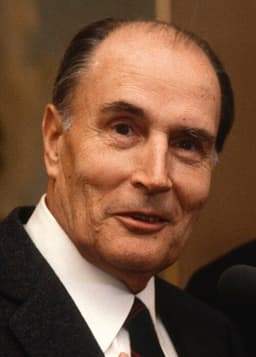
Francois Mitterrand
Politician · Modern
63.1Total
Basic Information
Born
1950
1916
Died
—
1996
Era
Modern
Modern
Nationality
Bhutan
France
Occupation
Politician
Politician
Civilization
Indian
Western
Score Comparison
Military (10%)
41.2
36.6
Political (20%)
30.8
72.0
Influence (20%)
46.3
72.0
Legacy (20%)
37.5
58.0
Leadership (15%)
58.8
72.0
Strategy (15%)
60.0
53.5
TOTAL
44.5
63.1
Dasho Tshering Wangchuk — Complete Timeline
2003 AD
Appointed as Chief Justice of BhutanPolitical Action
Dasho Tshering Wangchuk was appointed Chief Justice of the Royal Court of Justice of Bhutan in 2003. He served as the head of the judiciary, overseeing legal reforms and the modernization of Bhutan's court system.
JudiciaryLegal Reform
Impact: nationalconstructive
2005 AD
Presided Over Constitutional Drafting ProcessPolitical Action◆ Major
As Chief Justice, Wangchuk was involved in the drafting of Bhutan's first written constitution, which was adopted in 2008. He ensured the judiciary's independence and the rule of law were enshrined.
ConstitutionLegal Framework
Impact: nationalconstructive
2008 AD
Served as Interim Head of GovernmentPolitical Action◆ Major
Following the first democratic elections in 2008, Dasho Tshering Wangchuk served as the interim head of government (Chief Advisor) during the transition period. He oversaw the handover of power from the monarchy to the elected government.
TransitionDemocracy
Impact: nationalconstructive
Francois Mitterrand — Complete Timeline
1981 AD
Abolition of the Death PenaltyReform◆ Major
Mitterrand signed the law abolishing the death penalty in France, fulfilling a campaign promise. The law was championed by Justice Minister Robert Badinter and made France the last Western European country to abolish capital punishment.
Human RightsJudicial ReformAbolition
Impact: nationalprogressive
Election as President of FrancePolitical Action◆ Major
Mitterrand was elected President of France, defeating incumbent Val
ElectionSocialismFifth Republic
Impact: nationalconstructive
1992 AD
Maastricht Treaty RatificationPolitical Action◆ Major
Mitterrand pushed for the ratification of the Maastricht Treaty, which deepened European integration. The treaty was approved by a narrow French referendum, establishing the European Union and paving the way for the euro.
European UnionMaastrichtIntegration
Impact: globalconstructive
Expert Analysis
Origins
Dasho Tshering Wangchuk was born in Bhutan in the mid-20th century, though exact birth year is not widely documented. He pursued a legal career, studying law and eventually becoming a judge. His background reflects Bhutan's traditional society, which transitioned to a constitutional monarchy in the 2000s. Wangchuk's early career was rooted in the judiciary, where he rose through the ranks to become Chief Justice of the Royal Court of Justice in 2003. His formative experiences were shaped by Bhutan's gradual modernization and the need to establish an independent judiciary.
Francois Mitterrand was born on October 26, 1916, in Jarnac, France, into a conservative Catholic family. He studied law and political science in Paris, and during World War II, he was captured by the Germans but escaped. Initially a Vichy official, he later joined the Resistance. After the war, he held various ministerial positions in the Fourth Republic, including Interior and Justice. His early political career was marked by shifting alliances, from centrist to socialist, reflecting his pragmatic approach.
Rise to Power
Wangchuk's rise to power was not through electoral politics but through judicial appointment. He became Chief Justice in 2003, overseeing Bhutan's judiciary during a critical period of constitutional reform. In 2008, following the first democratic elections, he served as Interim Head of Government (Chief Advisor) to facilitate the transition from absolute monarchy to constitutional monarchy. This role was temporary but pivotal in ensuring a peaceful transfer of power.
Mitterrand rose through the French political system over decades. He first ran for president in 1965 against de Gaulle, forcing a runoff. He built the Socialist Party into a major force and eventually won the presidency in 1981, defeating Valéry Giscard d'Estaing. His victory marked the first socialist presidency of the Fifth Republic. Key turning points included his 1971 Epinay Congress speech, where he unified the left, and his 1981 campaign focusing on social justice.
Leadership & Governance
Wangchuk's leadership was characterized by judicial integrity and a low-key, procedural role. As Chief Justice, he presided over the drafting of Bhutan's constitution, ensuring the judiciary's independence. As interim head, he managed the transition with minimal disruption, focusing on stability rather than policy innovation. His governance score is 58.8, reflecting his limited executive power.
Mitterrand's leadership was dynamic and strategic. He implemented major reforms: nationalization of banks and industries, abolition of the death penalty (1981), and decentralization. Later, he shifted to austerity and European integration, notably pushing the Maastricht Treaty (1992). His political score of 72.0 reflects his ability to navigate complex coalitions and maintain power for 14 years. However, his governance was criticized for cronyism and scandals, such as the Elysée wiretapping.
Triumph & Tragedy
Wangchuk's greatest success was overseeing the peaceful transition to democracy and the adoption of Bhutan's constitution in 2008, a milestone for the nation. His failure is less documented, but his limited influence on policy due to the interim nature of his role may be seen as a missed opportunity to shape Bhutan's direction. His legacy score is 37.5.
Mitterrand's triumphs include abolition of the death penalty, the Maastricht Treaty, and the end of the Cold War era where he maintained French independence. His tragedies include the Rainbow Warrior bombing (1985), the Elysée wiretapping scandal, and his late-life acknowledgement of a Vichy past. His legacy is mixed: revered as a statesman but criticized for ethical lapses.
Character & Destiny
Wangchuk's character is defined by legal precision and commitment to constitutional processes. His destiny was to be a transitional figure, not a permanent leader. He scored 60.0 in strategy, indicating careful planning within his limited scope.
Mitterrand was a master strategist, known for his patience and ability to outmaneuver opponents. His character was complex: intellectual, secretive, and pragmatic. His destiny was to shape France's modern identity, but his flaws also defined his later years. His leadership score of 72.0 reflects his effectiveness.
Legacy
Wangchuk's legacy is tied to Bhutan's democratic transition and the constitution. He is remembered as a key figure in establishing the rule of law. However, his influence remains within Bhutan and is not globally recognized. His overall score is 44.5.
Mitterrand's legacy is vast: he ended the death penalty, deepened European integration, and left a lasting imprint on French socialism. He is one of France's most studied presidents. His influence score of 72.0 and legacy score of 58.0 reflect his enduring impact.
Conclusion
Francois Mitterrand had greater impact due to his longer tenure, higher political and influence scores (72.0 each vs Wangchuk's 30.8 and 46.3), and his role in shaping European and French history. Wangchuk's contribution to Bhutan's democracy is significant but localized. Mitterrand's total score of 63.1 vs 44.5 underscores his broader influence.
Rankings
🥇
Francois MitterrandLeader
Mil: 36.6Pol: 72.0Inf: 72.0
63.1
🥈
Dasho Tshering Wangchuk
Mil: 41.2Pol: 30.8Inf: 46.3
44.5
+18.6 behind
How This Comparison Works
Algorithm
Each figure is scored on 6 dimensions (0—100 scale) based on structured historical data: Military (10%), Political (20%), Influence (20%), Legacy (20%), Leadership (15%), Strategy (15%). The weighted total produces the final ranking.
Data Sources
Scores are computed from structured sub-indicators in the database. Scale factors adjust for era (Ancient ×0.85, Modern ×1.0) and civilization size (Eastern ×1.05, Other ×0.80) to account for differences in population and military scale.
Maximum 3 Figures
Comparisons are limited to 2—3 figures to ensure readability and statistical meaningfulness.
Error Margins
±5 points per dimension — Sub-scores are derived from historical records with inherent uncertainty. Two figures within 5 points on a dimension should be considered roughly equivalent in that area.
Total Score Accuracy
±3 points overall — The weighted combination of 6 dimensions produces a total score with approximately ±3 points of uncertainty. Differences of less than 3 points are not statistically significant— the figures are effectively tied.
Known Limitations
- Historical records are incomplete and uneven across civilizations
- Figures from oral-tradition societies may be underrepresented
- Occupation labels can misclassify multi-role figures
- Scores measure capability and impact, not moral character
- Quantitative scoring is a comparison tool, not absolute truth
Capability Radar
Military (10%) — Battles & Warfare
Battles
43
5
Win Rate
47
5
Expansion
50
5
Political (20%) — Governance & Reform
Reform
25
75
Diplomacy
20
80
Economy
15
70
Influence (20%) — Cultural & Global Reach
Cultural
10
60
Global
5
65
Legacy (20%) — Historical Impact
Historical
15
70
Longevity
10
55
Leadership (15%) — Power & Stability
Tenure
30
85
Stability
25
65
Strategy (15%) — Tactics & Innovation
Strategy
55
10
Tactics
55
5
Reform
59
15
Similar Comparisons
Comments & Discussion
No comments yet. Be the first to share your thoughts!