Loading...
David Lange vs Queen Victoria
Queen Victoria leads by 6.4 pts · 2 figures compared
…

David Lange
Politician · Modern
58.2Total
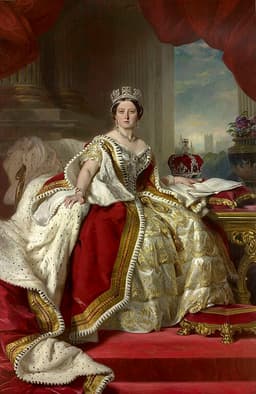
Queen Victoria
Politician · Modern
64.6Total
Basic Information
Born
1942
1819
Died
—
1901
Era
Modern
Modern
Nationality
New Zealand
United Kingdom
Occupation
Politician
Politician
Civilization
Western
Western
Score Comparison
Military (10%)
49.6
25.9
Political (20%)
72.0
70.0
Influence (20%)
58.3
75.0
Legacy (20%)
52.0
70.0
Leadership (15%)
72.0
72.0
Strategy (15%)
40.6
45.0
TOTAL
58.2
64.6
David Lange — Complete Timeline
1984 AD
Became Prime Minister of New ZealandPolitical Action◆ Major
David Lange became Prime Minister after the Labour Party won the 1984 general election. His government inherited an economic crisis and implemented radical free-market reforms known as Rogernomics, while also pursuing a strong anti-nuclear foreign policy.
ElectionGovernment FormationEconomic Reform
Impact: national
Declared New Zealand Nuclear-FreePolitical Action
Lange's government declared New Zealand a nuclear-free zone, banning nuclear-powered or nuclear-armed ships from entering its waters. This policy led to a major rift with the United States and the suspension of ANZUS treaty obligations.
Anti-NuclearForeign PolicyANZUS
Impact: regionalconstructive
1985 AD
Rainbow Warrior Bombing ResponsePolitical Action◆ Major
After French intelligence agents bombed the Greenpeace ship Rainbow Warrior in Auckland harbour, Lange's government condemned the act and pursued diplomatic and legal action against France. The incident strained New Zealand-France relations and led to international arbitration.
Diplomatic IncidentFranceGreenpeace
Impact: global
1989 AD
Resigned as Prime MinisterPolitical Action◆ Major
David Lange resigned as Prime Minister due to declining health and internal party conflicts over economic policy. His resignation marked the end of a transformative but divisive period in New Zealand politics.
ResignationPolitical Career
Impact: national
Queen Victoria — Complete Timeline
1851 AD
Great Exhibition of 1851Cultural◆ Major
Prince Albert, Victoria's consort, organized the Great Exhibition in London's Crystal Palace. The exhibition showcased industrial and cultural achievements from around the world, symbolizing Britain's technological and imperial dominance during the Victorian Era.
ExhibitionIndustryCulture
Impact: globalconstructive
1857 AD
Indian Rebellion of 1857War
The Indian Rebellion of 1857, a major uprising against British East India Company rule, occurred during Victoria's reign. The rebellion was suppressed, leading to the dissolution of the Company and the establishment of direct British Crown rule over India in 1858.
IndiaRebellionEmpire
Impact: global
1867 AD
Reform Act 1867 PassedReform◆ Major
The Reform Act 1867, passed during Victoria's reign, expanded the franchise to include many urban working-class men in Britain. This electoral reform increased the electorate by over a million voters, reshaping British politics and the two-party system.
ReformDemocracyPolitics
Impact: nationalprogressive
British North America Act PassedPolitical Action◆ Major
The British North America Act, passed by the UK Parliament, created the Dominion of Canada as a self-governing entity within the British Empire. Victoria's approval marked the beginning of Canadian confederation and a model for future colonial autonomy.
CanadaColonialSelf-Government
Impact: regionalconstructive
1899 AD
Second Boer War BeganWar◆ Major
The Second Boer War broke out between the British Empire and the Boer republics in South Africa. The conflict, which ended in 1902, resulted in British victory and the incorporation of the Transvaal and Orange Free State into the empire, but at great cost.
WarSouth AfricaEmpire
Impact: regional
Expert Analysis
Origins
David Lange (1942-2005) was born in Otahuhu, New Zealand, to a doctor father and a mother of English descent. He studied law at the University of Auckland and worked as a lawyer before entering politics. His early career was marked by a focus on social justice and anti-nuclear activism.
Queen Victoria (1819-1901) was born at Kensington Palace in London, the only child of Prince Edward, Duke of Kent, and Princess Victoria of Saxe-Coburg-Saalfeld. She became heir to the throne after her father's death and was raised under the strict 'Kensington System' by her mother and Sir John Conroy. Her education emphasized languages, history, and constitutional law.
Rise to Power
Lange entered Parliament in 1977 as the MP for Mangere. He quickly rose through Labour Party ranks, becoming leader of the opposition in 1983. In the 1984 snap election, Labour won a landslide, and Lange became Prime Minister at age 41. Key turning point: his anti-nuclear stance, which resonated with a public opposed to US nuclear ship visits.
Victoria became queen at age 18 in 1837 after the death of her uncle, William IV. Her early reign was influenced by Prime Minister Lord Melbourne, and she later relied on Prince Albert after their marriage in 1840. The 1851 Great Exhibition showcased Britain's industrial dominance, cementing her symbolic role as the nation's figurehead.
Leadership & Governance
Lange's government implemented radical economic reforms (Rogernomics) that deregulated markets and reduced subsidies, while maintaining a strong anti-nuclear foreign policy. The 1985 Rainbow Warrior bombing tested his diplomacy; he secured a UN-brokered settlement with France. His leadership score is 72.0, reflecting his ability to navigate crises.
Victoria's reign saw the expansion of the British Empire to its zenith, with Canada (1867) and India (1858) coming under direct Crown rule. She exercised influence through her ministers, particularly Disraeli and Gladstone. The Reform Acts of 1867 and 1884 expanded suffrage. Her political score of 70.0 reflects her constitutional role and symbolic power.
Triumph & Tragedy
Lange's greatest triumph: declaring New Zealand nuclear-free in 1987, which set a global precedent and boosted his country's moral authority. His tragedy: the economic reforms caused unemployment and inequality, leading to his resignation in 1989 due to health and party infighting. His strategy score of 40.6 indicates mixed success in managing domestic policy.
Victoria's triumphs include the Great Exhibition and the expansion of the Empire. The Indian Rebellion of 1857 was suppressed, leading to the dissolution of the East India Company. Her tragedies include the death of Prince Albert in 1861, after which she withdrew from public life for years, and the Second Boer War (1899-1902), which exposed imperial overreach. Her military score of 25.9 reflects her limited direct role.
Character & Destiny
Lange was charismatic, combative, and principled. His anti-nuclear stance was deeply personal, stemming from a moral conviction. He was a skilled orator, famously debating fundamentalist Christian Jerry Falwell on nuclear issues. His health declined due to obesity and diabetes, leading to his early resignation and death at 63.
Victoria was known for her strong will, emotional nature, and devotion to duty. After Albert's death, she wore black for decades, earning the nickname 'Widow of Windsor'. She was stubborn but adaptable, learning to work with ministers of different parties. Her longevity (63-year reign) allowed her to shape an era.
Legacy
Lange's nuclear-free policy remains law in New Zealand and influenced global disarmament. His economic reforms are still debated. He scored 52.0 in legacy, reflecting his lasting impact on New Zealand's identity as a peacemaker.
Victoria's legacy is the Victorian Era, characterized by industrial progress, moral values, and imperial expansion. The British Empire reached its peak under her rule, and many institutions (e.g., the Victoria Cross) bear her name. Her legacy score of 70.0 is higher due to global impact.
Conclusion
Queen Victoria had a greater impact overall, with a total score of 64.6 vs. Lange's 58.2. Her reign shaped the modern world through empire and industrialization, while Lange's influence was more regionally focused. However, Lange's anti-nuclear stance was a moral landmark. Victoria's long reign and global reach give her the edge in influence and legacy.
Rankings
🥇
Queen VictoriaLeader
Mil: 25.9Pol: 70.0Inf: 75.0
64.6
🥈
David Lange
Mil: 49.6Pol: 72.0Inf: 58.3
58.2
+6.4 behind
How This Comparison Works
Algorithm
Each figure is scored on 6 dimensions (0—100 scale) based on structured historical data: Military (10%), Political (20%), Influence (20%), Legacy (20%), Leadership (15%), Strategy (15%). The weighted total produces the final ranking.
Data Sources
Scores are computed from structured sub-indicators in the database. Scale factors adjust for era (Ancient ×0.85, Modern ×1.0) and civilization size (Eastern ×1.05, Other ×0.80) to account for differences in population and military scale.
Maximum 3 Figures
Comparisons are limited to 2—3 figures to ensure readability and statistical meaningfulness.
Error Margins
±5 points per dimension — Sub-scores are derived from historical records with inherent uncertainty. Two figures within 5 points on a dimension should be considered roughly equivalent in that area.
Total Score Accuracy
±3 points overall — The weighted combination of 6 dimensions produces a total score with approximately ±3 points of uncertainty. Differences of less than 3 points are not statistically significant— the figures are effectively tied.
Known Limitations
- Historical records are incomplete and uneven across civilizations
- Figures from oral-tradition societies may be underrepresented
- Occupation labels can misclassify multi-role figures
- Scores measure capability and impact, not moral character
- Quantitative scoring is a comparison tool, not absolute truth
Capability Radar
Military (10%) — Battles & Warfare
Battles
30
10
Win Rate
33
10
Expansion
33
70
Political (20%) — Governance & Reform
Reform
65
60
Diplomacy
70
75
Economy
55
80
Influence (20%) — Cultural & Global Reach
Cultural
55
85
Global
55
85
Legacy (20%) — Historical Impact
Historical
60
90
Longevity
50
80
Leadership (15%) — Power & Stability
Tenure
60
95
Stability
60
85
Strategy (15%) — Tactics & Innovation
Strategy
36
20
Tactics
39
10
Reform
42
30
Similar Comparisons
Comments & Discussion
No comments yet. Be the first to share your thoughts!