Loading...
This comparison has not been analyzed yet.
One-time AI generation (~1 minute). Scores and timeline are already available below.
Dennis Osadebay vs Yair Lapid
Dennis Osadebay leads by 5.3 pts · 2 figures compared
…
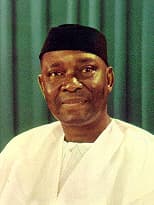
Dennis Osadebay
Politician · Modern
47.6Total

Yair Lapid
Politician · Modern
42.3Total
Basic Information
Born
1911
1963
Died
1994
—
Era
Modern
Modern
Nationality
Nigeria
Israel
Occupation
Politician
Politician
Civilization
Other
Middle Eastern
Score Comparison
Military (10%)
43.3
50.0
Political (20%)
45.1
35.1
Influence (20%)
49.4
50.2
Legacy (20%)
39.2
37.5
Leadership (15%)
67.0
41.5
Strategy (15%)
42.8
38.7
TOTAL
47.6
42.3
Dennis Osadebay — Complete Timeline
1939 AD
Trained as a lawyer in EnglandOther
Dennis Osadebay traveled to England to study law, being called to the bar at Gray's Inn. His legal training equipped him for a career in politics and public service, and he returned to Nigeria to practice law and enter the nationalist movement.
EducationLawEngland
Impact: national
1952 AD
Published poetry collection 'Africa Sings'Cultural
Dennis Osadebay published 'Africa Sings', a collection of poems that expressed African nationalist sentiments and cultural pride. The work established him as a literary figure in Nigeria, blending political themes with poetic expression.
LiteraturePoetryNationalism
Impact: nationalconstructive
1964 AD
Appointed Premier of Mid-Western RegionPolitical Action◆ Major
Dennis Osadebay was appointed Premier of the newly created Mid-Western Region of Nigeria. He became the first and only premier of the region before the military coups, leading its government during a period of political tension and regional development.
Mid-Western RegionPremierRegional Government
Impact: regional
1966 AD
Detained by the military governmentPolitical Action
Following the first military coup in Nigeria, Dennis Osadebay was detained by the new military regime. He was held for several months before being released, after which he largely withdrew from active politics.
Military CoupDetentionNigeria
Impact: nationaltragic
Yair Lapid — Complete Timeline
2012 AD
Founded Yesh Atid PartyPolitical Action◆ Major
Lapid founded the centrist Yesh Atid party, entering politics after a career as a journalist and TV host. The party focused on social and economic issues, including ending ultra-Orthodox military exemptions.
Political PartyCentrismIsrael
Impact: nationalconstructive
2013 AD
Appointed Minister of FinancePolitical Action◆ Major
Lapid served as Minister of Finance from 2013 to 2014 under Prime Minister Netanyahu. He implemented economic reforms including tax cuts and housing measures, but faced criticism over budget deficits.
FinanceEconomic ReformIsrael
Impact: nationalconstructive
2022 AD
Became Prime Minister of IsraelPolitical Action◆ Major
Lapid became Prime Minister in July 2022 as part of a rotation agreement with Naftali Bennett. He served until November 2022, when elections brought Benjamin Netanyahu back to power.
Prime MinisterRotationLeadership
Impact: national
2023 AD
Led Opposition Against Judicial ReformPolitical Action◆ Major
As opposition leader, Lapid led protests and parliamentary opposition against the Netanyahu government's judicial reform plan, which critics said would weaken the Supreme Court and democratic checks.
Judicial ReformDemocracyProtests
Impact: nationalconstructive
This comparison has not been analyzed yet.
One-time AI generation (~1 minute). Scores and timeline are already available below.
Rankings
🥇
Dennis OsadebayLeader
Mil: 43.3Pol: 45.1Inf: 49.4
47.6
🥈
Yair Lapid
Mil: 50.0Pol: 35.1Inf: 50.2
42.3
+5.3 behind
How This Comparison Works
Algorithm
Each figure is scored on 6 dimensions (0—100 scale) based on structured historical data: Military (10%), Political (20%), Influence (20%), Legacy (20%), Leadership (15%), Strategy (15%). The weighted total produces the final ranking.
Data Sources
Scores are computed from structured sub-indicators in the database. Scale factors adjust for era (Ancient ×0.85, Modern ×1.0) and civilization size (Eastern ×1.05, Other ×0.80) to account for differences in population and military scale.
Maximum 3 Figures
Comparisons are limited to 2—3 figures to ensure readability and statistical meaningfulness.
Error Margins
±5 points per dimension — Sub-scores are derived from historical records with inherent uncertainty. Two figures within 5 points on a dimension should be considered roughly equivalent in that area.
Total Score Accuracy
±3 points overall — The weighted combination of 6 dimensions produces a total score with approximately ±3 points of uncertainty. Differences of less than 3 points are not statistically significant— the figures are effectively tied.
Known Limitations
- Historical records are incomplete and uneven across civilizations
- Figures from oral-tradition societies may be underrepresented
- Occupation labels can misclassify multi-role figures
- Scores measure capability and impact, not moral character
- Quantitative scoring is a comparison tool, not absolute truth
Capability Radar
Military (10%) — Battles & Warfare
Battles
25
23
Win Rate
22
25
Expansion
28
27
Political (20%) — Governance & Reform
Reform
35
20
Diplomacy
45
30
Economy
30
25
Influence (20%) — Cultural & Global Reach
Cultural
25
20
Global
10
20
Legacy (20%) — Historical Impact
Historical
20
15
Longevity
15
10
Leadership (15%) — Power & Stability
Tenure
40
15
Stability
30
15
Strategy (15%) — Tactics & Innovation
Strategy
32
33
Tactics
31
35
Reform
34
37
Similar Comparisons
Comments & Discussion
No comments yet. Be the first to share your thoughts!