Loading...
This comparison has not been analyzed yet.
One-time AI generation (~1 minute). Scores and timeline are already available below.
Dhatusena vs Nebuchadnezzar I
Nebuchadnezzar I leads by 2.7 pts · 2 figures compared
…

Dhatusena
Emperor · Ancient
53.6Total
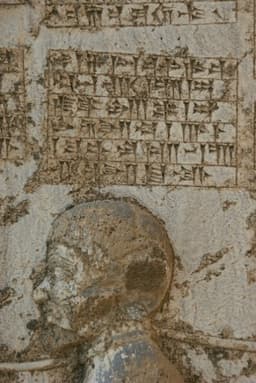
Nebuchadnezzar I
Emperor · Ancient
56.3Total
Basic Information
Born
455
-1125
Died
473
-1104
Era
Ancient
Ancient
Nationality
Sri Lanka
Babylon
Occupation
Emperor
Emperor
Civilization
Indian
Middle Eastern
Score Comparison
Military (10%)
47.5
70.0
Political (20%)
68.0
68.0
Influence (20%)
48.6
52.5
Legacy (20%)
45.0
42.5
Leadership (15%)
74.0
64.0
Strategy (15%)
41.0
57.5
TOTAL
53.6
56.3
Dhatusena — Complete Timeline
458 AD
Restoration of the MahaviharaPolitical Action
Dhatusena restored the Mahavihara, the main Buddhist monastery in Anuradhapura, which had been damaged during the reign of Mahasena. This act reaffirmed his support for Theravada Buddhism.
BuddhismRestorationReligion
Impact: nationalconstructive
460 AD
Construction of Kalawewa TankOther◆ Major
Dhatusena constructed the Kalawewa tank, a massive irrigation reservoir in the North Central Province. The tank, with a circumference of over 30 miles, was a major engineering feat and provided water for extensive rice cultivation.
IrrigationAgricultureInfrastructure
Impact: regionalconstructive
465 AD
Construction of Yoda Ela CanalOther◆ Major
Dhatusena built the Yoda Ela, a 54-mile-long canal that connected the Kalawewa tank to the Tissa Wewa tank in Anuradhapura. This canal ensured a reliable water supply to the capital and surrounding farmlands.
IrrigationEngineeringInfrastructure
Impact: regionalconstructive
473 AD
Assassination by KashyapaPolitical Action◆ Major
Dhatusena was assassinated by his son Kashyapa, who seized the throne. Kashyapa had Dhatusena walled up alive after the king refused to reveal the location of hidden treasure.
AssassinationCivil WarDynastic Conflict
Impact: nationaltragic
Nebuchadnezzar I — Complete Timeline
1115 BC
Recovery of the Marduk Statue from ElamWar
Nebuchadnezzar I led a military campaign into Elam and successfully retrieved the statue of the god Marduk, which had been taken by the Elamites centuries earlier. This act restored the central religious symbol of Babylon and legitimized his rule.
Religious RestorationMilitary CampaignElam
Impact: regionalconstructive
1110 BC
Restoration of Babylonian PowerPolitical Action◆ Major
Following the recovery of the Marduk statue, Nebuchadnezzar I consolidated Babylonian control over Mesopotamia. He reasserted Babylonian dominance over rival states and re-established the kingdom as a major regional power after a period of weakness.
Political ConsolidationRegional PowerMesopotamia
Impact: regionalconstructive
This comparison has not been analyzed yet.
One-time AI generation (~1 minute). Scores and timeline are already available below.
Rankings
🥇
Nebuchadnezzar ILeader
Mil: 70.0Pol: 68.0Inf: 52.5
56.3
🥈
Dhatusena
Mil: 47.5Pol: 68.0Inf: 48.6
53.6
+2.7 behind
How This Comparison Works
Algorithm
Each figure is scored on 6 dimensions (0—100 scale) based on structured historical data: Military (10%), Political (20%), Influence (20%), Legacy (20%), Leadership (15%), Strategy (15%). The weighted total produces the final ranking.
Data Sources
Scores are computed from structured sub-indicators in the database. Scale factors adjust for era (Ancient ×0.85, Modern ×1.0) and civilization size (Eastern ×1.05, Other ×0.80) to account for differences in population and military scale.
Maximum 3 Figures
Comparisons are limited to 2—3 figures to ensure readability and statistical meaningfulness.
Error Margins
±5 points per dimension — Sub-scores are derived from historical records with inherent uncertainty. Two figures within 5 points on a dimension should be considered roughly equivalent in that area.
Total Score Accuracy
±3 points overall — The weighted combination of 6 dimensions produces a total score with approximately ±3 points of uncertainty. Differences of less than 3 points are not statistically significant— the figures are effectively tied.
Known Limitations
- Historical records are incomplete and uneven across civilizations
- Figures from oral-tradition societies may be underrepresented
- Occupation labels can misclassify multi-role figures
- Scores measure capability and impact, not moral character
- Quantitative scoring is a comparison tool, not absolute truth
Capability Radar
Military (10%) — Battles & Warfare
Battles
20
55
Win Rate
20
60
Expansion
20
50
Political (20%) — Governance & Reform
Reform
60
50
Diplomacy
40
55
Economy
70
45
Influence (20%) — Cultural & Global Reach
Cultural
40
40
Global
20
35
Legacy (20%) — Historical Impact
Historical
50
45
Longevity
40
30
Leadership (15%) — Power & Stability
Tenure
50
45
Stability
60
50
Strategy (15%) — Tactics & Innovation
Strategy
20
55
Tactics
20
50
Reform
10
40
Similar Comparisons
Comments & Discussion
No comments yet. Be the first to share your thoughts!