Loading...
Analysis will be generated on first visit.
Scores and timeline are available below. The page will refresh automatically when ready.
Di Renjie vs Julius Caesar
Julius Caesar leads by 13.2 pts · 2 figures compared
…

Di Renjie
Politician · Medieval
70.1Total
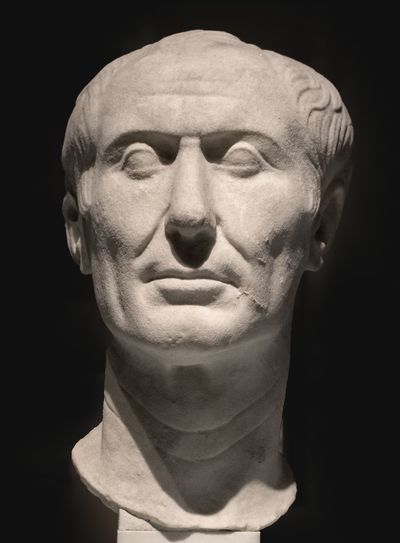
Julius Caesar
General · Ancient
83.3Total
Basic Information
Born
630
-100
Died
700
-44
Era
Medieval
Ancient
Nationality
China
Roman Republic
Occupation
Politician
General
Civilization
Eastern
Western
Score Comparison
Military (10%)
47.0
88.0
Political (20%)
73.8
78.0
Influence (20%)
70.5
85.0
Legacy (20%)
70.1
82.0
Leadership (15%)
83.0
82.0
Strategy (15%)
67.1
88.0
TOTAL
70.1
83.3
Rankings
🥇
Julius CaesarLeader
Mil: 88.0Pol: 78.0Inf: 85.0
83.3
🥈
Di Renjie
Mil: 47.0Pol: 73.8Inf: 70.5
70.1
+13.2 behind
How This Comparison Works
Algorithm
Each figure is scored on 6 dimensions (0—100 scale) based on structured historical data: Military (10%), Political (20%), Influence (20%), Legacy (20%), Leadership (15%), Strategy (15%). The weighted total produces the final ranking.
Data Sources
Scores are computed from structured sub-indicators in the database. Scale factors adjust for era (Ancient ×0.85, Modern ×1.0) and civilization size (Eastern ×1.05, Other ×0.80) to account for differences in population and military scale.
Maximum 3 Figures
Comparisons are limited to 2—3 figures to ensure readability and statistical meaningfulness.
Error Margins
±5 points per dimension — Sub-scores are derived from historical records with inherent uncertainty. Two figures within 5 points on a dimension should be considered roughly equivalent in that area.
Total Score Accuracy
±3 points overall — The weighted combination of 6 dimensions produces a total score with approximately ±3 points of uncertainty. Differences of less than 3 points are not statistically significant— the figures are effectively tied.
Known Limitations
- Historical records are incomplete and uneven across civilizations
- Figures from oral-tradition societies may be underrepresented
- Occupation labels can misclassify multi-role figures
- Scores measure capability and impact, not moral character
- Quantitative scoring is a comparison tool, not absolute truth
Capability Radar
Military (10%) — Battles & Warfare
Battles
38
95
Win Rate
43
92
Expansion
42
97
Political (20%) — Governance & Reform
Reform
55
90
Diplomacy
65
85
Economy
50
82
Influence (20%) — Cultural & Global Reach
Cultural
70
88
Global
55
94
Legacy (20%) — Historical Impact
Historical
65
95
Longevity
70
96
Leadership (15%) — Power & Stability
Tenure
60
75
Stability
60
60
Strategy (15%) — Tactics & Innovation
Strategy
46
94
Tactics
52
96
Reform
52
88
Analysis will be generated on first visit.
Scores and timeline are available below. The page will refresh automatically when ready.
Di Renjie — Complete Timeline
692 AD
Appointed as CensorPolitical Action◆ Major
Di Renjie was appointed Censor (Yushi) under Empress Wu Zetian. In this role, he gained a reputation for fearless remonstrance and exposing corruption, often risking imperial displeasure to uphold justice.
Tang DynastyCensorateWu Zetian
Impact: nationalconstructive
697 AD
Appointed as ChancellorPolitical Action◆ Major
Di Renjie was appointed as Chancellor (Tong Zhongshu Menxia Pingzhangshi) under Empress Wu Zetian. He served as a key advisor, advocating for lenient policies and the restoration of the Tang imperial line.
Tang DynastyChancellorshipWu Zetian
Impact: nationalconstructive
698 AD
Opposed the Heir Apparent's RemovalPolitical Action
Di Renjie argued against Empress Wu Zetian's plan to replace her son Li Xian as heir with her nephew Wu Sansi. He cited historical precedents and filial piety, convincing Wu to retain Li Xian, which preserved the Tang dynasty's restoration.
Tang DynastySuccession CrisisWu Zetian
Impact: nationalconstructive
700 AD
Recommended Zhang JianzhiPolitical Action◆ Major
Di Renjie recommended Zhang Jianzhi for high office, despite Zhang being older and previously overlooked. Zhang later led the coup that restored Emperor Zhongzong to the throne in 705, ending Wu Zetian's reign.
Tang DynastySuccessionWu Zetian
Impact: nationalconstructive
Similar Comparisons
Comments & Discussion
No comments yet. Be the first to share your thoughts!