Loading...
Di Yi of Shang vs Olybrius
Di Yi of Shang leads by 1.4 pts · 2 figures compared
…
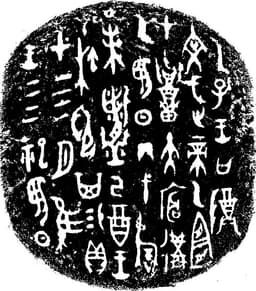
Di Yi of Shang
Emperor · Ancient
43.1Total

Olybrius
Emperor · Ancient
41.7Total
Basic Information
Born
-1020
430
Died
—
472
Era
Ancient
Ancient
Nationality
Shang China
Western Roman Empire
Occupation
Emperor
Emperor
Civilization
Eastern
Western
Score Comparison
Military (10%)
55.0
10.7
Political (20%)
29.3
40.8
Influence (20%)
46.3
56.4
Legacy (20%)
37.5
39.2
Leadership (15%)
41.5
45.0
Strategy (15%)
60.0
38.2
TOTAL
43.1
41.7
Di Yi of Shang — Complete Timeline
1020 BC
Conflict with the ZhouWar◆ Major
Di Yi engaged in military conflict with the Zhou, a vassal state in the Wei River valley. The Zhou, under King Wen, began to challenge Shang authority, and Di Yi's campaigns failed to suppress their growing power.
Military ConflictZhou RebellionShang Decline
Impact: regional
Marriage alliance with the Ji clanPolitical Action
Di Yi arranged a marriage between his daughter and the Zhou ruler King Wen, attempting to secure peace through alliance. This diplomatic move temporarily eased tensions but did not prevent the eventual Zhou conquest.
DiplomacyMarriage AllianceZhou Relations
Impact: regional
Olybrius — Complete Timeline
472 AD
Proclaimed Western Roman Emperor by RicimerPolitical Action◆ Major
After the death of Anthemius during the siege of Rome, the powerful magister militum Ricimer proclaimed Olybrius as Western Roman Emperor. Olybrius was a member of the Anician family and had ties to the Vandal king Gaiseric.
Imperial SuccessionPower Struggle
Impact: regional
Died of natural causesOther◆ Major
Olybrius died of natural causes after a reign of only a few months. His death occurred shortly after that of Ricimer, leaving the Western Empire without effective leadership and plunging it into further instability.
DeathImperial Succession
Impact: regional
Expert Analysis
Origins
Di Yi of Shang was born around 1100 BCE into the royal clan of the Shang dynasty, which had ruled over the Yellow River valley for centuries. He became the penultimate Shang king, inheriting a realm strained by internal dissent and external threats. Little is known of his early life, but his reign was marked by the rising power of the Zhou, a vassal state in the Wei River valley. Di Yi's father, King Wen Ding, had already faced Zhou encroachments, and Di Yi continued this struggle. His marriage to a woman from the Ji clan (the Zhou ruling family) was a diplomatic attempt to ease tensions, but it ultimately failed to prevent conflict.
Olybrius, born around 420 CE in Rome, was a member of the Roman senatorial aristocracy. He was a descendant of the Valentinian dynasty through his mother, which gave him a claim to imperial power. Little is recorded of his early career, but he likely held senatorial offices. His marriage to Placidia, the daughter of Emperor Valentinian III, connected him to the Theodosian dynasty. Olybrius lived during the terminal decline of the Western Roman Empire, when Germanic generals like Ricimer dominated the throne.
Rise to Power
Di Yi ascended to the Shang throne around 1086 BCE, succeeding his father. His reign was defined by the Zhou threat. The Zhou under King Wen began openly challenging Shang authority, and Di Yi responded with military campaigns. He scored 60.0 in Strategy, reflecting his attempts to use both force and diplomacy. However, his political score of 29.3 indicates limited success in consolidating power. He married his daughter to King Wen, but this did not stop Zhou expansion. Di Yi's reign saw the Shang lose control over key territories, setting the stage for his successor's downfall.
Olybrius was proclaimed Western Roman Emperor in 472 CE by the powerful magister militum Ricimer, after the death of Emperor Anthemius during the siege of Rome. Ricimer needed a puppet who had ties to the Eastern court and could be controlled. Olybrius's marriage to Placidia and his senatorial background made him suitable. He scored 40.8 in Politics, indicating some skill in navigating the treacherous court, but his reign was entirely dependent on Ricimer. He was never recognized by the Eastern Empire, which weakened his legitimacy.
Leadership & Governance
Di Yi's leadership style was traditional for Shang kings: he was a warrior-king who led armies and performed religious rituals. He attempted to maintain Shang hegemony through military force, but his governance was undermined by corruption and disloyalty among nobles. His marriage alliance was a diplomatic move, but he failed to implement reforms or strengthen central authority. His leadership score of 41.5 reflects a ruler who could not reverse decline.
Olybrius had no real power; his governance was nominal. Ricimer controlled the army and administration. Olybrius's only significant act was to negotiate with the Vandal king Gaiseric, who had captured his wife and children. He attempted to secure their release, but failed. His leadership score of 45.0 is generous, as he exerted no independent authority. He was a figurehead in a dying empire.
Triumph & Tragedy
Di Yi's greatest success was temporarily checking Zhou expansion through his marriage alliance and some military campaigns. He managed to hold the Shang together for a few more years. However, his greatest failure was that his policies could not prevent the Zhou from eventually conquering the Shang under his son, Di Xin. His strategy score of 60.0 was insufficient against the Zhou's superior organization.
Olybrius's triumph was simply becoming emperor, a remarkable achievement for a senator in a chaotic era. But his tragedy was his utter powerlessness. He reigned for only a few months before dying of natural causes, leaving no legacy. His reign accelerated the empire's collapse by further destabilizing the throne. His military score of 10.7 reflects his complete lack of military involvement.
Character & Destiny
Di Yi was a traditionalist who relied on established methods. He was cautious, using diplomacy and marriage ties, but he lacked the ruthlessness to crush the Zhou early. His character shaped his fate: his moderate approach failed to inspire loyalty or fear. Historical assessments view him as a transitional figure whose weaknesses were inherited by his son.
Olybrius was a political survivor, but he was not ambitious enough to seize real power. He accepted the role of puppet, which sealed his irrelevance. His death soon after Ricimer's left the Western Empire without a stable ruler. He is remembered as one of the many short-lived emperors of Rome's decline.
Legacy
Di Yi's legacy is overshadowed by the fall of the Shang. He scored 37.5 in Legacy, as his reign is a footnote in Chinese history. The Shang dynasty ended with his son, and the Zhou rewrote history to portray the Shang as corrupt. Di Yi's attempts at diplomacy are sometimes noted, but he is not considered a major figure.
Olybrius's legacy is even slimmer, scoring 39.2. He is remembered only as one of the last Western emperors, a symbol of the empire's final years. His reign had no lasting impact; the Western Empire fell five years later. Historians mention him mainly in lists of emperors.
Conclusion
Di Yi of Shang had a greater impact than Olybrius, despite his low scores. His actions, however ineffective, were part of a pivotal transition in Chinese history from Shang to Zhou. Olybrius, by contrast, was a passive figure in Rome's collapse, contributing nothing. Di Yi's military and strategy scores (55.0 and 60.0) far exceed Olybrius's (10.7 and 38.2), and his reign lasted longer. While neither was a great ruler, Di Yi's role in the conflict with the Zhou gives him historical significance. Olybrius's reign was a brief, powerless interlude. Thus, Di Yi edges ahead with a total score of 43.1 vs 41.7, a 1.4-point gap that reflects his slightly greater, albeit limited, influence.
Rankings
🥇
Di Yi of ShangLeader
Mil: 55.0Pol: 29.3Inf: 46.3
43.1
🥈
Olybrius
Mil: 10.7Pol: 40.8Inf: 56.4
41.7
+1.4 behind
How This Comparison Works
Algorithm
Each figure is scored on 6 dimensions (0—100 scale) based on structured historical data: Military (10%), Political (20%), Influence (20%), Legacy (20%), Leadership (15%), Strategy (15%). The weighted total produces the final ranking.
Data Sources
Scores are computed from structured sub-indicators in the database. Scale factors adjust for era (Ancient ×0.85, Modern ×1.0) and civilization size (Eastern ×1.05, Other ×0.80) to account for differences in population and military scale.
Maximum 3 Figures
Comparisons are limited to 2—3 figures to ensure readability and statistical meaningfulness.
Error Margins
±5 points per dimension — Sub-scores are derived from historical records with inherent uncertainty. Two figures within 5 points on a dimension should be considered roughly equivalent in that area.
Total Score Accuracy
±3 points overall — The weighted combination of 6 dimensions produces a total score with approximately ±3 points of uncertainty. Differences of less than 3 points are not statistically significant— the figures are effectively tied.
Known Limitations
- Historical records are incomplete and uneven across civilizations
- Figures from oral-tradition societies may be underrepresented
- Occupation labels can misclassify multi-role figures
- Scores measure capability and impact, not moral character
- Quantitative scoring is a comparison tool, not absolute truth
Capability Radar
Military (10%) — Battles & Warfare
Battles
40
6
Win Rate
30
7
Expansion
25
14
Political (20%) — Governance & Reform
Reform
20
0
Diplomacy
25
10
Economy
25
0
Influence (20%) — Cultural & Global Reach
Cultural
20
0
Global
15
0
Legacy (20%) — Historical Impact
Historical
25
5
Longevity
20
0
Leadership (15%) — Power & Stability
Tenure
30
5
Stability
20
0
Strategy (15%) — Tactics & Innovation
Strategy
40
11
Tactics
35
16
Reform
20
20
Similar Comparisons
Comments & Discussion
No comments yet. Be the first to share your thoughts!