Loading...
Diaeus vs Zhou Yu
Zhou Yu leads by 12.6 pts · 2 figures compared
…

Diaeus
General · Ancient
43.6Total
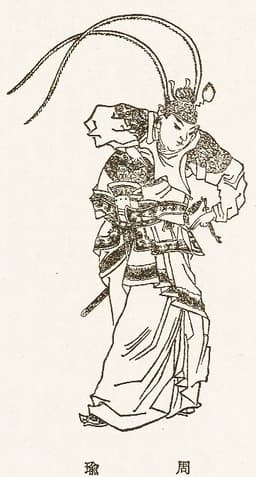
Zhou Yu
General · Ancient
56.2Total
Basic Information
Born
-160
175
Died
-146
210
Era
Ancient
Ancient
Nationality
Achaean League
China
Occupation
General
General
Civilization
Western
Eastern
Score Comparison
Military (10%)
45.0
76.0
Political (20%)
35.0
35.1
Influence (20%)
47.1
61.0
Legacy (20%)
37.5
52.0
Leadership (15%)
57.1
54.2
Strategy (15%)
41.7
70.0
TOTAL
43.6
56.2
Diaeus — Complete Timeline
150 BC
Election as strategos of the Achaean LeaguePolitical Action◆ Major
Diaeus was elected strategos (general) of the Achaean League during a period of rising tension with Rome. He advocated for war against Rome, pushing the League toward the disastrous Achaean War.
Achaean LeagueStrategosRome
Impact: regional
146 BC
Battle of CorinthWar◆ Major
Diaeus commanded the Achaean army at the Battle of Corinth against the Roman forces of Lucius Mummius. The Achaeans were decisively defeated, and Corinth was sacked and destroyed by the Romans.
Achaean WarCorinthBattle
Impact: regionaltragic
Declaration of war against RomePolitical Action
Diaeus declared war on the Roman Republic, leading the Achaean League into the Achaean War. This decision was made despite Roman military superiority and warnings from pro-Roman factions within the League.
Achaean WarRomeDeclaration of War
Impact: regionaldestructive
Suicide after defeatPolitical Action◆ Major
After the defeat at Corinth, Diaeus fled to Megalopolis and committed suicide to avoid capture by the Romans. His death marked the end of the Achaean League's resistance and the beginning of Roman domination of Greece.
Achaean WarSuicideEnd of League
Impact: regionaltragic
Zhou Yu — Complete Timeline
208 AD
Battle of Red CliffsWar
Zhou Yu, as commander of Sun Quan's forces, allied with Liu Bei to confront Cao Cao's northern fleet on the Yangtze River. Using fire ships, Zhou Yu's smaller navy destroyed Cao Cao's larger fleet, preventing a southern conquest and securing the Three Kingdoms division.
Three KingdomsNaval battleAlliance
Impact: regional
209 AD
Siege of JianglingWar◆ Major
After Red Cliffs, Zhou Yu led Sun Quan's forces in a year-long siege against Cao Cao's garrison at Jiangling. Zhou Yu was wounded by an arrow during the campaign. The eventual capture of Jiangling expanded Sun Quan's territory into Jing Province.
Three KingdomsSiegeTerritorial expansion
Impact: regional
210 AD
Death of Zhou YuOther◆ Major
Zhou Yu died at age 36 in Yueyang while preparing a campaign against Liu Bei's ally Liu Zhang. His death removed a key strategist from Sun Quan's court and allowed Liu Bei to consolidate control over Jing Province.
Three KingdomsDeathPower shift
Impact: regionaltragic
Expert Analysis
Origins
Diaeus was a Greek statesman and general of the Achaean League in the 2nd century BCE. Born into a prominent family in Megalopolis, he rose through the ranks of the League's political structure. Little is known of his early life, but his career was shaped by the growing power of Rome in the eastern Mediterranean. He became a leading advocate for Achaean independence and resistance against Roman hegemony.
Zhou Yu (175–210 CE) was born into a wealthy and influential family in Lujiang Commandery (modern Anhui, China) during the late Eastern Han dynasty. His father, Zhou Yi, was a high-ranking official. Zhou Yu received a comprehensive education in military strategy, literature, and music. He befriended Sun Ce, the eldest son of the warlord Sun Jian, and later served the Sun family, becoming a key commander under Sun Quan.
Rise to Power
Diaeus first emerged as a prominent figure in the Achaean League during the 150s BCE, when he served as strategos (general) multiple times. He was a vocal opponent of Roman interference in Greek affairs. In 147 BCE, he was elected strategos again and pushed the League into war with Rome, despite the overwhelming military disparity. His rise was fueled by popular sentiment for Greek freedom, but his leadership was marked by overconfidence and miscalculation.
Zhou Yu's rise began when he joined Sun Ce's forces around 190 CE. He helped Sun Ce conquer the Jiangdong region, earning trust and military command. After Sun Ce's death in 200 CE, Zhou Yu remained loyal to Sun Quan, becoming his chief military advisor. His strategic acumen was recognized during the campaign against Huang Zu in 208 CE, where he commanded naval forces. But his defining moment came later that year at the Battle of Red Cliffs.
Leadership & Governance
Diaeus's leadership was characterized by aggressive nationalism and a refusal to compromise. As strategos, he centralized authority and suppressed internal dissent, but his governance was erratic. He imposed heavy taxes to fund the war effort and alienated moderate factions within the League. His military strategy relied on mobilizing a large citizen army, but he failed to secure adequate training or logistics. In contrast, Zhou Yu was a pragmatic commander who emphasized discipline, intelligence, and cooperation. He built a professional navy and forged alliances, most notably with Liu Bei against Cao Cao. Zhou Yu's governance style was collaborative, consulting with subordinates like Lu Su and Huang Gai. While Diaeus scored 35.0 in political ability, Zhou Yu scored 35.1, a negligible difference, but Zhou Yu's political support was more stable.
Triumph & Tragedy
Diaeus's greatest success was uniting the Achaean League in a final stand against Rome, briefly reviving Greek resistance. However, his greatest failure was the catastrophic defeat at the Battle of Corinth in 146 BCE. His army was routed by Lucius Mummius, and Corinth was sacked and destroyed. Diaeus fled to Megalopolis and committed suicide, ending the independence of the Achaean League. His total score of 43.6 reflects his inability to achieve any lasting military or political victory.
Zhou Yu's greatest triumph was the Battle of Red Cliffs (208 CE), where his forces used fire ships to destroy Cao Cao's vastly larger fleet, preventing the unification of China under Cao Cao. This victory secured the southern kingdoms of Sun Quan and Liu Bei. His tragedy was his premature death at age 36 from illness, exacerbated by an arrow wound sustained during the Siege of Jiangling. He died in 210 CE while planning a campaign against Liu Bei's ally Liu Zhang, leaving his ambitions unfulfilled. Zhou Yu scored 56.2 overall, with a military score of 76.0 compared to Diaeus's 45.0.
Character & Destiny
Diaeus was stubborn, ambitious, and short-sighted. He ignored Roman warnings and overestimated the League's military capacity. His character—defiant but reckless—led directly to the League's destruction. Historical assessments by Polybius portray him as a demagogue who manipulated popular sentiment. In contrast, Zhou Yu was known for his calm demeanor, strategic foresight, and musical talent. He was decisive yet cautious, but his pride sometimes caused friction with allies like Liu Bei. His death at a young age cut short a promising career, but his legacy was secured by his victory at Red Cliffs.
Legacy
Diaeus's legacy is largely negative: he is remembered as the leader who led the Achaean League to its final defeat and the destruction of Corinth. His actions hastened the Roman conquest of Greece, leading to the end of Greek independence for centuries. His score of 37.5 in legacy reflects this destructive outcome. Zhou Yu's legacy is far more positive. He is celebrated in Chinese history as a brilliant naval strategist and a loyal minister. The Battle of Red Cliffs is a cultural touchstone, featured in literature like "Romance of the Three Kingdoms." His influence on military tactics, especially the use of fire ships, endured. Zhou Yu scored 61.0 in influence and 52.0 in legacy.
Conclusion
Zhou Yu had a greater impact on history than Diaeus. While Diaeus's actions led to the end of Greek freedom, Zhou Yu's victory at Red Cliffs preserved the division of China for decades, shaping the Three Kingdoms period. Zhou Yu's military score (76.0) vastly exceeds Diaeus's (45.0), and his strategic legacy is more enduring. Diaeus's total score of 43.6 against Zhou Yu's 56.2 reflects this disparity. Zhou Yu's leadership and strategy created a lasting narrative of resistance against overwhelming odds, while Diaeus's failure was total. Therefore, Zhou Yu stands as the more significant historical figure.
Rankings
🥇
Zhou YuLeader
Mil: 76.0Pol: 35.1Inf: 61.0
56.2
🥈
Diaeus
Mil: 45.0Pol: 35.0Inf: 47.1
43.6
+12.6 behind
How This Comparison Works
Algorithm
Each figure is scored on 6 dimensions (0—100 scale) based on structured historical data: Military (10%), Political (20%), Influence (20%), Legacy (20%), Leadership (15%), Strategy (15%). The weighted total produces the final ranking.
Data Sources
Scores are computed from structured sub-indicators in the database. Scale factors adjust for era (Ancient ×0.85, Modern ×1.0) and civilization size (Eastern ×1.05, Other ×0.80) to account for differences in population and military scale.
Maximum 3 Figures
Comparisons are limited to 2—3 figures to ensure readability and statistical meaningfulness.
Error Margins
±5 points per dimension — Sub-scores are derived from historical records with inherent uncertainty. Two figures within 5 points on a dimension should be considered roughly equivalent in that area.
Total Score Accuracy
±3 points overall — The weighted combination of 6 dimensions produces a total score with approximately ±3 points of uncertainty. Differences of less than 3 points are not statistically significant— the figures are effectively tied.
Known Limitations
- Historical records are incomplete and uneven across civilizations
- Figures from oral-tradition societies may be underrepresented
- Occupation labels can misclassify multi-role figures
- Scores measure capability and impact, not moral character
- Quantitative scoring is a comparison tool, not absolute truth
Capability Radar
Military (10%) — Battles & Warfare
Battles
15
75
Win Rate
10
70
Expansion
10
55
Political (20%) — Governance & Reform
Reform
10
30
Diplomacy
15
65
Economy
10
40
Influence (20%) — Cultural & Global Reach
Cultural
10
70
Global
10
55
Legacy (20%) — Historical Impact
Historical
15
75
Longevity
10
70
Leadership (15%) — Power & Stability
Tenure
30
45
Stability
5
50
Strategy (15%) — Tactics & Innovation
Strategy
15
80
Tactics
20
85
Reform
10
40
Similar Comparisons
Comments & Discussion
No comments yet. Be the first to share your thoughts!