Loading...
Diocletian vs Gallienus
Diocletian leads by 10.5 pts · 2 figures compared
…
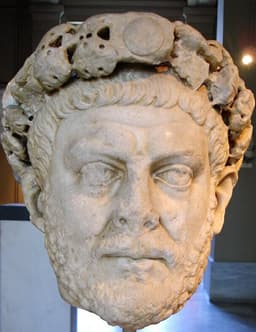
Diocletian
Emperor · Ancient
69.6Total

Gallienus
Emperor · Ancient
59.1Total
Basic Information
Born
244
218
Died
311
268
Era
Ancient
Ancient
Nationality
Roman Empire
Roman Empire
Occupation
Emperor
Emperor
Civilization
Western
Western
Score Comparison
Military (10%)
65.0
50.0
Political (20%)
82.0
72.0
Influence (20%)
72.0
56.4
Legacy (20%)
55.0
50.0
Leadership (15%)
82.0
65.0
Strategy (15%)
67.2
69.1
TOTAL
69.6
59.1
Diocletian — Complete Timeline
293 AD
Establishment of the TetrarchyReform
Diocletian created the Tetrarchy, dividing the Roman Empire into four administrative regions ruled by two senior emperors (Augusti) and two junior emperors (Caesares). This system aimed to improve governance and defense, and stabilize imperial succession.
TetrarchyReformAdministration
Impact: globalconstructive
Administrative Reorganization of the EmpireReform◆ Major
Diocletian reorganized the Roman provinces into smaller units (dioceses) grouped into four prefectures, separating civilian and military authority. This reform improved tax collection and administration, but also increased bureaucracy.
AdministrationReformProvinces
Impact: globalconstructive
301 AD
Economic Reforms (Edict on Maximum Prices)Reform◆ Major
Diocletian issued the Edict on Maximum Prices, setting price ceilings on over 1,000 goods and services to combat inflation. The edict was largely ineffective and led to black markets, but demonstrated the state's attempt to control the economy.
Economic ReformPrice ControlsInflation
Impact: global
303 AD
Diocletianic Persecution of ChristiansPolitical Action◆ Major
Diocletian issued a series of edicts ordering the persecution of Christians throughout the Roman Empire. Churches were destroyed, scriptures burned, and Christians were executed or forced to sacrifice to Roman gods. This was the last and most severe state-sponsored persecution.
PersecutionChristianityReligion
Impact: globaldestructive
305 AD
Abdication of DiocletianPolitical Action
Diocletian voluntarily abdicated the throne, retiring to his palace in Split (modern Croatia). He forced his co-emperor Maximian to do the same, setting a precedent for orderly succession, though the Tetrarchy soon collapsed after his departure.
AbdicationRetirementTetrarchy
Impact: global
Gallienus — Complete Timeline
259 AD
Defeat of the Alemanni at the Battle of MediolanumWar◆ Major
Gallienus led Roman forces to victory against the Alemanni who had invaded Italy and reached Mediolanum (Milan). The victory secured northern Italy from Germanic incursions and demonstrated Gallienus's military capability during the Crisis of the Third Century.
Germanic WarsBattleCrisis of the Third Century
Impact: regionalconstructive
260 AD
Reforms of the Roman ArmyReform◆ Major
After his father Valerian's capture, Gallienus reorganized the Roman army by creating a mobile cavalry force (vexillationes) under commanders like Aureolus. He also promoted equestrians over senators for military commands, reducing senatorial influence and improving military efficiency.
Military ReformCavalryEquestrian Order
Impact: regionalconstructive
Edict of Toleration (Gallienus)Political Action◆ Major
Gallienus issued an edict ending the persecution of Christians that had been enforced under his father Valerian. He restored Christian property and allowed freedom of worship, marking a shift in imperial policy toward Christianity before the later Edict of Milan.
Religious TolerationChristianityEdict
Impact: regionalprogressive
268 AD
Assassination at MediolanumPolitical Action◆ Major
Gallienus was murdered by his own officers while besieging the usurper Aureolus at Mediolanum. The conspiracy was led by Claudius, who succeeded him as emperor. Gallienus's death ended a 15-year reign that held the empire together during its deepest crisis.
AssassinationUsurpationCrisis of the Third Century
Impact: regionaltragic
Expert Analysis
Origins
Diocletian, born Diocles around 244 AD in Dalmatia (modern Croatia), came from humble origins. His father was a freedman or scribe, and Diocletian rose through the military ranks, serving under emperors like Aurelian and Probus. He became commander of the imperial guard under Emperor Carus and later was acclaimed emperor by his troops after Carus's death in 283 AD. Gallienus, born around 218 AD, was the son of Emperor Valerian. He belonged to a senatorial family and was raised in the imperial court. He was appointed co-emperor with his father in 253 AD, ruling the western provinces while Valerian focused on the east. Gallienus had a privileged upbringing and was educated in rhetoric and philosophy, but his reign was defined by constant crisis.
Rise to Power
Diocletian's rise was meteoric. After Carus's death, his son Numerian died under suspicious circumstances, and Diocletian was proclaimed emperor by the army in November 284 AD. He quickly defeated Carinus, Carus's other son, at the Battle of the Margus in 285 AD, securing sole control. Diocletian then appointed Maximian as his co-emperor (Augustus) in 286 AD, and later expanded the imperial college to four rulers (Tetrarchy) in 293 AD, with Galerius and Constantius Chlorus as Caesars. Gallienus became sole emperor after his father Valerian was captured by the Sassanid Persians in 260 AD. He faced numerous usurpers (the 'Thirty Tyrants') and barbarian invasions. His reign was marked by constant military campaigns, including victories over the Alemanni at Mediolanum (260 AD) and the Goths at Naissus (268 AD). He also had to contend with the breakaway Gallic Empire under Postumus and the Palmyrene Empire under Odaenathus.
Leadership & Governance
Diocletian's leadership was systematic and authoritarian. He reorganized the empire into four prefectures, each ruled by an Augustus or Caesar, with a clear hierarchy. He separated civilian and military careers, creating a more professional bureaucracy. His economic reforms included the Edict on Maximum Prices (301 AD), which set price ceilings but failed due to black markets. He also reformed taxation with a new census and land tax. Diocletian scored 82.0 in political skills, reflecting his ability to create a stable system. Gallienus, by contrast, was a crisis manager. He reformed the army by creating a mobile cavalry force (vexillationes) under commanders like Aureolus and Claudius, which was a precursor to the later field armies. He also issued an Edict of Toleration (260 AD) ending the persecution of Christians, which improved internal stability. However, his political score of 72.0 reflects his inability to prevent fragmentation of the empire. Diocletian's governance was proactive and structural; Gallienus's was reactive and tactical.
Triumph & Tragedy
Diocletian's greatest triumph was the Tetrarchy, which brought stability after decades of civil war. He also defeated the Sarmatians and Carpi, and secured the Danube frontier. His greatest failure was the Diocletianic Persecution (303-311 AD), which alienated Christians and proved counterproductive. The Edict on Maximum Prices also failed, causing economic disruption. Gallienus's triumph was holding the empire together during the Crisis of the Third Century. He defeated multiple usurpers and barbarian invasions. His military reforms were innovative. His tragedy was his assassination in 268 AD by his own officers, led by Claudius, who succeeded him. He also lost the Gallic Empire and Palmyra, which were only recovered later. Diocletian scored 65.0 in military, while Gallienus scored 50.0, reflecting Gallienus's more defensive posture.
Character & Destiny
Diocletian was methodical, autocratic, and visionary. He saw himself as a divine ruler, adopting the title 'Jovius' (from Jupiter). He voluntarily abdicated in 305 AD, retiring to his palace in Split, a unique act in Roman history. His character shaped his destiny: he created a system that outlasted his reign but eventually collapsed due to succession issues. Gallienus was more cultured and tolerant, but his reign was consumed by crisis. He had a reputation for cruelty (e.g., executing the philosopher Plotinus's patron) but also for military competence. His character was pragmatic, but his inability to secure loyalty led to his murder. Historical assessments: Diocletian is seen as the savior of the empire, while Gallienus is often underrated, though modern historians credit him with crucial reforms.
Legacy
Diocletian's Tetrarchy system influenced later imperial divisions, such as the Eastern and Western Roman Empires. His administrative reforms (dioceses, prefectures) became the basis for late Roman and Byzantine governance. The Diocletianic Persecution, however, failed to eradicate Christianity. Gallienus's military reforms (cavalry corps) were adopted by his successors, including Aurelian and Constantine. His Edict of Toleration set a precedent for religious freedom. Gallienus scored 50.0 in legacy, while Diocletian scored 55.0, reflecting Diocletian's more enduring institutional impact.
Conclusion
Diocletian had the greater impact on history. His total score of 69.6 surpasses Gallienus's 59.1 by 10.5 points. Diocletian's political and leadership scores (82.0 each) dwarf Gallienus's (72.0 and 65.0). While Gallienus held the empire together, Diocletian fundamentally restructured it, ending the Crisis of the Third Century and setting the stage for the later Roman Empire. Gallienus was a competent crisis manager, but Diocletian was a transformative reformer. His Tetrarchy, though flawed, provided a model for shared rule that influenced later emperors. Therefore, Diocletian's impact was more significant and lasting.
Rankings
🥇
DiocletianLeader
Mil: 65.0Pol: 82.0Inf: 72.0
69.6
🥈
Gallienus
Mil: 50.0Pol: 72.0Inf: 56.4
59.1
+10.5 behind
How This Comparison Works
Algorithm
Each figure is scored on 6 dimensions (0—100 scale) based on structured historical data: Military (10%), Political (20%), Influence (20%), Legacy (20%), Leadership (15%), Strategy (15%). The weighted total produces the final ranking.
Data Sources
Scores are computed from structured sub-indicators in the database. Scale factors adjust for era (Ancient ×0.85, Modern ×1.0) and civilization size (Eastern ×1.05, Other ×0.80) to account for differences in population and military scale.
Maximum 3 Figures
Comparisons are limited to 2—3 figures to ensure readability and statistical meaningfulness.
Error Margins
±5 points per dimension — Sub-scores are derived from historical records with inherent uncertainty. Two figures within 5 points on a dimension should be considered roughly equivalent in that area.
Total Score Accuracy
±3 points overall — The weighted combination of 6 dimensions produces a total score with approximately ±3 points of uncertainty. Differences of less than 3 points are not statistically significant— the figures are effectively tied.
Known Limitations
- Historical records are incomplete and uneven across civilizations
- Figures from oral-tradition societies may be underrepresented
- Occupation labels can misclassify multi-role figures
- Scores measure capability and impact, not moral character
- Quantitative scoring is a comparison tool, not absolute truth
Capability Radar
Military (10%) — Battles & Warfare
Battles
65
65
Win Rate
70
55
Expansion
50
30
Political (20%) — Governance & Reform
Reform
95
80
Diplomacy
80
65
Economy
75
60
Influence (20%) — Cultural & Global Reach
Cultural
60
50
Global
75
50
Legacy (20%) — Historical Impact
Historical
85
65
Longevity
70
55
Leadership (15%) — Power & Stability
Tenure
85
60
Stability
80
40
Strategy (15%) — Tactics & Innovation
Strategy
75
75
Tactics
60
70
Reform
85
85
Similar Comparisons
Comments & Discussion
No comments yet. Be the first to share your thoughts!