Loading...
This comparison has not been analyzed yet.
One-time AI generation (~1 minute). Scores and timeline are already available below.
Diosdado Macapagal vs Mauricio Macri
Mauricio Macri leads by 2.3 pts · 2 figures compared
…

Diosdado Macapagal
Politician · Modern
49.8Total
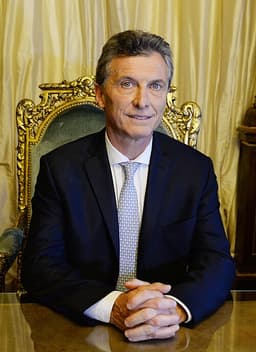
Mauricio Macri
Politician · Modern
52.1Total
Basic Information
Born
1910
1959
Died
1997
—
Era
Modern
Modern
Nationality
Philippines
Argentina
Occupation
Politician
Politician
Civilization
Eastern
Western
Score Comparison
Military (10%)
12.7
50.0
Political (20%)
68.0
68.0
Influence (20%)
54.9
51.8
Legacy (20%)
46.7
40.0
Leadership (15%)
68.0
64.0
Strategy (15%)
27.5
43.5
TOTAL
49.8
52.1
Diosdado Macapagal — Complete Timeline
1961 AD
Presidential Election VictoryPolitical Action◆ Major
Macapagal defeated incumbent President Carlos P. Garcia in the 1961 Philippine presidential election, running under the Liberal Party. His campaign focused on anti-corruption and economic reform, and he won with a platform promising change from the nationalist policies of Garcia.
Election VictoryLiberal PartyPolitical Change
Impact: national
1962 AD
Change of Philippine Independence DayPolitical Action◆ Major
President Macapagal issued Proclamation No. 28 moving the celebration of Philippine Independence Day from July 4 (the date of U.S. recognition of independence in 1946) to June 12 (the date of Emilio Aguinaldo's declaration of independence from Spain in 1898). This act aimed to assert national identity and correct historical inaccuracy.
Independence DayNational IdentityProclamation
Impact: nationalconstructive
Establishment of the Philippines' Claim to SabahPolitical Action
Macapagal formally revived the Philippine claim to the territory of Sabah (North Borneo), asserting that it was part of the Sultanate of Sulu and thus belonged to the Philippines. This claim led to diplomatic tensions with Malaysia and the United Kingdom, and remains unresolved.
Territorial DisputeSabah ClaimDiplomacy
Impact: regional
1963 AD
Land Reform Code of 1963Reform◆ Major
Macapagal signed the Agricultural Land Reform Code (Republic Act No. 3844) into law, aiming to abolish tenancy and establish owner-cultivatorship. The law provided for the expropriation of large estates and redistribution to tenant farmers, though implementation was limited and faced resistance from landowners.
Land ReformAgricultural PolicySocial Justice
Impact: nationalconstructive
1965 AD
Defeat in 1965 Presidential ElectionPolitical Action◆ Major
Macapagal lost his re-election bid to Senate President Ferdinand Marcos. The election was marked by Marcos's effective campaign and Macapagal's perceived failure to fully implement land reform and address economic issues, leading to a decisive defeat.
Election DefeatPolitical TransitionMarcos
Impact: nationaltragic
Mauricio Macri — Complete Timeline
2015 AD
Removal of Currency ControlsReform◆ Major
Macri lifted capital and currency controls on his first day in office, allowing the peso to float freely. This aimed to attract foreign investment but led to a sharp devaluation and inflation spike.
Economic ReformCurrency
Impact: national
Election as President of ArgentinaPolitical Action◆ Major
Mauricio Macri won the 2015 Argentine general election, defeating Daniel Scioli. He became the first non-Peronist and non-Radical president since 1916, ending 12 years of Kirchnerist rule.
ElectionPolitical Change
Impact: national
2018 AD
Signing of the 2018 IMF AgreementPolitical Action◆ Major
Macri's government signed a $57 billion standby agreement with the International Monetary Fund, the largest in IMF history. The loan aimed to stabilize the economy amid a currency crisis but imposed austerity measures.
IMFEconomic Crisis
Impact: nationaldestructive
2019 AD
Defeat in 2019 Presidential ElectionPolitical Action◆ Major
Macri lost his re-election bid to Alberto Fern
ElectionDefeat
Impact: nationaltragic
This comparison has not been analyzed yet.
One-time AI generation (~1 minute). Scores and timeline are already available below.
Rankings
🥇
Mauricio MacriLeader
Mil: 50.0Pol: 68.0Inf: 51.8
52.1
🥈
Diosdado Macapagal
Mil: 12.7Pol: 68.0Inf: 54.9
49.8
+2.3 behind
How This Comparison Works
Algorithm
Each figure is scored on 6 dimensions (0—100 scale) based on structured historical data: Military (10%), Political (20%), Influence (20%), Legacy (20%), Leadership (15%), Strategy (15%). The weighted total produces the final ranking.
Data Sources
Scores are computed from structured sub-indicators in the database. Scale factors adjust for era (Ancient ×0.85, Modern ×1.0) and civilization size (Eastern ×1.05, Other ×0.80) to account for differences in population and military scale.
Maximum 3 Figures
Comparisons are limited to 2—3 figures to ensure readability and statistical meaningfulness.
Error Margins
±5 points per dimension — Sub-scores are derived from historical records with inherent uncertainty. Two figures within 5 points on a dimension should be considered roughly equivalent in that area.
Total Score Accuracy
±3 points overall — The weighted combination of 6 dimensions produces a total score with approximately ±3 points of uncertainty. Differences of less than 3 points are not statistically significant— the figures are effectively tied.
Known Limitations
- Historical records are incomplete and uneven across civilizations
- Figures from oral-tradition societies may be underrepresented
- Occupation labels can misclassify multi-role figures
- Scores measure capability and impact, not moral character
- Quantitative scoring is a comparison tool, not absolute truth
Capability Radar
Military (10%) — Battles & Warfare
Battles
12
27
Win Rate
19
34
Expansion
21
33
Political (20%) — Governance & Reform
Reform
60
55
Diplomacy
55
50
Economy
50
40
Influence (20%) — Cultural & Global Reach
Cultural
40
20
Global
30
30
Legacy (20%) — Historical Impact
Historical
45
25
Longevity
35
15
Leadership (15%) — Power & Stability
Tenure
55
45
Stability
50
30
Strategy (15%) — Tactics & Innovation
Strategy
25
40
Tactics
29
43
Reform
28
43
Similar Comparisons
Comments & Discussion
No comments yet. Be the first to share your thoughts!