Loading...
This comparison has not been analyzed yet.
One-time AI generation (~1 minute). Scores and timeline are already available below.
Dragoljub Mihailovic vs Imru Haile Selassie
Dragoljub Mihailovic leads by 13.4 pts · 2 figures compared
…
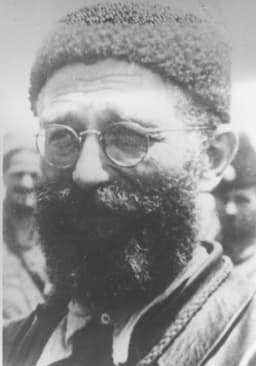
Dragoljub Mihailovic
General · Modern
49.5Total

Imru Haile Selassie
General · Modern
36.1Total
Basic Information
Born
1893
1892
Died
1946
1980
Era
Modern
Modern
Nationality
Yugoslavia
Ethiopia
Occupation
General
General
Civilization
Western
Other
Score Comparison
Military (10%)
30.0
10.2
Political (20%)
37.9
26.4
Influence (20%)
56.4
50.2
Legacy (20%)
48.3
37.5
Leadership (15%)
57.6
31.2
Strategy (15%)
60.0
45.0
TOTAL
49.5
36.1
Dragoljub Mihailovic — Complete Timeline
1941 AD
Formation of the Chetnik MovementWar◆ Major
After the Axis invasion of Yugoslavia, Mihailovi
ResistanceChetniksWWII
Impact: regional
Meeting with British Liaison OfficersPolitical Action◆ Major
Mihailović met with British Special Operations Executive officers in September 1941, securing Allied support for the Chetniks. This recognition positioned him as the leader of the royalist resistance, but the alliance later shifted to Tito's Partisans due to Chetnik collaboration.
Allied RelationsResistanceWWII
Impact: regional
1942 AD
Collaboration with Axis ForcesWar◆ Major
Mihailović's Chetniks began cooperating with Italian and German forces in operations against Tito's Partisans. This collaboration, including the division of territory and joint military actions, led to the loss of Allied support and later charges of treason.
CollaborationWWIIChetniks
Impact: regionaldestructive
1946 AD
Execution by Tito's RegimePolitical Action◆ Major
Dragoljub Mihailovi
ExecutionPost-WWIIYugoslavia
Impact: nationaltragic
Imru Haile Selassie — Complete Timeline
1932 AD
Appointment as Governor of GojjamPolitical Action
Imru Haile Selassie, cousin of Emperor Haile Selassie, was appointed Governor of Gojjam province. He implemented administrative reforms and worked to modernize the region's infrastructure.
GovernorshipGojjamReform
Impact: regionalconstructive
1936 AD
Appointment as acting emperor in exilePolitical Action◆ Major
After the Italian occupation of Ethiopia, Emperor Haile Selassie appointed Imru as his representative and acting emperor in exile. Imru led a provisional government from Gore in western Ethiopia, coordinating resistance efforts.
ExileResistanceProvisional Government
Impact: national
1937 AD
Capture and imprisonment by the ItaliansPolitical Action◆ Major
Imru Haile Selassie was captured by Italian forces after the collapse of the provisional government. He was imprisoned on the island of Ponza in Italy, where he remained until his release after World War II.
CaptureImprisonmentItalian Occupation
Impact: nationaltragic
This comparison has not been analyzed yet.
One-time AI generation (~1 minute). Scores and timeline are already available below.
Rankings
🥇
Dragoljub MihailovicLeader
Mil: 30.0Pol: 37.9Inf: 56.4
49.5
🥈
Imru Haile Selassie
Mil: 10.2Pol: 26.4Inf: 50.2
36.1
+13.4 behind
How This Comparison Works
Algorithm
Each figure is scored on 6 dimensions (0—100 scale) based on structured historical data: Military (10%), Political (20%), Influence (20%), Legacy (20%), Leadership (15%), Strategy (15%). The weighted total produces the final ranking.
Data Sources
Scores are computed from structured sub-indicators in the database. Scale factors adjust for era (Ancient ×0.85, Modern ×1.0) and civilization size (Eastern ×1.05, Other ×0.80) to account for differences in population and military scale.
Maximum 3 Figures
Comparisons are limited to 2—3 figures to ensure readability and statistical meaningfulness.
Error Margins
±5 points per dimension — Sub-scores are derived from historical records with inherent uncertainty. Two figures within 5 points on a dimension should be considered roughly equivalent in that area.
Total Score Accuracy
±3 points overall — The weighted combination of 6 dimensions produces a total score with approximately ±3 points of uncertainty. Differences of less than 3 points are not statistically significant— the figures are effectively tied.
Known Limitations
- Historical records are incomplete and uneven across civilizations
- Figures from oral-tradition societies may be underrepresented
- Occupation labels can misclassify multi-role figures
- Scores measure capability and impact, not moral character
- Quantitative scoring is a comparison tool, not absolute truth
Capability Radar
Military (10%) — Battles & Warfare
Battles
45
5
Win Rate
40
5
Expansion
35
5
Political (20%) — Governance & Reform
Reform
20
5
Diplomacy
35
10
Economy
15
5
Influence (20%) — Cultural & Global Reach
Cultural
40
5
Global
30
5
Legacy (20%) — Historical Impact
Historical
45
10
Longevity
35
5
Leadership (15%) — Power & Stability
Tenure
40
10
Stability
20
5
Strategy (15%) — Tactics & Innovation
Strategy
50
5
Tactics
55
5
Reform
30
5
Similar Comparisons
Comments & Discussion
No comments yet. Be the first to share your thoughts!