Loading...
This comparison has not been analyzed yet.
One-time AI generation (~1 minute). Scores and timeline are already available below.
Dudley Senanayake vs Vilasrao Deshmukh
Dudley Senanayake leads by 3.0 pts · 2 figures compared
…

Dudley Senanayake
Politician · Modern
53.8Total
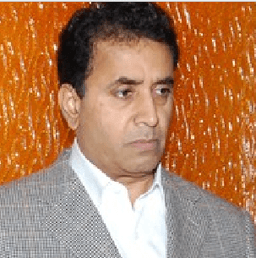
Vilasrao Deshmukh
Politician · Modern
50.8Total
Basic Information
Born
1911
1945
Died
1973
—
Era
Modern
Modern
Nationality
Sri Lanka
India
Occupation
Politician
Politician
Civilization
Indian
Indian
Score Comparison
Military (10%)
37.6
33.1
Political (20%)
68.0
54.7
Influence (20%)
49.4
49.4
Legacy (20%)
41.7
39.2
Leadership (15%)
74.0
74.0
Strategy (15%)
60.0
60.0
TOTAL
53.8
50.8
Dudley Senanayake — Complete Timeline
1952 AD
Became Prime Minister for the First TimePolitical Action◆ Major
Senanayake became Prime Minister of Ceylon in 1952 after the death of his father, D. S. Senanayake. He led the United National Party government, continuing his father's policies of moderate nationalism and pro-Western alignment. His first term lasted until 1953.
Prime MinisterUNPSuccession
Impact: national
1953 AD
Resigned as Prime Minister after HartalPolitical Action◆ Major
Senanayake resigned as Prime Minister in 1953 following a massive nationwide hartal (strike) against his government's decision to cut the rice subsidy. The protest turned violent, with dozens killed. His resignation was seen as a response to public pressure and political crisis.
ResignationHartalRice Subsidy
Impact: nationaltragic
1965 AD
Returned as Prime Minister for a Second TermPolitical Action◆ Major
Senanayake became Prime Minister again in 1965, leading a UNP-led coalition government. His second term focused on economic stabilization, agricultural development, and maintaining neutrality in foreign policy. He served until 1970, when his government lost the election.
Prime MinisterCoalition GovernmentEconomic Policy
Impact: nationalconstructive
1972 AD
Became Prime Minister for a Third TermPolitical Action
Senanayake became Prime Minister for a third time in 1972, leading a minority government. His term was marked by economic difficulties and the rise of the Janatha Vimukthi Peramuna (JVP). He resigned in 1973 due to ill health and political instability.
Prime MinisterMinority GovernmentJVP
Impact: national
Vilasrao Deshmukh — Complete Timeline
2003 AD
First Term as Chief Minister of MaharashtraPolitical Action◆ Major
Deshmukh became Chief Minister of Maharashtra in January 2003, leading the Indian National Congress-NCP coalition government. He served until 2004, focusing on agricultural development and irrigation projects.
Chief MinisterCoalition GovernmentMaharashtra
Impact: regionalconstructive
2004 AD
Second Term as Chief Minister of MaharashtraPolitical Action◆ Major
Deshmukh was reappointed Chief Minister in November 2004 after the Congress-NCP alliance won the state elections. He served until 2008, overseeing infrastructure projects like the Mumbai Metro and the Maharashtra State Road Development Corporation.
Chief MinisterInfrastructureMaharashtra
Impact: regionalconstructive
2008 AD
Served as Union Minister of Science and TechnologyPolitical Action
Deshmukh was appointed Union Minister of Science and Technology and Earth Sciences in 2008 under Prime Minister Manmohan Singh. He held the position until 2009, promoting scientific research and space exploration initiatives.
Union MinisterScience PolicyIndia
Impact: nationalconstructive
2009 AD
Served as Union Minister of Heavy IndustriesPolitical Action
Deshmukh was appointed Union Minister of Heavy Industries and Public Enterprises in 2009. He oversaw the performance of public sector undertakings and industrial policy until his resignation in 2010.
Union MinisterIndustrial PolicyIndia
Impact: national
This comparison has not been analyzed yet.
One-time AI generation (~1 minute). Scores and timeline are already available below.
Rankings
🥇
Dudley SenanayakeLeader
Mil: 37.6Pol: 68.0Inf: 49.4
53.8
🥈
Vilasrao Deshmukh
Mil: 33.1Pol: 54.7Inf: 49.4
50.8
+3.0 behind
How This Comparison Works
Algorithm
Each figure is scored on 6 dimensions (0—100 scale) based on structured historical data: Military (10%), Political (20%), Influence (20%), Legacy (20%), Leadership (15%), Strategy (15%). The weighted total produces the final ranking.
Data Sources
Scores are computed from structured sub-indicators in the database. Scale factors adjust for era (Ancient ×0.85, Modern ×1.0) and civilization size (Eastern ×1.05, Other ×0.80) to account for differences in population and military scale.
Maximum 3 Figures
Comparisons are limited to 2—3 figures to ensure readability and statistical meaningfulness.
Error Margins
±5 points per dimension — Sub-scores are derived from historical records with inherent uncertainty. Two figures within 5 points on a dimension should be considered roughly equivalent in that area.
Total Score Accuracy
±3 points overall — The weighted combination of 6 dimensions produces a total score with approximately ±3 points of uncertainty. Differences of less than 3 points are not statistically significant— the figures are effectively tied.
Known Limitations
- Historical records are incomplete and uneven across civilizations
- Figures from oral-tradition societies may be underrepresented
- Occupation labels can misclassify multi-role figures
- Scores measure capability and impact, not moral character
- Quantitative scoring is a comparison tool, not absolute truth
Capability Radar
Military (10%) — Battles & Warfare
Battles
45
44
Win Rate
44
47
Expansion
52
51
Political (20%) — Governance & Reform
Reform
40
40
Diplomacy
50
45
Economy
45
40
Influence (20%) — Cultural & Global Reach
Cultural
20
20
Global
15
15
Legacy (20%) — Historical Impact
Historical
30
20
Longevity
20
15
Leadership (15%) — Power & Stability
Tenure
55
55
Stability
35
35
Strategy (15%) — Tactics & Innovation
Strategy
55
54
Tactics
55
54
Reform
61
60
Similar Comparisons
Comments & Discussion
No comments yet. Be the first to share your thoughts!