Loading...
Duke Huan of Qi vs Galerius
Duke Huan of Qi leads by 6.6 pts · 2 figures compared
…
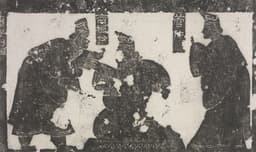
Duke Huan of Qi
Emperor · Ancient
62.3Total
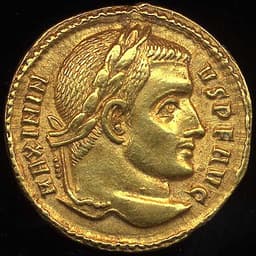
Galerius
Emperor · Ancient
55.7Total
Basic Information
Born
-685
250
Died
-643
311
Era
Ancient
Ancient
Nationality
China
Roman Empire
Occupation
Emperor
Emperor
Civilization
Eastern
Western
Score Comparison
Military (10%)
67.3
63.3
Political (20%)
65.0
62.7
Influence (20%)
60.0
55.7
Legacy (20%)
58.0
48.3
Leadership (15%)
72.0
48.8
Strategy (15%)
55.0
66.3
TOTAL
62.3
55.7
Duke Huan of Qi — Complete Timeline
685 BC
Reforms under Guan ZhongReform◆ Major
Duke Huan appointed Guan Zhong as chancellor, who implemented administrative and economic reforms. These included reorganizing the state into districts, standardizing taxes, and promoting trade, which strengthened Qi's power and wealth.
Qi StateReformGuan Zhong
Impact: regionalprogressive
Reign as Hegemon of QiPolitical Action◆ Major
Duke Huan of Qi became the first of the Five Hegemons, dominating the Spring and Autumn period. He used the authority of the Zhou king to lead alliances of states, maintaining order and defending against non-Chinese tribes.
Spring and AutumnHegemonAlliance
Impact: regionalconstructive
664 BC
Defeat of the Northern Di TribesWar
Duke Huan led a campaign against the Northern Di tribes who were threatening the states of Yan and Xing. His victory protected the northern borders and earned him gratitude from the Zhou court, enhancing his prestige as protector of Chinese civilization.
Spring and AutumnWarDefense
Impact: regionalconstructive
651 BC
Convening of the Alliance of KuiqiuPolitical Action◆ Major
Duke Huan convened a major alliance of states at Kuiqiu, where he reaffirmed the authority of the Zhou king and established a code of conduct among states. This meeting solidified his position as hegemon and set precedents for interstate relations.
Spring and AutumnAllianceHegemon
Impact: regionalconstructive
Galerius — Complete Timeline
297 AD
Persian CampaignWar◆ Major
Galerius led a Roman army against the Sassanid Empire, suffering an initial defeat near Carrhae. He later regrouped and won a decisive victory, capturing the Persian king Narseh's family and forcing a favorable peace treaty.
Sassanid WarMilitary Campaign
Impact: regional
303 AD
Great Persecution of ChristiansPolitical Action◆ Major
Galerius was a primary instigator of Diocletian's Great Persecution, which sought to suppress Christianity through destruction of churches, confiscation of property, and execution of clergy. The persecution lasted until 311.
ChristianityPersecutionTetrarchy
Impact: nationaldestructive
311 AD
Edict of TolerationReform
Galerius, on his deathbed, issued an edict ending the persecution of Christians in the Roman Empire. The edict granted Christians the right to practice their religion and rebuild their churches, marking a major shift in imperial policy.
ChristianityReligious PolicyTetrarchy
Impact: globalprogressive
Expert Analysis
Origins
Duke Huan of Qi (born 685 BCE, died 643 BCE) was a ruler of the state of Qi during the Spring and Autumn period of ancient China. He was the son of Duke Xi of Qi and ascended the throne after a period of internal strife. His early life was marked by exile and political turmoil, which shaped his pragmatic and alliance-building approach. He appointed Guan Zhong, a former enemy, as his chancellor, a decision that proved pivotal.
Galerius (born c. 258 CE, died 311 CE) was a Roman emperor from the Illyrian region. He rose from a humble background as a herdsman to become a military officer under Emperor Diocletian. His early career was defined by military service on the Danube frontier, where he gained a reputation for discipline and ruthlessness. He was adopted into the Tetrarchy, a system of four co-emperors.
Rise to Power
Duke Huan came to power in 685 BCE after his brother, the previous ruler, was assassinated. He initially faced challenges from rival states and internal factions. With Guan Zhong's counsel, he implemented reforms that strengthened Qi's economy and military. By 679 BCE, he convened the first of several alliances, establishing himself as the hegemon (ba) over other states. His rise was gradual, built on diplomatic maneuvering and military campaigns that protected smaller states from aggression.
Galerius rose through military ranks, distinguishing himself in campaigns against the Sarmatians and Persians. In 293 CE, Diocletian appointed him as Caesar (junior emperor) in the eastern provinces. He was tasked with defending the Danube frontier and later led campaigns in Persia. After Diocletian's abdication in 305 CE, Galerius became Augustus of the East, controlling most of the empire's territory. His rise was accelerated by the Tetrarchic system and his close ties to Diocletian.
Leadership & Governance
Duke Huan's leadership was characterized by delegation and strategic alliance-building. He entrusted Guan Zhong with administrative and economic reforms, including dividing the state into districts, standardizing taxes, and promoting trade. He used the authority of the Zhou king to legitimize his hegemony, convening alliances like the 651 BCE Alliance of Kuiqiu, where he established a code of conduct for states. His governance focused on stability and mutual defense, rather than territorial expansion.
Galerius governed as a traditional Roman autocrat, emphasizing military strength and religious uniformity. He was a key instigator of the Great Persecution of Christians (303–311 CE), issuing edicts that destroyed churches, confiscated property, and mandated sacrifices to Roman gods. His governance relied on coercion and fear. In contrast, his later Edict of Toleration (311 CE) granted Christians freedom of worship, a dramatic reversal prompted by his illness and political expediency.
Triumph & Tragedy
Duke Huan's greatest success was establishing the hegemonic system that maintained relative peace among Chinese states for decades. He protected Yan and Xing from northern invaders and upheld the Zhou ritual order. His tragedy was his later years: after Guan Zhong's death in 645 BCE, he trusted corrupt officials, leading to chaos. He died in 643 BCE during a palace coup, and his body lay unburied for months as his sons fought for power.
Galerius's triumph was his Persian campaign: after an initial defeat in 297 CE, he won a decisive victory in 298 CE, capturing the Sassanid capital Ctesiphon and securing a favorable peace. His tragedy is his role in the Great Persecution, which caused widespread suffering and failed to eliminate Christianity. His edict of toleration, issued on his deathbed, was an admission of failure. He died shortly after, his reputation tarnished by his persecution.
Character & Destiny
Duke Huan was pragmatic and able to forgive past enmities, as shown by appointing Guan Zhong despite their conflict. He was also capable of grand vision, creating a multi-state alliance system. However, his later reliance on sycophants revealed a lack of vigilance. His destiny was tied to his ability to delegate: success under Guan Zhong, failure without him.
Galerius was harsh and uncompromising, with a military mindset that valued discipline and order. His persecution of Christians reflected a rigid ideology, but his final edict showed a capacity for pragmatism when facing mortality. His legacy is mixed: he both intensified and ended state-sponsored persecution. His scores reflect this: political 62.7, but legacy only 48.3.
Legacy
Duke Huan's legacy as the first hegemon of the Spring and Autumn period established a model for later hegemons like Duke Wen of Jin. The hegemonic system preserved the Zhou feudal order for centuries. His reforms under Guan Zhong influenced Chinese statecraft, emphasizing economic management and centralized administration. He scored 58.0 in legacy, reflecting his foundational role in Chinese political thought.
Galerius's legacy is dominated by the Edict of Toleration, which paved the way for Constantine's Edict of Milan (313 CE) and the eventual Christianization of the Roman Empire. However, his persecution left a bitter memory for Christians. His military victories were ephemeral, and his administrative reforms were overshadowed by the Tetrarchy's collapse. His legacy score is 48.3, indicating limited enduring impact.
Conclusion
Duke Huan of Qi had a greater overall impact than Galerius, with a total score of 62.3 compared to Galerius's 55.7. Duke Huan's leadership (72.0) and political acumen (65.0) enabled him to create a stable hegemonic order that shaped Chinese history for centuries. Galerius, despite a higher strategy score (66.3), was ultimately a figure of transition whose persecution failed and whose toleration was reactive. Duke Huan's positive contributions to governance and interstate relations outweigh Galerius's mixed record of oppression and belated reform.
Rankings
🥇
Duke Huan of QiLeader
Mil: 67.3Pol: 65.0Inf: 60.0
62.3
🥈
Galerius
Mil: 63.3Pol: 62.7Inf: 55.7
55.7
+6.6 behind
How This Comparison Works
Algorithm
Each figure is scored on 6 dimensions (0—100 scale) based on structured historical data: Military (10%), Political (20%), Influence (20%), Legacy (20%), Leadership (15%), Strategy (15%). The weighted total produces the final ranking.
Data Sources
Scores are computed from structured sub-indicators in the database. Scale factors adjust for era (Ancient ×0.85, Modern ×1.0) and civilization size (Eastern ×1.05, Other ×0.80) to account for differences in population and military scale.
Maximum 3 Figures
Comparisons are limited to 2—3 figures to ensure readability and statistical meaningfulness.
Error Margins
±5 points per dimension — Sub-scores are derived from historical records with inherent uncertainty. Two figures within 5 points on a dimension should be considered roughly equivalent in that area.
Total Score Accuracy
±3 points overall — The weighted combination of 6 dimensions produces a total score with approximately ±3 points of uncertainty. Differences of less than 3 points are not statistically significant— the figures are effectively tied.
Known Limitations
- Historical records are incomplete and uneven across civilizations
- Figures from oral-tradition societies may be underrepresented
- Occupation labels can misclassify multi-role figures
- Scores measure capability and impact, not moral character
- Quantitative scoring is a comparison tool, not absolute truth
Capability Radar
Military (10%) — Battles & Warfare
Battles
65
65
Win Rate
70
70
Expansion
70
55
Political (20%) — Governance & Reform
Reform
65
65
Diplomacy
80
55
Economy
75
50
Influence (20%) — Cultural & Global Reach
Cultural
65
40
Global
55
55
Legacy (20%) — Historical Impact
Historical
75
60
Longevity
70
50
Leadership (15%) — Power & Stability
Tenure
70
60
Stability
60
45
Strategy (15%) — Tactics & Innovation
Strategy
75
65
Tactics
60
60
Reform
55
50
Similar Comparisons
Comments & Discussion
No comments yet. Be the first to share your thoughts!