Loading...
Dzhokhar Dudayev vs Mikhail Kutuzov
Mikhail Kutuzov leads by 16.8 pts · 2 figures compared
…
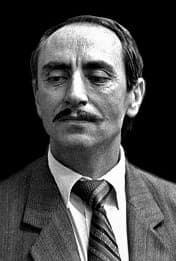
Dzhokhar Dudayev
General · Modern
52.0Total

Mikhail Kutuzov
General · Modern
68.8Total
Basic Information
Born
1944
1745
Died
—
1813
Era
Modern
Modern
Nationality
Chechnya
Russia
Occupation
General
General
Civilization
Western
Western
Score Comparison
Military (10%)
46.7
67.3
Political (20%)
45.1
68.0
Influence (20%)
57.2
68.0
Legacy (20%)
47.5
72.0
Leadership (15%)
57.6
68.0
Strategy (15%)
57.5
66.3
TOTAL
52.0
68.8
Dzhokhar Dudayev — Complete Timeline
1991 AD
Proclaimed Independence of ChechnyaPolitical Action
Dzhokhar Dudayev declared the independence of the Chechen Republic of Ichkeria from the Soviet Union. He was elected president in a controversial election. This act triggered the First Chechen War with Russia.
ChechnyaIndependenceIchkeria
Impact: regionalconstructive
1994 AD
First Chechen War BeginsWar
Russian forces invaded Chechnya to suppress the independence movement. Dudayev led the Chechen resistance, using guerrilla tactics. The war resulted in heavy casualties and destruction but failed to defeat the Chechen forces.
Chechen WarRussiaInvasion
Impact: regionaltragic
1996 AD
Assassination by Russian MissileWar
Dudayev was killed by a Russian guided missile while using a satellite phone near Grozny. His death was a major blow to the Chechen resistance but did not end the war. He was succeeded by Aslan Maskhadov.
AssassinationChechnyaRussia
Impact: regionaltragic
Mikhail Kutuzov — Complete Timeline
1805 AD
Battle of AusterlitzWar
Kutuzov commanded the Russian army alongside Austrian forces against Napoleon at Austerlitz. Despite his advice to avoid battle, Tsar Alexander I ordered an attack, resulting in a decisive French victory that destroyed the Third Coalition.
Napoleonic WarsThird CoalitionDefeat
Impact: globaltragic
1812 AD
Battle of BorodinoWar
Kutuzov commanded the Russian army against Napoleon's Grande Arm
Napoleonic WarsFrench Invasion of RussiaBloodiest Battle
Impact: globaltragic
Battle of MaloyaroslavetsWar◆ Major
Kutuzov's forces engaged Napoleon's army at Maloyaroslavets, blocking the French retreat along the Kaluga road. The battle forced Napoleon to retreat along the devastated Smolensk road, leading to the destruction of the Grande Arm
Napoleonic WarsFrench Invasion of RussiaTurning Point
Impact: global
Decision to Abandon MoscowPolitical Action
Kutuzov made the controversial decision to abandon Moscow to Napoleon without a fight after the Battle of Borodino. The retreat preserved the Russian army and led to Napoleon's occupation of a burning city, ultimately contributing to the French retreat.
Napoleonic WarsStrategic DecisionScorched Earth
Impact: global
Expert Analysis
Origins
Dzhokhar Dudayev was born on February 15, 1944, in Yalkhori, Chechnya, into a family deported to Central Asia by Stalin's regime. He grew up in exile, returning to Chechnya in the 1950s. Dudayev joined the Soviet Air Force, graduating from the Tambov Higher Military Aviation School in 1966, and later the Gagarin Air Force Academy. He rose to become a Major General, commanding a strategic bomber division in Estonia. His military career was conventional, but his Chechen identity shaped his later nationalism.
Mikhail Kutuzov was born on September 16, 1745, in Saint Petersburg, Russia, into a noble military family. His father was a lieutenant general. Kutuzov studied military engineering under famous generals, and his early career included service under Alexander Suvorov. He was wounded twice in the head during battles against the Turks, surviving severe injuries that affected his eyesight. Kutuzov's formative experiences were within the Russian imperial military tradition, emphasizing discipline and strategic patience.
Rise to Power
Dudayev's rise began with the collapse of the Soviet Union. In 1990, he was elected head of the Chechen National Congress, advocating independence. On October 27, 1991, he proclaimed the Chechen Republic of Ichkeria and was elected president in a controversial election. Russian President Boris Yeltsin attempted to suppress the secession, leading to the First Chechen War starting on December 11, 1994. Dudayev's leadership of the resistance catapulted him to international prominence as a symbol of Chechen defiance.
Kutuzov's rise was gradual. He served with distinction in the Russo-Turkish Wars, becoming a general in 1784. His diplomatic skills were recognized when he served as ambassador to the Ottoman Empire. In 1805, he commanded the Russian army at Austerlitz, but his advice to avoid battle was overruled by Tsar Alexander I, leading to a disastrous defeat. Despite this, he remained influential. After Napoleon's invasion in 1812, public pressure forced the Tsar to appoint Kutuzov as commander-in-chief on August 20, 1812, at age 67.
Leadership & Governance
Dudayev's leadership was charismatic but chaotic. As president, he struggled to establish effective governance amid economic collapse and internal opposition. He relied on his military background to organize the Chechen resistance, employing guerrilla tactics that inflicted heavy casualties on Russian forces. His political score of 45.1 reflects his inability to build stable institutions or secure international recognition. Dudayev's military score of 46.7 acknowledges his strategic use of terrain and popular support, but his forces were outmatched in conventional battles.
Kutuzov's leadership was marked by cautious deliberation and strategic retreat. His political score of 68.0 indicates his skill in navigating court politics and maintaining troop morale. At Borodino on September 7, 1812, he fought a bloody defensive battle (scoring 67.3 military) but then made the controversial decision to abandon Moscow to preserve the army. He governed through consensus among his generals, often avoiding decisive engagements. His strategy of attrition and maneuver forced Napoleon into a disastrous retreat, demonstrating patience over aggression.
Triumph & Tragedy
Dudayev's greatest triumph was leading Chechnya to de facto independence after the 1994-96 war, though he did not live to see the ceasefire. His guerrilla tactics tied down Russian forces and exposed the weaknesses of the Russian military. His tragedy was his assassination on April 21, 1996, by a Russian guided missile while using a satellite phone. His death fragmented the Chechen resistance, leading to internal power struggles. He also failed to gain international recognition or improve living standards for his people.
Kutuzov's triumph was the defeat of Napoleon's Grande Armée in 1812, a turning point in European history. By luring the French deep into Russia and then pursuing them during the retreat, he preserved his army and destroyed the enemy. His tragedy was his controversial decision at Austerlitz, where his advice was ignored, leading to a crushing defeat that cost thousands of lives. He died on April 28, 1813, before the final fall of Napoleon, but his legacy as the savior of Russia was secure.
Character & Destiny
Dudayev was a determined nationalist, willing to sacrifice his life for Chechen independence. His character was shaped by the trauma of deportation and the Soviet military, blending discipline with rebelliousness. He made decisions based on emotion and ideology, often rejecting compromise. This led to his isolation and eventual assassination. His legacy score of 47.5 reflects his role as a martyr for Chechen nationalism, but his failure to build a sustainable state limited his long-term impact.
Kutuzov was pragmatic and patient, often described as cunning. He learned from his mistakes at Austerlitz, where he saw the folly of attacking a superior force. He was wary of Napoleon's genius and preferred to avoid battle when possible. His character was cautious, sometimes seen as indecisive, but his strategic patience proved correct. His legacy score of 72.0 reflects his status as a national hero in Russia, credited with saving the country from invasion.
Legacy
Dudayev's legacy is contested. In Chechnya, he is revered as a founding father and martyr. His image appears on currency and monuments. However, his rule was marked by economic hardship and instability. The Chechen independence movement he started continued after his death, culminating in the 1996 ceasefire, but the second war (1999-2009) eventually crushed the rebellion. His influence score of 57.2 shows his impact on post-Soviet separatist movements, but his methods (guerrilla warfare and hostage-taking) have been widely criticized.
Kutuzov's legacy is monumental in Russian history. He is celebrated as the general who defeated Napoleon, with numerous monuments, streets, and the Order of Kutuzov named after him. His strategy of strategic retreat and attrition became a model for Russian defensive campaigns. He influenced later commanders like Georgy Zhukov. His legacy score of 72.0 reflects his enduring status as a symbol of Russian resilience. His decision to abandon Moscow is still debated, but it is credited with saving Russia.
Conclusion
Mikhail Kutuzov had greater impact than Dzhokhar Dudayev. Kutuzov's total score of 68.8 versus Dudayev's 52.0 reflects his superior military and political achievements. Kutuzov defeated the most powerful army of his time, altering the course of European history. Dudayev, while symbolically important for Chechnya, failed to achieve lasting independence or stable governance. Kutuzov's strategies are studied in military academies worldwide, while Dudayev's influence is largely regional. The 16.8-point gap underscores the scale of Kutuzov's historical significance.
Rankings
🥇
Mikhail KutuzovLeader
Mil: 67.3Pol: 68.0Inf: 68.0
68.8
🥈
Dzhokhar Dudayev
Mil: 46.7Pol: 45.1Inf: 57.2
52.0
+16.8 behind
How This Comparison Works
Algorithm
Each figure is scored on 6 dimensions (0—100 scale) based on structured historical data: Military (10%), Political (20%), Influence (20%), Legacy (20%), Leadership (15%), Strategy (15%). The weighted total produces the final ranking.
Data Sources
Scores are computed from structured sub-indicators in the database. Scale factors adjust for era (Ancient ×0.85, Modern ×1.0) and civilization size (Eastern ×1.05, Other ×0.80) to account for differences in population and military scale.
Maximum 3 Figures
Comparisons are limited to 2—3 figures to ensure readability and statistical meaningfulness.
Error Margins
±5 points per dimension — Sub-scores are derived from historical records with inherent uncertainty. Two figures within 5 points on a dimension should be considered roughly equivalent in that area.
Total Score Accuracy
±3 points overall — The weighted combination of 6 dimensions produces a total score with approximately ±3 points of uncertainty. Differences of less than 3 points are not statistically significant— the figures are effectively tied.
Known Limitations
- Historical records are incomplete and uneven across civilizations
- Figures from oral-tradition societies may be underrepresented
- Occupation labels can misclassify multi-role figures
- Scores measure capability and impact, not moral character
- Quantitative scoring is a comparison tool, not absolute truth
Capability Radar
Military (10%) — Battles & Warfare
Battles
35
75
Win Rate
30
70
Expansion
20
60
Political (20%) — Governance & Reform
Reform
35
30
Diplomacy
30
80
Economy
15
40
Influence (20%) — Cultural & Global Reach
Cultural
40
60
Global
35
70
Legacy (20%) — Historical Impact
Historical
45
75
Longevity
30
65
Leadership (15%) — Power & Stability
Tenure
30
65
Stability
10
55
Strategy (15%) — Tactics & Innovation
Strategy
50
90
Tactics
55
85
Reform
40
40
Similar Comparisons
Comments & Discussion
No comments yet. Be the first to share your thoughts!