Loading...
Edgar the Peaceful vs Mongke Khan
Mongke Khan leads by 16.0 pts · 2 figures compared
…
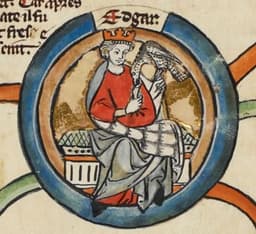
Edgar the Peaceful
Emperor · Medieval
53.5Total
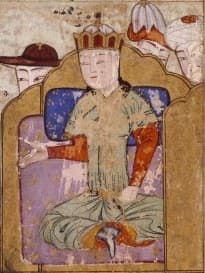
Mongke Khan
Emperor · Medieval
69.5Total
Basic Information
Born
943
1209
Died
975
1259
Era
Medieval
Medieval
Nationality
England
Mongol Empire
Occupation
Emperor
Emperor
Civilization
Western
Eastern
Score Comparison
Military (10%)
21.2
85.0
Political (20%)
65.0
59.3
Influence (20%)
56.4
68.0
Legacy (20%)
49.2
72.0
Leadership (15%)
78.0
68.0
Strategy (15%)
35.7
69.1
TOTAL
53.5
69.5
Edgar the Peaceful — Complete Timeline
959 AD
Coronation as King of EnglandPolitical Action◆ Major
Edgar succeeded his brother Eadwig as King of England. His reign was marked by stability and the consolidation of monastic reform under Dunstan.
Impact: nationalconstructive
970 AD
Naval defense reformsReform
Edgar organized a standing navy and divided England into naval districts to defend against Viking raids. This created a period of peace and security along the coasts.
Impact: nationalconstructive
Council of WinchesterCultural◆ Major
Edgar convened the Council of Winchester, which established the Regularis Concordia, a code for monastic life. This standardized Benedictine practices across England.
Impact: nationalconstructive
Mongke Khan — Complete Timeline
1251 AD
Election as Great KhanPolitical Action
Möngke was elected as the fourth Great Khan of the Mongol Empire with the support of Batu and his family, ending a period of regency after Güyük's death. His election was contested by the Ögedeid and Chagataid families, leading to purges.
SuccessionMongol EmpirePurge
Impact: global
1252 AD
Conquest of the Song Dynasty (Southern China)War◆ Major
Möngke launched a massive campaign against the Southern Song dynasty, personally leading the western army while his brother Kublai attacked from the north. The campaign stalled at Diaoyu Fortress, where Möngke died, but it set the stage for Kublai's later conquest.
Mongol ConquestSong DynastyChina
Impact: global
Purge of the Ögedeid and Chagataid FamiliesPolitical Action◆ Major
Möngke ordered a systematic purge of the Ögedeid and Chagataid princes and their supporters, accusing them of plotting against him. Hundreds of nobles were executed, consolidating Möngke's power and centralizing the empire under the Toluid line.
PurgeMongol EmpireToluid Consolidation
Impact: globaldestructive
1253 AD
Invasion of the Middle East (Hulagu's Campaign)War◆ Major
Möngke ordered his brother Hulagu to lead a massive Mongol army into the Middle East to conquer the Abbasid Caliphate and the Ismaili fortresses. This campaign resulted in the destruction of Baghdad in 1258 and the establishment of the Ilkhanate.
Mongol ConquestMiddle EastBaghdad
Impact: globaldestructive
1259 AD
Death at Diaoyu FortressWar
Möngke died during the siege of Diaoyu Fortress in Sichuan, possibly from dysentery or a battle wound. His death triggered a succession crisis that led to the division of the Mongol Empire into four khanates.
DeathMongol EmpireSuccession Crisis
Impact: globaltragic
Expert Analysis
Origins
Edgar the Peaceful was born around 943 into the House of Wessex, the younger son of King Edmund I. After his father's death in 946, his uncle Eadred ruled, then his brother Eadwig. Edgar's early life was shaped by the monastic reform movement led by Dunstan, who was exiled by Eadwig. Edgar received a strong ecclesiastical education and was proclaimed king in 959 following Eadwig's death, at age 16. His upbringing in a turbulent royal court instilled a preference for consensus and religious order.
Möngke Khan was born in 1209 into the Borjigin clan, grandson of Genghis Khan. His father Tolui was a leading general, and his mother Sorghaghtani Beki was a Nestorian Christian who ensured her sons received a broad education. Möngke grew up in the Mongol steppe tradition, learning warfare and administration. He accompanied his father on campaigns, including the conquest of the Jin dynasty. His early exposure to both military command and political intrigue prepared him for the highest office.
Rise to Power
Edgar ascended the throne in 959 after the death of his brother Eadwig, whose unpopular rule had alienated nobles and clergy. Edgar immediately recalled Dunstan from exile and appointed him Archbishop of Canterbury. He consolidated power by building alliances with the Church and the nobility, avoiding military conflict. His coronation in 973 at Bath was deliberately delayed until he was 30, following a pattern of symbolic maturity. The ceremony included a formal recognition by eight sub-kings of Britain, signifying his overlordship.
Möngke's rise was more violent. After the death of his uncle Ögedei in 1241, the empire was ruled by regents until 1246, when Güyük became Great Khan. Möngke's mother Sorghaghtani maneuvered to keep her sons influential. When Güyük died in 1248, Möngke, with the support of Batu Khan (ruler of the Golden Horde), was elected Great Khan at a kurultai in 1251. He immediately crushed opposition, purging the Ögedeid and Chagataid families, executing hundreds of princes and nobles. This ruthless consolidation ensured his uncontested rule.
Leadership & Governance
Edgar's leadership focused on internal stability and ecclesiastical reform. He convened the Council of Winchester around 970, which produced the Regularis Concordia, a code standardizing Benedictine monastic practices across England. This unified the Church and strengthened royal authority. Edgar also reorganized the navy, dividing England into naval districts with standing fleets to deter Viking raids. His reign was notably free of war, earning him the epithet "the Peaceful." He avoided foreign entanglements and focused on administrative consolidation, scoring 78.0 in leadership but only 21.2 in military.
Möngke governed an empire spanning from Korea to the Caucasus. He centralized administration, creating a unified tax system and standardizing weights and measures. He also reformed the postal relay system (yam) to improve communication. Militarily, he scored 85.0, launching simultaneous campaigns: his brother Kublai against the Song dynasty, another brother Hulagu against the Abbasid Caliphate, and a personal campaign in Sichuan. His leadership score of 68.0 reflects his ability to command vast armies but also his ruthless purges, which created fear rather than loyalty.
Triumph & Tragedy
Edgar's greatest success was the peaceful unification of England under a strong monarchy and reformed Church. The Regularis Concordia became the foundation of English monasticism for centuries. His naval reforms created a period of security that allowed trade and agriculture to flourish. His tragedy was that his achievements were short-lived: after his death in 975, his son Edward the Martyr was murdered, and the country fell into turmoil under his younger son Æthelred the Unready. Edgar's legacy of stability crumbled due to weak successors.
Möngke's triumphs were vast territorial expansions. His armies conquered the Abbasid Caliphate (sacking Baghdad in 1258) and advanced into Syria. He also pushed deep into Southern Song territory. His tragedy was his death at the Siege of Diaoyu Fortress in 1259, possibly from dysentery or a wound. This triggered a succession crisis that led to civil war between his brothers Kublai and Ariq Böke, fracturing the Mongol Empire into four khanates that never reunited. His death directly caused the empire's fragmentation, scoring 72.0 in legacy but losing the chance for global dominion.
Character & Destiny
Edgar was described by contemporaries as pious and just, but also ruthless when necessary—he executed the earl of East Anglia for corruption. His decision to delay his coronation shows a careful, symbolic approach. However, his reliance on Dunstan and other churchmen suggests a delegating style. His character suited a period of consolidation, not expansion. His destiny was to be overshadowed by his more famous successors, and his scores reflect a moderate impact: 56.4 in influence and 49.2 in legacy.
Möngke was known for his intelligence and decisiveness, but also for cruelty—the purge of rivals earned him a reputation for terror. He was a hands-on commander, personally leading campaigns. His death at a relatively young age (50) cut short his ambitions. Historians note that if he had lived, the Mongol Empire might have remained unified and conquered all of China and the Middle East. His character combined strategic vision with ruthless pragmatism, scoring 69.1 in strategy and 68.0 in leadership.
Legacy
Edgar's legacy is primarily ecclesiastical: the Regularis Concordia shaped English monastic life until the Norman Conquest. His administrative reforms influenced later Anglo-Saxon governance, but his reign is often seen as a golden age that did not outlast him. He is remembered as a king who brought peace but not lasting institutional change. His total score of 53.5 reflects a competent but not transformative ruler.
Möngke's legacy is more profound. His campaigns set the stage for the Mongol conquest of Song China (completed by Kublai) and the Ilkhanate in Persia. His administrative reforms influenced the Yuan dynasty. However, his death also marked the beginning of the empire's fragmentation. He is remembered as a capable Great Khan who expanded the empire but failed to preserve its unity. His total score of 69.5 shows a stronger overall impact.
Conclusion
Möngke Khan had a greater impact on world history than Edgar the Peaceful. While Edgar unified England and reformed its church, his influence was confined to a small island and lasted only a few decades. Möngke's military campaigns reshaped Eurasia, destroying the Abbasid Caliphate and advancing Mongol power to its zenith. His death triggered the empire's division, but the Mongol states that emerged—Yuan, Ilkhanate, Chagatai, Golden Horde—dominated for centuries. Edgar's score of 53.5 versus Möngke's 69.5 reflects this disparity. Möngke's actions had consequences that changed the course of history for millions, whereas Edgar's peace was a temporary respite in a turbulent era.
Rankings
🥇
Mongke KhanLeader
Mil: 85.0Pol: 59.3Inf: 68.0
69.5
🥈
Edgar the Peaceful
Mil: 21.2Pol: 65.0Inf: 56.4
53.5
+16.0 behind
How This Comparison Works
Algorithm
Each figure is scored on 6 dimensions (0—100 scale) based on structured historical data: Military (10%), Political (20%), Influence (20%), Legacy (20%), Leadership (15%), Strategy (15%). The weighted total produces the final ranking.
Data Sources
Scores are computed from structured sub-indicators in the database. Scale factors adjust for era (Ancient ×0.85, Modern ×1.0) and civilization size (Eastern ×1.05, Other ×0.80) to account for differences in population and military scale.
Maximum 3 Figures
Comparisons are limited to 2—3 figures to ensure readability and statistical meaningfulness.
Error Margins
±5 points per dimension — Sub-scores are derived from historical records with inherent uncertainty. Two figures within 5 points on a dimension should be considered roughly equivalent in that area.
Total Score Accuracy
±3 points overall — The weighted combination of 6 dimensions produces a total score with approximately ±3 points of uncertainty. Differences of less than 3 points are not statistically significant— the figures are effectively tied.
Known Limitations
- Historical records are incomplete and uneven across civilizations
- Figures from oral-tradition societies may be underrepresented
- Occupation labels can misclassify multi-role figures
- Scores measure capability and impact, not moral character
- Quantitative scoring is a comparison tool, not absolute truth
Capability Radar
Military (10%) — Battles & Warfare
Battles
10
85
Win Rate
10
80
Expansion
10
90
Political (20%) — Governance & Reform
Reform
70
75
Diplomacy
70
70
Economy
65
80
Influence (20%) — Cultural & Global Reach
Cultural
40
60
Global
20
80
Legacy (20%) — Historical Impact
Historical
45
75
Longevity
40
65
Leadership (15%) — Power & Stability
Tenure
65
60
Stability
75
65
Strategy (15%) — Tactics & Innovation
Strategy
15
85
Tactics
10
75
Reform
20
70
Similar Comparisons
Comments & Discussion
No comments yet. Be the first to share your thoughts!