Loading...
Edward the Martyr vs Otto IV
Edward the Martyr leads by 1.5 pts · 2 figures compared
…

Edward the Martyr
Emperor · Medieval
40.1Total
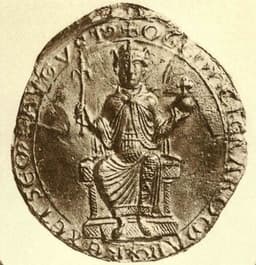
Otto IV
Emperor · Medieval
38.6Total
Basic Information
Born
962
1175
Died
978
1218
Era
Medieval
Medieval
Nationality
England
Holy Roman Empire
Occupation
Emperor
Emperor
Civilization
Western
Western
Score Comparison
Military (10%)
14.5
50.0
Political (20%)
35.0
27.9
Influence (20%)
47.1
46.3
Legacy (20%)
35.8
38.3
Leadership (15%)
55.3
34.6
Strategy (15%)
43.7
30.3
TOTAL
40.1
38.6
Edward the Martyr — Complete Timeline
975 AD
Coronation as King of EnglandPolitical Action
Edward succeeded his father Edgar as King of England at age 13. His short reign was marked by conflict between monastic reformers and secular nobles.
Anglo-Saxon EnglandCoronationMinor king
Impact: national
978 AD
Murdered at Corfe CastlePolitical Action◆ Major
Edward was stabbed to death while visiting his stepmother Aelfthryth at Corfe Castle. The murder was likely orchestrated by his stepmother to secure the throne for her son Aethelred.
Anglo-Saxon EnglandMurderSuccession
Impact: nationaltragic
Otto IV — Complete Timeline
1198 AD
Election as King of GermanyPolitical Action◆ Major
Otto IV was elected King of Germany in June 1198 by Welf supporters, opposing Philip of Swabia. His election sparked a civil war with the Hohenstaufen faction that lasted a decade.
SuccessionCivil War
Impact: regional
1209 AD
Coronation as Holy Roman EmperorPolitical Action◆ Major
Pope Innocent III crowned Otto IV Holy Roman Emperor in Rome on October 4, 1209, after Otto promised to respect papal territories. The coronation ended the civil war and made Otto the sole ruler.
CoronationPapal Alliance
Impact: regionalconstructive
1210 AD
Excommunication by Pope Innocent IIIPolitical Action◆ Major
Pope Innocent III excommunicated Otto IV in 1210 after Otto invaded the Kingdom of Sicily, violating his promises. The exclamation led to the election of Frederick II as rival king and Otto's decline.
ExcommunicationPapal Conflict
Impact: regionaldestructive
1214 AD
Battle of BouvinesWar
Otto IV was decisively defeated by King Philip II of France at the Battle of Bouvines on July 27, 1214. This defeat ended Otto's imperial ambitions and led to his loss of the German throne to Frederick II.
BattleDefeatFrench Victory
Impact: regionaltragic
Expert Analysis
Origins
Edward the Martyr was born around 962 as the eldest son of King Edgar of England and his first wife, Æthelflæd. His early life was overshadowed by his father's death in 975, leaving him a 13-year-old successor in a kingdom divided between monastic reformers and secular nobles. Otto IV was born around 1175 as the son of Henry the Lion, Duke of Saxony and Bavaria, and Matilda of England. As a member of the Welf dynasty, he grew up in exile in England after his father's rebellion against Frederick Barbarossa, shaping his later alliance with the English crown.
Rise to Power
Edward's accession was contested by supporters of his younger half-brother Æthelred, led by their mother Ælfthryth. Despite the opposition, Edward was crowned king in 975 with the backing of Archbishop Dunstan. His short reign—lasting only three years—was marked by continued strife between the reformist clergy and the nobility. Otto IV's rise was more protracted. After the death of Emperor Henry VI in 1197, a double election occurred: Philip of Swabia (Hohenstaufen) and Otto (Welf) were both elected King of Germany in 1198. Otto's support came from the northern German territories and his uncle King John of England, while Philip held the south. The ensuing civil war lasted until 1208, when Philip was assassinated, leaving Otto as sole ruler. Otto was crowned Holy Roman Emperor by Pope Innocent III in 1209 after promising to respect papal lands.
Leadership & Governance
Edward's governance was heavily influenced by his advisors, particularly Dunstan, who promoted Benedictine monastic reform. Edward's reign saw continued enforcement of Edgar's monastic policies, but he lacked the authority to quell noble unrest. Otto IV, by contrast, pursued an aggressive imperial policy. As emperor, he attempted to reclaim Sicily, violating his oath to the pope, which led to his excommunication in 1210. His leadership was marked by overreach and poor diplomacy, alienating the papacy and many German princes. In comparison, Edward's political score of 35.0 reflects his limited agency, while Otto's 27.9 indicates his failure to consolidate power.
Triumph & Tragedy
Edward's greatest triumph was maintaining his throne amid factional strife, but his tragic murder at Corfe Castle in 978—likely orchestrated by his stepmother Ælfthryth—cut his reign short. The assassination shocked England and led to his veneration as a martyr. Otto's triumph was his imperial coronation, but his tragedy was the Battle of Bouvines (1214), where his coalition with King John of England was crushed by Philip II of France. This defeat ended Otto's imperial ambitions and led to his deposition in 1215. Edward's military score of 14.5 reflects his lack of campaigns, while Otto's 50.0 shows his martial focus, though ultimately unsuccessful.
Character & Destiny
Edward's character is shrouded in hagiography; he is remembered as a pious youth whose innocence made him vulnerable. His murder was a pivotal event, strengthening the monastic party under Æthelred the Unready. Otto's character was ambitious but impetuous. His decision to invade Sicily despite papal warnings displayed a reckless disregard for consequences. His destiny was sealed by the Battle of Bouvines, where his coalition's defeat left him isolated. Otto's leadership score of 34.6 indicates his inability to inspire lasting loyalty, while Edward's 55.3 suggests his symbolic strength as a martyr.
Legacy
Edward's legacy was immediate: he was canonized as a saint, and his cult persisted for centuries. His death weakened the monarchy, contributing to the Danish invasions during Æthelred's reign. Otto's legacy is more mixed: his defeat at Bouvines solidified Capetian dominance in France and weakened the Welf dynasty. However, his conflict with the papacy set precedents for imperial-papal struggles. Edward's influence score of 47.1 and legacy score of 35.8 reflect his religious impact; Otto's influence of 46.3 and legacy of 38.3 underscore his political failure.
Conclusion
Despite Edward's shorter reign and lower military impact (14.5 vs Otto's 50.0), his total score (40.1) slightly exceeds Otto's (38.6). Edward's martyrdom had enduring religious and political consequences, shaping English history. Otto's defeat at Bouvines was a turning point but his overall impact was limited by his inability to sustain power. Therefore, Edward the Martyr had a greater net impact on medieval history through his symbolic legacy and its repercussions.
Rankings
🥇
Edward the MartyrLeader
Mil: 14.5Pol: 35.0Inf: 47.1
40.1
🥈
Otto IV
Mil: 50.0Pol: 27.9Inf: 46.3
38.6
+1.5 behind
How This Comparison Works
Algorithm
Each figure is scored on 6 dimensions (0—100 scale) based on structured historical data: Military (10%), Political (20%), Influence (20%), Legacy (20%), Leadership (15%), Strategy (15%). The weighted total produces the final ranking.
Data Sources
Scores are computed from structured sub-indicators in the database. Scale factors adjust for era (Ancient ×0.85, Modern ×1.0) and civilization size (Eastern ×1.05, Other ×0.80) to account for differences in population and military scale.
Maximum 3 Figures
Comparisons are limited to 2—3 figures to ensure readability and statistical meaningfulness.
Error Margins
±5 points per dimension — Sub-scores are derived from historical records with inherent uncertainty. Two figures within 5 points on a dimension should be considered roughly equivalent in that area.
Total Score Accuracy
±3 points overall — The weighted combination of 6 dimensions produces a total score with approximately ±3 points of uncertainty. Differences of less than 3 points are not statistically significant— the figures are effectively tied.
Known Limitations
- Historical records are incomplete and uneven across civilizations
- Figures from oral-tradition societies may be underrepresented
- Occupation labels can misclassify multi-role figures
- Scores measure capability and impact, not moral character
- Quantitative scoring is a comparison tool, not absolute truth
Capability Radar
Military (10%) — Battles & Warfare
Battles
4
25
Win Rate
7
20
Expansion
9
10
Political (20%) — Governance & Reform
Reform
5
10
Diplomacy
5
20
Economy
5
15
Influence (20%) — Cultural & Global Reach
Cultural
5
10
Global
5
5
Legacy (20%) — Historical Impact
Historical
10
20
Longevity
5
10
Leadership (15%) — Power & Stability
Tenure
5
30
Stability
5
10
Strategy (15%) — Tactics & Innovation
Strategy
17
15
Tactics
16
20
Reform
23
5
Similar Comparisons
Comments & Discussion
No comments yet. Be the first to share your thoughts!