Loading...
Ehud Barak vs Hyder Ali
Hyder Ali leads by 9.5 pts · 2 figures compared
…
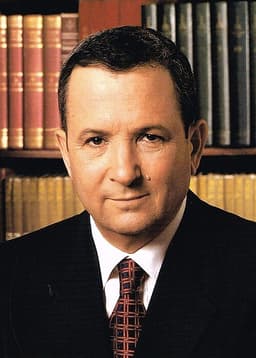
Ehud Barak
General · Modern
59.9Total
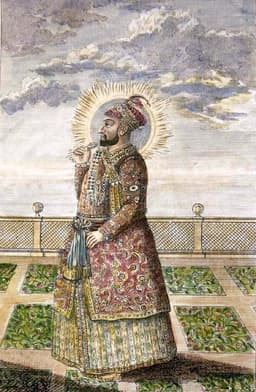
Hyder Ali
General · Modern
69.4Total
Basic Information
Born
1942
1720
Died
—
1782
Era
Modern
Modern
Nationality
Israel
India
Occupation
General
General
Civilization
Middle Eastern
Indian
Score Comparison
Military (10%)
63.3
80.0
Political (20%)
72.0
65.7
Influence (20%)
55.0
82.0
Legacy (20%)
52.0
56.0
Leadership (15%)
66.0
68.0
Strategy (15%)
61.2
68.0
TOTAL
59.9
69.4
Ehud Barak — Complete Timeline
1973 AD
Awarded Medal of Distinguished ServiceOther
Barak received the Medal of Distinguished Service, Israel's highest military decoration, for his actions during the Yom Kippur War. He led a commando raid deep into Egyptian territory, destroying radar installations. This was part of a broader operation to open a supply route.
Military DecorationYom Kippur War
Impact: nationalconstructive
1976 AD
Led Operation Thunderbolt (Entebbe Raid)War◆ Major
As Chief of Staff, Barak planned and oversaw the Entebbe raid, a rescue of hostages hijacked by Palestinian and German militants in Uganda. Israeli commandos rescued 102 hostages. The operation was a major military success and boosted Israeli morale and international standing.
EntebbeHostage RescueCounterterrorism
Impact: globalconstructive
1991 AD
Appointed Chief of Staff of the IDFPolitical Action◆ Major
Barak was appointed the 14th Chief of Staff of the Israel Defense Forces. He served until 1995, overseeing military operations during the First Intifada and the Oslo Accords period. His tenure included the 1993 Operation Accountability in Lebanon.
Military CommandIDF
Impact: national
1999 AD
Elected Prime Minister of IsraelPolitical Action◆ Major
Barak was elected Prime Minister of Israel, defeating incumbent Benjamin Netanyahu. He campaigned on a platform of peace negotiations and domestic reform. His government pursued the Camp David Summit with Palestinians and withdrew from southern Lebanon.
ElectionPeace Process
Impact: regionalconstructive
2000 AD
Camp David Summit with ArafatPolitical Action
Barak participated in the Camp David Summit with Palestinian leader Yasser Arafat and U.S. President Bill Clinton. The summit aimed to reach a final status agreement but failed. Barak offered territorial concessions that were rejected. The failure contributed to the Second Intifada.
Peace NegotiationsCamp DavidIsraeli-Palestinian Conflict
Impact: global
Withdrew from Southern LebanonPolitical Action◆ Major
Barak ordered the unilateral withdrawal of Israeli forces from the security zone in southern Lebanon, ending 18 years of occupation. The withdrawal was completed in May 2000. Hezbollah claimed victory, and the move was criticized by some as a retreat under fire.
WithdrawalLebanonHezbollah
Impact: regional
Hyder Ali — Complete Timeline
1757 AD
Battle of PlasseyWar◆ Major
Hyder Ali, as a commander under the Wodeyar dynasty, participated in the Battle of Plassey indirectly by supporting the French against the British. However, his major role came later. This battle marked the beginning of British dominance in Bengal, which Hyder Ali would later challenge in the Carnatic Wars.
Carnatic WarsBritish East India CompanyMysore
Impact: regional
1761 AD
Capture of the throne of MysorePolitical Action◆ Major
Hyder Ali, a military commander, overthrew the Wodeyar ruler Krishnaraja Wodeyar II and established himself as the de facto ruler of Mysore. He imprisoned the maharaja and assumed full control, transforming Mysore into a powerful state through military reforms and expansion.
CoupMysore KingdomWodeyar Dynasty
Impact: regionaldestructive
1767 AD
First Anglo-Mysore WarWar◆ Major
Hyder Ali led Mysore against the British East India Company in the First Anglo-Mysore War. He formed alliances with the Nizam of Hyderabad and the Marathas. The war ended with the Treaty of Madras in 1769, which restored conquered territories and established a defensive alliance between Mysore and the British.
Anglo-Mysore WarsTreaty of MadrasBritish India
Impact: regional
1780 AD
Second Anglo-Mysore WarWar◆ Major
Hyder Ali launched the Second Anglo-Mysore War, attacking British territories in the Carnatic. He captured Arcot and defeated British forces at Pollilur. The war continued after his death in 1782, with his son Tipu Sultan taking command. The conflict ended with the Treaty of Mangalore in 1784.
Anglo-Mysore WarsBattle of PollilurTipu Sultan
Impact: regional
Expert Analysis
Ehud Barak vs Hyder Ali
# The General as Statesman: Ehud Barak and Hyder Ali
The helicopter descended through the thin air of the Golan Heights, carrying a man who had once crawled through Syrian bunkers in the dark, a knife between his teeth. Ehud Barak, Israel’s most decorated soldier, was about to become its prime minister. Two centuries earlier and half a world away, another warrior—Hyder Ali, a former mercenary who had seized a throne—watched British redcoats march across the plains of southern India, calculating how to break their power. Both men rose from the battlefield to rule, yet their paths diverged like rivers flowing to different seas. What separates a general who becomes a great statesman from one who remains, forever, a soldier?
Origins
Ehud Barak was born in 1942 on Kibbutz Mishmar HaSharon, a child of socialist pioneers who had transformed Palestine’s marshes into farmland. His parents were Holocaust survivors from Lithuania, and the shadow of annihilation hung over his childhood. Israel in the 1940s and 1950s was a nation fighting for its existence, where military service was not a career choice but a sacred duty. Barak absorbed this ethos completely. He was small, intense, and driven—a boy who taught himself piano and mathematics, but whose real classroom was the army.
Hyder Ali entered the world in 1720, in the chaotic borderlands between the crumbling Mughal Empire and the rising Maratha Confederacy. His father was a military commander in the service of the Wodeyar kings of Mysore, and Hyder grew up among soldiers and spies. Southern India in the eighteenth century was a kaleidoscope of warring states, where French and British traders played Indian princes against each other like pieces on a chessboard. Hyder learned to read the board early. He had no formal education, but he had something perhaps more valuable: an instinct for power, sharpened by poverty and the knowledge that in this world, a man either fought or was devoured.
Rise to Power
Barak’s ascent was methodical, almost clinical. He joined an elite commando unit, the Sayeret Matkal, and quickly became its star. In 1973, during the Yom Kippur War, he led a mission deep behind Egyptian lines, disguised as an Arab officer, and earned the Medal of Distinguished Service—Israel’s highest honor. In 1976, as a young colonel, he helped plan Operation Thunderbolt, the Entebbe raid that rescued hostages from a hijacked Air France plane in Uganda. Each success burnished his reputation. By 1991, he was Chief of Staff of the Israel Defense Forces, the pinnacle of a military career. From there, politics was the only frontier left.
Hyder Ali’s rise was messier, more brutal. He began as a humble soldier in the Mysore army, but his talents soon drew the attention of the ruling Wodeyar dynasty. In 1757, he fought alongside the French at the Battle of Plassey—a victory that, ironically, cemented British power in Bengal and sowed the seeds of his own future struggle. By 1761, he had accumulated enough influence to overthrow the Wodeyar king and declare himself the de facto ruler of Mysore. There was no election, no peaceful transition. He simply took what he wanted, because in eighteenth-century India, that was how empires were made.
Leadership & Governance
As prime minister from 1999 to 2001, Barak governed like a general planning a campaign. He withdrew Israeli forces from southern Lebanon in 2000, ending an eighteen-year occupation—a bold, unilateral move that he believed would strengthen Israel’s security. Then came the Camp David Summit with Yasser Arafat and Bill Clinton. Barak offered the Palestinians a state in Gaza and most of the West Bank, with shared control of Jerusalem. It was the most generous proposal any Israeli leader had ever made. Arafat walked away. The Second Intifada erupted. Barak’s peace offensive collapsed, and with it, his political career.
Hyder Ali, by contrast, never sought peace. He fought the British East India Company in two wars, outmaneuvering them with cavalry raids and scorched-earth tactics. In the First Anglo-Mysore War (1767–1769), he forced the British to sign a humiliating treaty. In the Second (1780–1782), he captured Arcot and threatened Madras itself. He was a brilliant military innovator, using rockets and guerrilla warfare against European discipline. But he never built lasting institutions. Mysore remained a personal kingdom, dependent on his will. When he died in 1782, his son Tipu Sultan inherited both the throne and the war—and ultimately, defeat.
Triumph & Tragedy
Barak’s greatest triumph was the Entebbe raid, a feat of daring that still defines Israeli military excellence. His greatest tragedy was Camp David. He had staked everything on a deal, believing that a general’s clarity and resolve could solve a conflict that had defied generations of politicians. He was wrong. The failure broke him politically, and he never held high office again.
Hyder Ali’s triumph was his rise itself—a self-made king who humbled the British Empire at its zenith. His tragedy was that he could not finish what he started. He died of cancer in the middle of his greatest war, leaving his son to face a British counterattack that would eventually destroy Mysore.
Character & Destiny
Barak was a man of immense discipline and intellectual rigor, but also of coldness. He inspired loyalty in his soldiers but struggled to connect with ordinary voters. He believed that politics, like war, was a problem to be solved by superior strategy. It was a fatal miscalculation: politics is about people, not logic.
Hyder Ali was cunning, ruthless, and pragmatic. He allied with the French, the Marathas, and the Nizam of Hyderabad as circumstances demanded. He was also a realist who understood that power flows from the barrel of a gun. He never pretended otherwise. His destiny was to fight, and he accepted it.
Legacy
Today, Barak is remembered as a brilliant soldier who failed as a statesman. His military innovations shaped the IDF for decades, but his political legacy is the Camp David collapse and the Lebanon withdrawal—both controversial, neither settled. He lives in the shadow of what might have been.
Hyder Ali is remembered as the father of Mysorean resistance, the man who taught the British that India could not be conquered easily. His rocket technology influenced British artillery, and his son Tipu became a symbol of anti-colonial struggle. But his kingdom fell, and his name is less known than it deserves to be.
Conclusion
Two generals, two worlds, two failures. Barak tried to transcend the battlefield and was broken by politics. Hyder Ali never left the battlefield and was broken by death. Perhaps the lesson is that the qualities that make a great soldier—decisiveness, risk-taking, a willingness to destroy—are not the qualities that make a great ruler. Or perhaps the lesson is simpler: history does not reward generals who become politicians. It rewards the ones who win.
Rankings
🥇
Hyder AliLeader
Mil: 80.0Pol: 65.7Inf: 82.0
69.4
🥈
Ehud Barak
Mil: 63.3Pol: 72.0Inf: 55.0
59.9
+9.5 behind
How This Comparison Works
Algorithm
Each figure is scored on 6 dimensions (0—100 scale) based on structured historical data: Military (10%), Political (20%), Influence (20%), Legacy (20%), Leadership (15%), Strategy (15%). The weighted total produces the final ranking.
Data Sources
Scores are computed from structured sub-indicators in the database. Scale factors adjust for era (Ancient ×0.85, Modern ×1.0) and civilization size (Eastern ×1.05, Other ×0.80) to account for differences in population and military scale.
Maximum 3 Figures
Comparisons are limited to 2—3 figures to ensure readability and statistical meaningfulness.
Error Margins
±5 points per dimension — Sub-scores are derived from historical records with inherent uncertainty. Two figures within 5 points on a dimension should be considered roughly equivalent in that area.
Total Score Accuracy
±3 points overall — The weighted combination of 6 dimensions produces a total score with approximately ±3 points of uncertainty. Differences of less than 3 points are not statistically significant— the figures are effectively tied.
Known Limitations
- Historical records are incomplete and uneven across civilizations
- Figures from oral-tradition societies may be underrepresented
- Occupation labels can misclassify multi-role figures
- Scores measure capability and impact, not moral character
- Quantitative scoring is a comparison tool, not absolute truth
Capability Radar
Military (10%) — Battles & Warfare
Battles
65
78
Win Rate
70
72
Expansion
55
70
Political (20%) — Governance & Reform
Reform
50
70
Diplomacy
60
68
Economy
45
60
Influence (20%) — Cultural & Global Reach
Cultural
50
50
Global
55
50
Legacy (20%) — Historical Impact
Historical
55
55
Longevity
45
45
Leadership (15%) — Power & Stability
Tenure
55
65
Stability
40
55
Strategy (15%) — Tactics & Innovation
Strategy
70
80
Tactics
75
85
Reform
60
75
Similar Comparisons
Comments & Discussion
GRIT_GLIDER6/16/2026
Calling Barak Israel’s most decorated soldier is a Band-Aid over his actual performance. As PM, his unilateral withdrawal from Lebanon in 2000 was a tactical disaster that handed Hezbollah a PR victory and a territorial perch for rockets. He ran as a warrior-statesman but governed like a cautious bureaucrat. By contrast, Hyder Ali fought the British and Marathas simultaneously with ruthless cunning—he modernized Mysore’s artillery and used rocket brigades decades before William Congreve. One man
弹弓将军6/16/2026
历史课本总爱给以色列总理巴拉克贴金,说他爬过叙利亚战壕,可他的政治生涯就是一场华丽撤退。从黎巴嫩单方面撤军,到在耶路撒冷问题上摇摆不定,他把辛辛苦苦赢来的威慑力当白菜卖。反之,海德尔·阿里——这才是真刀真枪的枭雄,用法国教官训练土兵,组建火箭部队,连英国人都得喊他一声“迈索尔之虎”。比较这两位?一个靠国家资源上位,一个白手起家建帝国,高下立判。