Loading...
Ehud Barak vs Mohan Singh
Ehud Barak leads by 13.3 pts · 2 figures compared
…
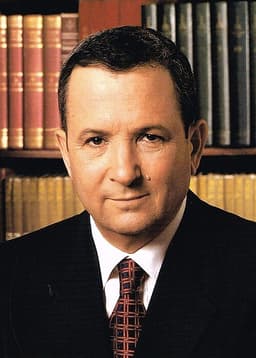
Ehud Barak
General · Modern
59.9Total
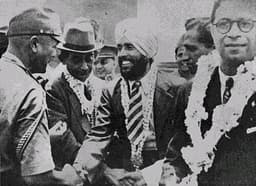
Mohan Singh
General · Modern
46.6Total
Basic Information
Born
1942
1909
Died
—
1989
Era
Modern
Modern
Nationality
Israel
India
Occupation
General
General
Civilization
Middle Eastern
Indian
Score Comparison
Military (10%)
63.3
50.0
Political (20%)
72.0
36.5
Influence (20%)
55.0
57.2
Legacy (20%)
52.0
48.3
Leadership (15%)
66.0
36.9
Strategy (15%)
61.2
41.7
TOTAL
59.9
46.6
Ehud Barak — Complete Timeline
1973 AD
Awarded Medal of Distinguished ServiceOther
Barak received the Medal of Distinguished Service, Israel's highest military decoration, for his actions during the Yom Kippur War. He led a commando raid deep into Egyptian territory, destroying radar installations. This was part of a broader operation to open a supply route.
Military DecorationYom Kippur War
Impact: nationalconstructive
1976 AD
Led Operation Thunderbolt (Entebbe Raid)War◆ Major
As Chief of Staff, Barak planned and oversaw the Entebbe raid, a rescue of hostages hijacked by Palestinian and German militants in Uganda. Israeli commandos rescued 102 hostages. The operation was a major military success and boosted Israeli morale and international standing.
EntebbeHostage RescueCounterterrorism
Impact: globalconstructive
1991 AD
Appointed Chief of Staff of the IDFPolitical Action◆ Major
Barak was appointed the 14th Chief of Staff of the Israel Defense Forces. He served until 1995, overseeing military operations during the First Intifada and the Oslo Accords period. His tenure included the 1993 Operation Accountability in Lebanon.
Military CommandIDF
Impact: national
1999 AD
Elected Prime Minister of IsraelPolitical Action◆ Major
Barak was elected Prime Minister of Israel, defeating incumbent Benjamin Netanyahu. He campaigned on a platform of peace negotiations and domestic reform. His government pursued the Camp David Summit with Palestinians and withdrew from southern Lebanon.
ElectionPeace Process
Impact: regionalconstructive
2000 AD
Camp David Summit with ArafatPolitical Action
Barak participated in the Camp David Summit with Palestinian leader Yasser Arafat and U.S. President Bill Clinton. The summit aimed to reach a final status agreement but failed. Barak offered territorial concessions that were rejected. The failure contributed to the Second Intifada.
Peace NegotiationsCamp DavidIsraeli-Palestinian Conflict
Impact: global
Withdrew from Southern LebanonPolitical Action◆ Major
Barak ordered the unilateral withdrawal of Israeli forces from the security zone in southern Lebanon, ending 18 years of occupation. The withdrawal was completed in May 2000. Hezbollah claimed victory, and the move was criticized by some as a retreat under fire.
WithdrawalLebanonHezbollah
Impact: regional
Mohan Singh — Complete Timeline
1942 AD
Founding of the Indian National ArmyPolitical Action◆ Major
Mohan Singh founded the Indian National Army (INA) in Singapore with captured Indian soldiers from the British Indian Army. He aimed to fight alongside Japan for Indian independence, but later fell out with Japanese leadership.
Indian National ArmyWorld War IIIndependence
Impact: nationalconstructive
Dissolution of the First INAPolitical Action◆ Major
Mohan Singh dissolved the first Indian National Army after disagreements with the Japanese over its command and objectives. He was arrested by the Japanese, and the INA was later revived by Subhas Chandra Bose.
Indian National ArmyJapanese ConflictDissolution
Impact: nationaldestructive
1945 AD
Imprisonment by BritishPolitical Action
Mohan Singh was imprisoned by the British after World War II for his role in the INA. He was tried and sentenced, but later released after Indian independence, becoming a symbol of resistance.
ImprisonmentBritish EmpireINA
Impact: nationaltragic
Expert Analysis
Ehud Barak vs Mohan Singh
# The General Who Could Not Surrender
On a July night in 1976, Israeli commandos stormed an airport terminal in Entebbe, Uganda, and rescued 102 hostages. The man who had planned the raid, Ehud Barak, was not yet prime minister. He was a soldier who had already earned his country's highest decoration. Half a world away and three decades earlier, another general sat in a Japanese prisoner-of-war camp in Singapore, watching his own army dissolve—not from enemy fire, but from the contradictions of war itself. Mohan Singh had founded the Indian National Army to liberate his homeland, only to see it splinter under the weight of imperial rivalries. Two generals, two nations, two wars for independence—but only one would taste the fruits of power.
Origins
Ehud Barak was born in 1942 on a kibbutz in British Palestine, a child of socialist Zionism. His world was one of collective farms, military drills, and the conviction that Jews could only rely on themselves. He joined the Israeli Defense Forces at eighteen, and by the 1973 Yom Kippur War, he was already a legend—leading a commando team disguised as Egyptian soldiers to blow up bridges behind enemy lines. His Medal of Distinguished Service, awarded that year, was not the last honor he would receive. His Israel was a nation forged in war, and Barak was its perfect product: brilliant, ruthless, and utterly convinced that force could solve any problem.
Mohan Singh was born in 1909 in Punjab, then part of British India. He grew up under the Raj, a system that promised order but delivered humiliation. He joined the British Indian Army as a young officer, serving in campaigns across the empire. But when World War II broke out, he was captured by the Japanese in Malaya. In captivity, he faced a choice: remain loyal to the British who had colonized his country, or join the enemy to fight for India's freedom. He chose the latter. His India was a nation stillborn, and Singh believed he could midwife it into being.
Rise to Power
Barak's path to power was a ladder of military promotions. He became Chief of Staff in 1991, overseeing operations that ranged from counterterrorism to the occupation of southern Lebanon. His reputation was that of a man who could think ten moves ahead—and who never hesitated to sacrifice pawns. In 1999, he translated that reputation into politics, defeating Benjamin Netanyahu for prime minister on a platform of peace. He had spent decades mastering the art of war; now he would try his hand at peace.
Mohan Singh's rise was more desperate. In 1942, with Japan advancing across Southeast Asia, he convinced captured Indian soldiers to join a new Indian National Army. The INA was meant to fight alongside the Japanese to liberate India from British rule. For a few months, Singh was its commander, drafting a manifesto and training recruits. But his army was a creature of convenience, not conviction. The Japanese wanted cannon fodder; Singh wanted independence. The mismatch was fatal.
Leadership & Governance
Barak governed as he commanded: with precision and impatience. He withdrew Israeli forces from southern Lebanon in 2000, ending an eighteen-year occupation that had drained his country's morale. He then went to Camp David with Yasser Arafat and Bill Clinton, offering the Palestinians a state on nearly all of the West Bank and Gaza. The summit collapsed, and Barak blamed Arafat. Critics say he moved too fast, offered too little, and failed to prepare his own public. But Barak never doubted his own strategy. He was a chess player who believed the board was his to control.
Mohan Singh never governed anything. His INA was dissolved in 1942 after he clashed with Japanese officers over its command. The Japanese wanted the INA as a propaganda tool; Singh wanted a real army. He was arrested by his own allies, and the first INA collapsed. By 1945, he was in British custody, tried for treason. His leadership was a series of brave beginnings and bitter endings. He could inspire loyalty but not sustain it; he could start a revolution but not finish one.
Triumph & Tragedy
Barak's triumph was Entebbe, a raid that became the stuff of legend. His tragedy was Camp David, where he gambled everything on peace and lost. The Palestinian intifada erupted soon after, and Barak's government fell. He had been the most decorated soldier in Israel's history, but he could not win the peace.
Mohan Singh's triumph was the INA itself—the idea that Indians could fight for their own freedom. His tragedy was that he could not control the forces he had unleashed. The INA was reborn under Subhas Chandra Bose, who led it to its doom in the jungles of Burma. Singh spent the rest of his life in obscurity, a footnote to a movement that had passed him by.
Character & Destiny
Barak's character was his destiny. He was a man of immense intelligence and immense arrogance, convinced that he could outthink history. He could not. Peace requires humility, and Barak had none. He saw himself as a solver of problems, not a builder of trust. His legacy is a cautionary tale: the warrior who could not become a peacemaker.
Mohan Singh's character was his tragedy. He was a patriot who trusted the wrong allies and lacked the ruthlessness to see his vision through. He was a general who surrendered—not to the enemy, but to the contradictions of his own cause. His destiny was to be forgotten, except by those who remember that independence is never won by armies alone.
Legacy
Barak is remembered as a brilliant soldier and a flawed prime minister. His military achievements are taught in staff colleges; his political failures are debated in think tanks. He lives in a country that still struggles with the questions he could not answer.
Mohan Singh is remembered, if at all, as the founder of the INA. In India, he is a minor figure in the pantheon of freedom fighters—honored but not celebrated. His real legacy is the lesson he taught: that war cannot be waged by proxy, and that freedom cannot be borrowed.
Conclusion
Two generals, two nations, two visions of liberation. Barak tried to win peace through war; Singh tried to win war through politics. Both failed, but their failures illuminate something essential about the human condition: that the tools we use to seize power are rarely the tools we need to wield it. Barak could storm an airport but could not storm the human heart. Singh could inspire an army but could not command its loyalty. In the end, they were both prisoners of their own contradictions—men who could not surrender the very thing that made them great.
Rankings
🥇
Ehud BarakLeader
Mil: 63.3Pol: 72.0Inf: 55.0
59.9
🥈
Mohan Singh
Mil: 50.0Pol: 36.5Inf: 57.2
46.6
+13.3 behind
How This Comparison Works
Algorithm
Each figure is scored on 6 dimensions (0—100 scale) based on structured historical data: Military (10%), Political (20%), Influence (20%), Legacy (20%), Leadership (15%), Strategy (15%). The weighted total produces the final ranking.
Data Sources
Scores are computed from structured sub-indicators in the database. Scale factors adjust for era (Ancient ×0.85, Modern ×1.0) and civilization size (Eastern ×1.05, Other ×0.80) to account for differences in population and military scale.
Maximum 3 Figures
Comparisons are limited to 2—3 figures to ensure readability and statistical meaningfulness.
Error Margins
±5 points per dimension — Sub-scores are derived from historical records with inherent uncertainty. Two figures within 5 points on a dimension should be considered roughly equivalent in that area.
Total Score Accuracy
±3 points overall — The weighted combination of 6 dimensions produces a total score with approximately ±3 points of uncertainty. Differences of less than 3 points are not statistically significant— the figures are effectively tied.
Known Limitations
- Historical records are incomplete and uneven across civilizations
- Figures from oral-tradition societies may be underrepresented
- Occupation labels can misclassify multi-role figures
- Scores measure capability and impact, not moral character
- Quantitative scoring is a comparison tool, not absolute truth
Capability Radar
Military (10%) — Battles & Warfare
Battles
65
15
Win Rate
70
10
Expansion
55
10
Political (20%) — Governance & Reform
Reform
50
25
Diplomacy
60
30
Economy
45
10
Influence (20%) — Cultural & Global Reach
Cultural
50
30
Global
55
25
Legacy (20%) — Historical Impact
Historical
55
40
Longevity
45
30
Leadership (15%) — Power & Stability
Tenure
55
20
Stability
40
10
Strategy (15%) — Tactics & Innovation
Strategy
70
25
Tactics
75
20
Reform
60
30
Similar Comparisons
Comments & Discussion
SabreRattler6/16/2026
This comparison misses the mark for any serious military historian. Barak was a special forces tactician who planned a single, brilliant rescue operation—impressive but not a strategic campaign. Mohan Singh raised an entire army from scratch, negotiating with Japanese imperialists while maintaining nationalist integrity, a feat of political-military leadership Barak never approached. Entebbe was a gamble that paid off; Singh's INA was a revolution that failed. Apples and oranges, and I'd take th
数据侦探6/16/2026
统计上这俩就没法比。Barak指挥过几个排级行动,最出名的Entebbe参与人数也就百来人;Mohan Singh领导了整个印度国民军,巅峰时兵力四万,横跨缅甸印度战场。拿个小分队队长和集团军司令放一起比较,这分析不是偷懒就是故意的。我支持Singh,人家至少组织过大规模军事体系,Barak那点战绩放二战太平洋战场连个勋章都混不上。
ScholarClassicus6/16/2026
The framework here is inherently flawed—it forces a binary 'victor vs. victim' narrative that ignores how both men were products of their respective colonial/postcolonial realities. Barak operated within a recognized sovereign state; Singh was building a proto-national army while still under British colonial imprisonment. You cannot compare a general commanding state resources to one constructing legitimacy from POW camps. This analysis reeks of presentism, judging Singh's 'failure' against Bara
历史迷6/16/2026
说Barak是"完美产物"太片面了。他1999年当总理后,2000年戴维营谈判直接跟阿拉法特谈崩,和平进程从此完蛋。Mohan Singh至少为印度独立种下了种子,虽然INA解散了,但战后英国注意到印度人的反抗意志——这点间接促进了1947年独立。要论历史影响力,Barak的军事成就被政治失败盖过了,Mohan Singh的失败反而激发了后来的独立运动。讽刺不?
RevisionistStirrer6/16/2026
You're both wrong. The real story isn't success or failure—it's that neither man truly won. Barak's Entebbe didn't end terrorism; it escalated it. Mohan Singh's INA didn't liberate India; it got co-opted by the Japanese war machine. Both were pawns in larger imperial games they couldn't control. Barak thought he could force peace through strength—ended up with the Second Intifada. Singh thought he could use Japanese power—ended up in their prison. Neither learned that war never solves the fundam