Loading...
This comparison has not been analyzed yet.
One-time AI generation (~1 minute). Scores and timeline are already available below.
Ehud Barak vs Oscar Osorio
Ehud Barak leads by 8.8 pts · 2 figures compared
…
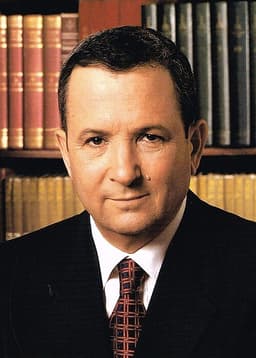
Ehud Barak
General · Modern
59.9Total

Oscar Osorio
General · Modern
51.1Total
Basic Information
Born
1942
1910
Died
—
1969
Era
Modern
Modern
Nationality
Israel
El Salvador
Occupation
General
General
Civilization
Middle Eastern
Western
Score Comparison
Military (10%)
63.3
25.9
Political (20%)
72.0
72.0
Influence (20%)
55.0
52.5
Legacy (20%)
52.0
42.5
Leadership (15%)
66.0
53.2
Strategy (15%)
61.2
60.0
TOTAL
59.9
51.1
Ehud Barak — Complete Timeline
1973 AD
Awarded Medal of Distinguished ServiceOther
Barak received the Medal of Distinguished Service, Israel's highest military decoration, for his actions during the Yom Kippur War. He led a commando raid deep into Egyptian territory, destroying radar installations. This was part of a broader operation to open a supply route.
Military DecorationYom Kippur War
Impact: nationalconstructive
1976 AD
Led Operation Thunderbolt (Entebbe Raid)War◆ Major
As Chief of Staff, Barak planned and oversaw the Entebbe raid, a rescue of hostages hijacked by Palestinian and German militants in Uganda. Israeli commandos rescued 102 hostages. The operation was a major military success and boosted Israeli morale and international standing.
EntebbeHostage RescueCounterterrorism
Impact: globalconstructive
1991 AD
Appointed Chief of Staff of the IDFPolitical Action◆ Major
Barak was appointed the 14th Chief of Staff of the Israel Defense Forces. He served until 1995, overseeing military operations during the First Intifada and the Oslo Accords period. His tenure included the 1993 Operation Accountability in Lebanon.
Military CommandIDF
Impact: national
1999 AD
Elected Prime Minister of IsraelPolitical Action◆ Major
Barak was elected Prime Minister of Israel, defeating incumbent Benjamin Netanyahu. He campaigned on a platform of peace negotiations and domestic reform. His government pursued the Camp David Summit with Palestinians and withdrew from southern Lebanon.
ElectionPeace Process
Impact: regionalconstructive
2000 AD
Camp David Summit with ArafatPolitical Action
Barak participated in the Camp David Summit with Palestinian leader Yasser Arafat and U.S. President Bill Clinton. The summit aimed to reach a final status agreement but failed. Barak offered territorial concessions that were rejected. The failure contributed to the Second Intifada.
Peace NegotiationsCamp DavidIsraeli-Palestinian Conflict
Impact: global
Withdrew from Southern LebanonPolitical Action◆ Major
Barak ordered the unilateral withdrawal of Israeli forces from the security zone in southern Lebanon, ending 18 years of occupation. The withdrawal was completed in May 2000. Hezbollah claimed victory, and the move was criticized by some as a retreat under fire.
WithdrawalLebanonHezbollah
Impact: regional
Oscar Osorio — Complete Timeline
1948 AD
Seized Power in a CoupPolitical Action◆ Major
Oscar Osorio led a military coup that overthrew the government of Salvador Castaneda Castro. Osorio established a military junta and later became president, initiating a period of military rule that lasted until 1956.
CoupMilitary RuleEl Salvador
Impact: nationaldestructive
1950 AD
Initiated Economic Modernization and IndustrializationReform◆ Major
Osorio's government launched a program of economic modernization, including the construction of the Lempa River hydroelectric dam, expansion of the port of Acajutla, and promotion of import-substitution industrialization. These projects aimed to reduce dependence on coffee exports.
Economic ReformIndustrializationInfrastructure
Impact: nationalconstructive
Enacted Social Reforms and Labor LawsReform◆ Major
Osorio's government introduced a new constitution and labor code that granted workers the right to organize, established a minimum wage, and created social security. These reforms were progressive for the time but were also used to control labor movements.
Labor RightsSocial SecurityConstitution
Impact: nationalconstructive
1952 AD
Suppressed Political OppositionPolitical Action
Osorio's regime cracked down on political dissent, banning the Communist Party and arresting opposition leaders. This repression ensured the military's continued dominance and stifled democratic development.
RepressionPolitical OppositionAuthoritarianism
Impact: nationaldestructive
This comparison has not been analyzed yet.
One-time AI generation (~1 minute). Scores and timeline are already available below.
Rankings
🥇
Ehud BarakLeader
Mil: 63.3Pol: 72.0Inf: 55.0
59.9
🥈
Oscar Osorio
Mil: 25.9Pol: 72.0Inf: 52.5
51.1
+8.8 behind
How This Comparison Works
Algorithm
Each figure is scored on 6 dimensions (0—100 scale) based on structured historical data: Military (10%), Political (20%), Influence (20%), Legacy (20%), Leadership (15%), Strategy (15%). The weighted total produces the final ranking.
Data Sources
Scores are computed from structured sub-indicators in the database. Scale factors adjust for era (Ancient ×0.85, Modern ×1.0) and civilization size (Eastern ×1.05, Other ×0.80) to account for differences in population and military scale.
Maximum 3 Figures
Comparisons are limited to 2—3 figures to ensure readability and statistical meaningfulness.
Error Margins
±5 points per dimension — Sub-scores are derived from historical records with inherent uncertainty. Two figures within 5 points on a dimension should be considered roughly equivalent in that area.
Total Score Accuracy
±3 points overall — The weighted combination of 6 dimensions produces a total score with approximately ±3 points of uncertainty. Differences of less than 3 points are not statistically significant— the figures are effectively tied.
Known Limitations
- Historical records are incomplete and uneven across civilizations
- Figures from oral-tradition societies may be underrepresented
- Occupation labels can misclassify multi-role figures
- Scores measure capability and impact, not moral character
- Quantitative scoring is a comparison tool, not absolute truth
Capability Radar
Military (10%) — Battles & Warfare
Battles
65
10
Win Rate
70
10
Expansion
55
10
Political (20%) — Governance & Reform
Reform
50
65
Diplomacy
60
50
Economy
45
60
Influence (20%) — Cultural & Global Reach
Cultural
50
30
Global
55
15
Legacy (20%) — Historical Impact
Historical
55
35
Longevity
45
20
Leadership (15%) — Power & Stability
Tenure
55
55
Stability
40
45
Strategy (15%) — Tactics & Innovation
Strategy
70
20
Tactics
75
15
Reform
60
60
Similar Comparisons
Comments & Discussion
No comments yet. Be the first to share your thoughts!