Loading...
This comparison has not been analyzed yet.
One-time AI generation (~1 minute). Scores and timeline are already available below.
Ekkathat vs Frederick I of Baden
Frederick I of Baden leads by 11.3 pts · 2 figures compared
…

Ekkathat
Emperor · Modern
35.3Total
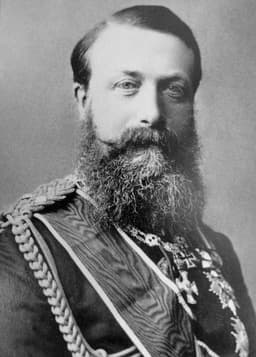
Frederick I of Baden
Emperor · Modern
46.6Total
Basic Information
Born
1718
1826
Died
1767
1907
Era
Modern
Modern
Nationality
Thailand
Baden
Occupation
Emperor
Emperor
Civilization
Eastern
Western
Score Comparison
Military (10%)
20.0
22.9
Political (20%)
27.9
45.0
Influence (20%)
45.5
48.6
Legacy (20%)
34.2
36.7
Leadership (15%)
31.2
68.0
Strategy (15%)
45.0
60.0
TOTAL
35.3
46.6
Ekkathat — Complete Timeline
1758 AD
Accession to the thronePolitical Action◆ Major
Ekkathat became king of Ayutthaya after his brother Uthumphon abdicated. His reign was marked by internal strife and the growing threat of Burmese invasion.
Succession
Impact: national
1765 AD
Burmese invasion of AyutthayaWar◆ Major
Burmese forces under King Hsinbyushin launched a massive invasion of Siam. Ekkathat's forces were unable to stop the Burmese advance, leading to a two-year siege of Ayutthaya.
InvasionBurmaSiege
Impact: regionaldestructive
1767 AD
Fall of AyutthayaWar
Burmese forces breached the walls of Ayutthaya and sacked the city. The kingdom of Ayutthaya was destroyed, and Ekkathat was killed during the chaos, ending 417 years of Ayutthayan rule.
Sack of CityEnd of DynastyBurma
Impact: regionaltragic
Frederick I of Baden — Complete Timeline
1856 AD
Marriage to Princess Louise of PrussiaOther
Frederick I married Princess Louise of Prussia, daughter of Prince Wilhelm (later Emperor Wilhelm I), on 20 September 1856. This marriage strengthened ties between Baden and Prussia, influencing Baden's alignment in German politics.
MarriagePrussiaBaden
Impact: nationalconstructive
1858 AD
Accession as Grand Duke of BadenPolitical Action◆ Major
Frederick I became Grand Duke of Baden on 5 September 1858, succeeding his father Leopold. His reign was noted for liberal reforms and constitutional governance.
BadenSuccession
Impact: national
1860 AD
Liberal reforms in BadenReform◆ Major
Frederick I implemented a series of liberal reforms in Baden, including freedom of the press, religious tolerance, and judicial independence. These reforms made Baden one of the most progressive states in the German Confederation.
BadenLiberalismReform
Impact: nationalprogressive
1871 AD
Support for German unificationPolitical Action◆ Major
Frederick I supported the unification of Germany under Prussian leadership. He proclaimed the German Empire in Versailles on 18 January 1871, alongside other German monarchs, and Baden became a state within the empire.
German unificationBadenEmpire
Impact: nationalconstructive
This comparison has not been analyzed yet.
One-time AI generation (~1 minute). Scores and timeline are already available below.
Rankings
🥇
Frederick I of BadenLeader
Mil: 22.9Pol: 45.0Inf: 48.6
46.6
🥈
Ekkathat
Mil: 20.0Pol: 27.9Inf: 45.5
35.3
+11.3 behind
How This Comparison Works
Algorithm
Each figure is scored on 6 dimensions (0—100 scale) based on structured historical data: Military (10%), Political (20%), Influence (20%), Legacy (20%), Leadership (15%), Strategy (15%). The weighted total produces the final ranking.
Data Sources
Scores are computed from structured sub-indicators in the database. Scale factors adjust for era (Ancient ×0.85, Modern ×1.0) and civilization size (Eastern ×1.05, Other ×0.80) to account for differences in population and military scale.
Maximum 3 Figures
Comparisons are limited to 2—3 figures to ensure readability and statistical meaningfulness.
Error Margins
±5 points per dimension — Sub-scores are derived from historical records with inherent uncertainty. Two figures within 5 points on a dimension should be considered roughly equivalent in that area.
Total Score Accuracy
±3 points overall — The weighted combination of 6 dimensions produces a total score with approximately ±3 points of uncertainty. Differences of less than 3 points are not statistically significant— the figures are effectively tied.
Known Limitations
- Historical records are incomplete and uneven across civilizations
- Figures from oral-tradition societies may be underrepresented
- Occupation labels can misclassify multi-role figures
- Scores measure capability and impact, not moral character
- Quantitative scoring is a comparison tool, not absolute truth
Capability Radar
Military (10%) — Battles & Warfare
Battles
5
38
Win Rate
5
37
Expansion
5
41
Political (20%) — Governance & Reform
Reform
5
60
Diplomacy
5
55
Economy
5
50
Influence (20%) — Cultural & Global Reach
Cultural
5
20
Global
5
10
Legacy (20%) — Historical Impact
Historical
10
20
Longevity
5
10
Leadership (15%) — Power & Stability
Tenure
10
50
Stability
5
55
Strategy (15%) — Tactics & Innovation
Strategy
5
45
Tactics
5
51
Reform
5
49
Similar Comparisons
Comments & Discussion
No comments yet. Be the first to share your thoughts!