Loading...
Analysis will be generated on first visit.
Scores and timeline are available below. The page will refresh automatically when ready.
Elias Hrawi vs Napoleon Bonaparte
Napoleon Bonaparte leads by 18.8 pts · 2 figures compared
…

Elias Hrawi
Politician · Modern
63.6Total
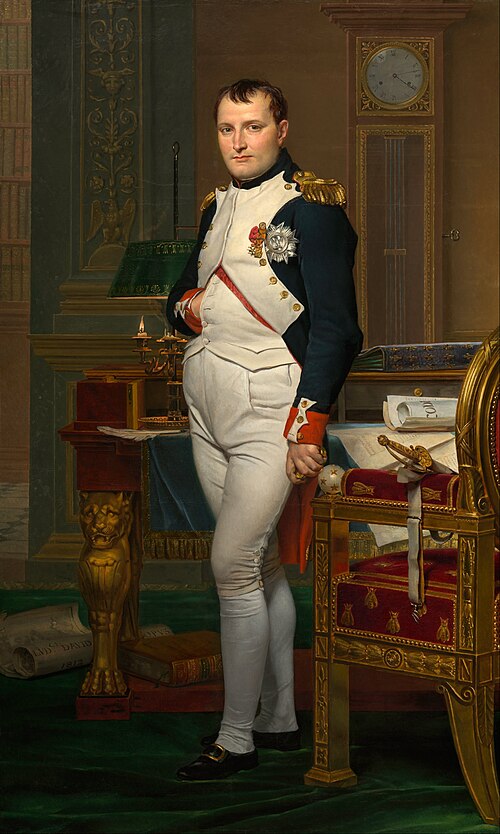
Napoleon Bonaparte
General · Modern
82.4Total
Basic Information
Born
1926
1769
Died
—
1821
Era
Modern
Modern
Nationality
Lebanon
France
Occupation
Politician
General
Civilization
Middle Eastern
Western
Score Comparison
Military (10%)
30.2
94.0
Political (20%)
72.0
75.0
Influence (20%)
71.3
82.0
Legacy (20%)
63.5
78.0
Leadership (15%)
72.0
80.0
Strategy (15%)
56.4
93.0
TOTAL
63.6
82.4
Rankings
🥇
Napoleon BonaparteLeader
Mil: 94.0Pol: 75.0Inf: 82.0
82.4
🥈
Elias Hrawi
Mil: 30.2Pol: 72.0Inf: 71.3
63.6
+18.8 behind
How This Comparison Works
Algorithm
Each figure is scored on 6 dimensions (0—100 scale) based on structured historical data: Military (10%), Political (20%), Influence (20%), Legacy (20%), Leadership (15%), Strategy (15%). The weighted total produces the final ranking.
Data Sources
Scores are computed from structured sub-indicators in the database. Scale factors adjust for era (Ancient ×0.85, Modern ×1.0) and civilization size (Eastern ×1.05, Other ×0.80) to account for differences in population and military scale.
Maximum 3 Figures
Comparisons are limited to 2—3 figures to ensure readability and statistical meaningfulness.
Error Margins
±5 points per dimension — Sub-scores are derived from historical records with inherent uncertainty. Two figures within 5 points on a dimension should be considered roughly equivalent in that area.
Total Score Accuracy
±3 points overall — The weighted combination of 6 dimensions produces a total score with approximately ±3 points of uncertainty. Differences of less than 3 points are not statistically significant— the figures are effectively tied.
Known Limitations
- Historical records are incomplete and uneven across civilizations
- Figures from oral-tradition societies may be underrepresented
- Occupation labels can misclassify multi-role figures
- Scores measure capability and impact, not moral character
- Quantitative scoring is a comparison tool, not absolute truth
Capability Radar
Military (10%) — Battles & Warfare
Battles
21
95
Win Rate
23
90
Expansion
28
95
Political (20%) — Governance & Reform
Reform
70
95
Diplomacy
65
80
Economy
40
85
Influence (20%) — Cultural & Global Reach
Cultural
30
85
Global
35
90
Legacy (20%) — Historical Impact
Historical
50
95
Longevity
40
90
Leadership (15%) — Power & Stability
Tenure
60
85
Stability
45
70
Strategy (15%) — Tactics & Innovation
Strategy
30
95
Tactics
31
98
Reform
34
92
Analysis will be generated on first visit.
Scores and timeline are available below. The page will refresh automatically when ready.
Elias Hrawi — Complete Timeline
1989 AD
Elected President of LebanonPolitical Action◆ Major
Elias Hrawi was elected President of Lebanon on November 24, 1989, just two days after the assassination of Rene Moawad. He was a Maronite politician from Zahle, backed by Syria, and his election was intended to continue the implementation of the Taif Agreement, which aimed to end the 15-year civil war.
PresidencyElectionTaif Agreement
Impact: nationalconstructive
1990 AD
Signed the Taif Agreement into lawPolitical Action
In 1990, President Elias Hrawi oversaw the ratification of the Taif Agreement, which reformed Lebanon's political system to give more power to Muslims and reduce the presidency's authority. The agreement ended the civil war and established a framework for national reconciliation, though it also formalized Syrian hegemony over Lebanon.
Taif AgreementCivil War EndPolitical Reform
Impact: nationalconstructive
1991 AD
Presided over the disarmament of militiasPolitical Action◆ Major
Under President Hrawi's leadership, the Lebanese government, with Syrian support, disarmed most militias in 1991, except for Hezbollah. This move consolidated state authority and ended the armed conflict, but it also left Hezbollah as the only major militia allowed to keep its weapons, a decision that would have long-term consequences for Lebanese sovereignty.
DisarmamentHezbollahPost-War
Impact: nationalconstructive
1995 AD
Extended presidential term by constitutional amendmentPolitical Action◆ Major
In 1995, the Lebanese Parliament, under Syrian influence, amended the constitution to extend President Hrawi's term by three years, citing the need for stability. This move was criticized as undemocratic and set a precedent for future term extensions, undermining the Taif Agreement's spirit of power-sharing.
Term ExtensionConstitutional AmendmentSyrian Influence
Impact: nationaldestructive
1998 AD
End of presidency and legacyPolitical Action
Elias Hrawi's extended term ended in 1998, and he was succeeded by Emile Lahoud. His presidency is credited with ending the civil war and rebuilding state institutions, but also criticized for entrenching Syrian control and failing to achieve true sovereignty. He died in 2006.
Term EndLegacySyrian Hegemony
Impact: national
Similar Comparisons
Comments & Discussion
No comments yet. Be the first to share your thoughts!