Loading...
Elizabeth I vs Franklin D. Roosevelt
Franklin D. Roosevelt leads by 5.3 pts · 2 figures compared
…
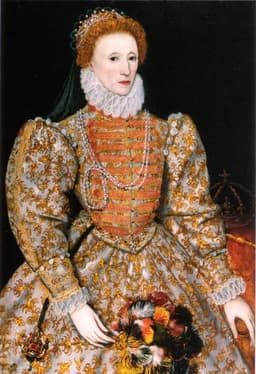
Elizabeth I
Politician · Modern
65.7Total
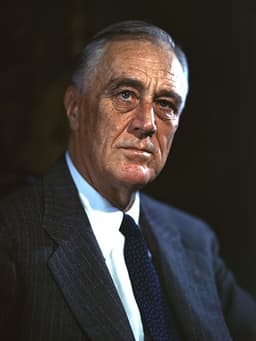
Franklin D. Roosevelt
Politician · Modern
71.0Total
Basic Information
Born
1533
1882
Died
1603
1945
Era
Modern
Modern
Nationality
England
United States
Occupation
Politician
Politician
Civilization
Western
Western
Score Comparison
Military (10%)
45.0
45.0
Political (20%)
78.0
85.0
Influence (20%)
65.0
75.0
Legacy (20%)
68.0
65.0
Leadership (15%)
75.0
85.0
Strategy (15%)
50.0
60.0
TOTAL
65.7
71.0
Elizabeth I — Complete Timeline
1559 AD
Act of Supremacy 1559Political Action◆ Major
Elizabeth I re-established the Church of England's independence from Rome, declaring herself Supreme Governor. This act, part of the Elizabethan Religious Settlement, restored Protestantism while maintaining some Catholic traditions, creating a via media that aimed to unify the nation.
Religious SettlementProtestantismChurch of England
Impact: nationalconstructive
1587 AD
Execution of Mary, Queen of ScotsPolitical Action◆ Major
After years of imprisonment, Elizabeth I signed the death warrant for Mary, Queen of Scots, who had been implicated in the Babington Plot to assassinate Elizabeth and claim the English throne. Mary's execution removed a major Catholic rival and solidified Elizabeth's position.
ExecutionCatholic RivalPlot
Impact: nationaltragic
1588 AD
Defeat of the Spanish ArmadaWar
The English navy under Lord Howard and Sir Francis Drake defeated the Spanish Armada, a massive invasion fleet sent by Philip II. Storms and English fireships scattered the Spanish fleet, preventing the invasion and establishing England as a major naval power.
Naval BattleSpainProtestantism
Impact: globalconstructive
1600 AD
Chartering of the East India CompanyPolitical Action◆ Major
Elizabeth I granted a royal charter to the East India Company, giving it a monopoly on English trade with Asia. This company would become a powerful instrument of British imperialism, eventually controlling large parts of India and shaping global trade.
TradeColonialismCharter
Impact: globalconstructive
1601 AD
Golden SpeechPolitical Action
In her final address to Parliament, Elizabeth I delivered the 'Golden Speech,' expressing her love for her subjects and her dedication to the realm. She addressed grievances over monopolies, promising reform, and cemented her image as a beloved monarch devoted to her people.
SpeechParliamentMonarchy
Impact: nationalconstructive
Franklin D. Roosevelt — Complete Timeline
1933 AD
Inaugurated as 32nd PresidentOther◆ Major
Franklin D. Roosevelt was inaugurated as President of the United States on March 4, 1933, during the Great Depression. His inaugural address declared 'the only thing we have to fear is fear itself,' and he immediately called Congress into special session to address the banking crisis.
Great DepressionPresidencyInauguration
Impact: national
Enacted the New DealOther◆ Major
Roosevelt launched the New Deal in 1933, a series of federal programs including the Civilian Conservation Corps, the Agricultural Adjustment Act, and the Tennessee Valley Authority. These measures aimed to provide relief, recovery, and reform during the Great Depression, fundamentally expanding the role of the federal government.
Great DepressionEconomic PolicySocial Reform
Impact: nationalconstructive
1935 AD
Signed the Social Security ActOther◆ Major
Roosevelt signed the Social Security Act into law on August 14, 1935, establishing a federal system of old-age pensions, unemployment insurance, and aid for dependent children. This created the modern American welfare state and provided a safety net for millions of citizens.
Social WelfareLegislationNew Deal
Impact: nationalconstructive
1941 AD
Lend-Lease ActOther◆ Major
Roosevelt signed the Lend-Lease Act on March 11, 1941, authorizing the transfer of military equipment and supplies to Allied nations, particularly Britain and the Soviet Union. This program provided critical material support to countries fighting the Axis powers before U.S. entry into World War II.
World War IIForeign PolicyMilitary Aid
Impact: globalconstructive
Declaration of War on JapanPolitical Action◆ Major
Following the Japanese attack on Pearl Harbor on December 7, 1941, Roosevelt delivered his 'Day of Infamy' speech to Congress the next day, requesting a declaration of war. Congress approved the declaration, bringing the United States into World War II.
World War IIPearl HarborDeclaration of War
Impact: globaldestructive
1942 AD
Executive Order 9066Other◆ Major
Roosevelt signed Executive Order 9066 on February 19, 1942, authorizing the forced relocation and internment of Japanese Americans living on the West Coast. Over 110,000 people, mostly U.S. citizens, were incarcerated in camps for the duration of the war, a decision later widely condemned as a violation of civil rights.
World War IICivil RightsInternment
Impact: nationaldestructive
1944 AD
Elected to Fourth TermOther◆ Major
Roosevelt was elected to an unprecedented fourth term as president in November 1944, defeating Republican Thomas E. Dewey. This election occurred during the final stages of World War II, and Roosevelt's continued leadership ensured stability in the war effort and post-war planning.
PresidencyElectionWorld War II
Impact: national
1945 AD
Yalta ConferenceOther◆ Major
Roosevelt met with Winston Churchill and Joseph Stalin at the Yalta Conference in February 1945 to discuss post-war Europe. Agreements included the division of Germany, Soviet entry into the war against Japan, and the creation of the United Nations, shaping the post-war world order.
World War IIDiplomacyPost-War Planning
Impact: global
Expert Analysis
Franklin D. Roosevelt vs Elizabeth I
# The Virgin Queen and the New Deal President: Two Paths to Power in Times of Crisis
On a gray December morning in 1941, Franklin Delano Roosevelt stood before a joint session of Congress, his leg braces hidden beneath the podium, and asked for a declaration of war against Japan. Three hundred and fifty-three years earlier, another ruler had faced her own existential threat: in the summer of 1588, Elizabeth Tudor rode to Tilbury to address her army, the Spanish Armada looming on the horizon. Both moments distilled the essence of leadership in crisis—yet the worlds these two figures inhabited could not have been more different. Roosevelt inherited a shattered economy and a reluctant superpower; Elizabeth inherited a bankrupt kingdom and a religious civil war. How did each navigate their era's storms, and what drove their vastly different outcomes?
Origins
Franklin Delano Roosevelt was born in 1882 into the Hudson Valley aristocracy, a world of country estates, private tutors, and the unshakeable confidence that comes with inherited privilege. His fifth cousin, Theodore Roosevelt, had already occupied the White House, and young Franklin absorbed the progressive reformism of the era—the belief that government could and should tame the excesses of industrial capitalism. Yet his was a sheltered youth, punctuated by a Harvard education and a law degree that bored him. The Great Depression would not strike until he was forty-seven, meaning Roosevelt spent his formative years in the gilded twilight of American optimism.
Elizabeth Tudor, by contrast, was born in 1533 into a kingdom still reeling from her father Henry VIII's break with Rome. Her mother, Anne Boleyn, was executed when Elizabeth was not yet three. She spent her childhood as a political pawn—declared illegitimate, imprisoned in the Tower of London under her half-sister Mary's reign, and constantly reminded that her very existence was a threat to Catholic Europe. Where Roosevelt grew up secure, Elizabeth grew up survivalist. Her education was rigorous—she mastered Latin, Greek, French, and Italian—but it was a weapon, not a luxury. Every book she read, every language she learned, was a tool to outthink the enemies who surrounded her.
Rise to Power
Roosevelt's path to the presidency was almost preordained. He served as Assistant Secretary of the Navy under Woodrow Wilson, ran for Vice President in 1920, and contracted polio in 1921—a devastating blow that could have ended his career. Instead, it transformed him. The man who emerged from years of rehabilitation was more empathetic, more patient, and more cunning. He won the governorship of New York in 1928, then the presidency in 1932, at the depths of the Depression. His rise was steady, conventional, and fueled by the Democratic Party machinery.
Elizabeth's rise was anything but conventional. She was twenty-five when she ascended the throne in 1558, after Mary's death. Her legitimacy was disputed; her gender was considered a weakness; and England was a second-rate power surrounded by Catholic rivals. She had no party machine, no inherited coalition. What she had was a fierce intelligence and a deep understanding of theater. Her coronation procession was carefully choreographed to present her as both a Protestant savior and a Virgin Queen wedded to her people. She understood that for a woman to rule in a man's world, she had to become a symbol as much as a sovereign.
Leadership & Governance
Roosevelt governed through audacity. The New Deal was not a single plan but a series of experimental programs—the Civilian Conservation Corps, the Works Progress Administration, the Social Security Act—that fundamentally redefined the relationship between the American people and their government. He was a master of communication, using his "fireside chats" to speak directly to citizens, explaining complex policies in plain language. He built the modern Democratic coalition: urban workers, Southern whites, Black voters, intellectuals, and immigrants. His military strategy was global—he understood that the Axis powers could not be defeated piecemeal, and he forged the Grand Alliance with Churchill and Stalin.
Elizabeth governed through balance. She never married, and she used the prospect of marriage as a diplomatic tool for decades. She appointed capable advisors—William Cecil, Francis Walsingham—and trusted them, but never entirely. Her Religious Settlement of 1559 (the Act of Supremacy and Act of Uniformity) was a masterpiece of compromise: she re-established the Church of England's independence from Rome, but kept many Catholic rituals to avoid alienating conservatives. She was frugal to a fault, refusing to spend money on wars unless absolutely necessary. Her military strategy was reactive—she relied on privateers like Francis Drake to raid Spanish treasure ships rather than building a standing navy. When the Armada came in 1588, she was lucky: storms scattered the Spanish fleet, and English fire ships finished the job.
Triumph & Tragedy
Roosevelt's greatest triumph was leading the United States through both the Depression and World War II. He died in April 1945, just weeks before Germany surrendered, and never saw the final victory. His greatest failure was the internment of Japanese Americans—a decision driven by wartime hysteria and racial prejudice that he never fully acknowledged as wrong. He also failed to fully solve the Depression; it was the war, not the New Deal, that finally ended mass unemployment.
Elizabeth's greatest triumph was the defeat of the Spanish Armada in 1588, which cemented England as a Protestant power and a naval force. Her greatest tragedy was the execution of Mary, Queen of Scots, in 1587—a decision she agonized over for years, signed reluctantly, and then claimed she regretted. She also failed to marry or name a successor, leaving England with a succession crisis that would eventually bring James I to the throne. Her later years were marked by factionalism at court and a growing disconnect between her aging rule and the needs of a changing nation.
Character & Destiny
Roosevelt was a man of immense personal charm and deliberate opacity. He told different people different things, played advisors against each other, and kept his own counsel. His polio gave him a hidden vulnerability that made him more relatable, but he never let anyone see him in a wheelchair. He was optimistic by temperament, and that optimism was contagious. His character shaped his destiny: he believed that problems could be solved through action, and he acted.
Elizabeth was a woman of immense intelligence and profound caution. She had seen what happened to those who acted rashly—her mother, her cousin Lady Jane Grey—and she never forgot. She was vain, indecisive, and deeply suspicious, but those traits served her well in a world where a wrong move meant death. Her character shaped her destiny: she survived by outlasting her enemies, by refusing to commit, by keeping every option open until the last possible moment.
Legacy
Roosevelt left behind the modern American state: Social Security, the regulatory state, the New Deal coalition, and the template for presidential leadership in crises. He is remembered as one of the greatest American presidents, though his legacy is contested by conservatives who see the New Deal as an overreach. His four terms led to the Twenty-Second Amendment, limiting future presidents to two.
Elizabeth left behind a golden age: Shakespeare, the defeat of the Armada, the East India Company (chartered in 1600), and a Protestant England that would become the core of the British Empire. She is remembered as one of England's greatest monarchs, though her legacy is tinged with the unresolved tensions of her reign. Her "Golden Speech" of 1601, delivered to Parliament near the end of her life, captured her unique bond with her subjects: "Though God hath raised me high, yet this I count the glory of my crown: that I have reigned with your loves."
Conclusion
What separates these two rulers is not ability—both were supremely capable—but the nature of the worlds they governed. Roosevelt inherited a system that could be reshaped; Elizabeth inherited a system that had to be preserved. Roosevelt could experiment because America was a young, rich, and confident nation; Elizabeth had to calculate because England was poor, divided, and surrounded. Roosevelt's tragedy was that he died before seeing his work completed; Elizabeth's tragedy was that she lived long enough to see her own legend begin to fade. Yet both understood the deepest truth of political leadership: that power is not about what you want, but about what the moment demands. Roosevelt met his moment with action; Elizabeth met hers with patience. History judged both worthy.
Rankings
🥇
Franklin D. RooseveltLeader
Mil: 45.0Pol: 85.0Inf: 75.0
71.0
🥈
Elizabeth I
Mil: 45.0Pol: 78.0Inf: 65.0
65.7
+5.3 behind
How This Comparison Works
Algorithm
Each figure is scored on 6 dimensions (0—100 scale) based on structured historical data: Military (10%), Political (20%), Influence (20%), Legacy (20%), Leadership (15%), Strategy (15%). The weighted total produces the final ranking.
Data Sources
Scores are computed from structured sub-indicators in the database. Scale factors adjust for era (Ancient ×0.85, Modern ×1.0) and civilization size (Eastern ×1.05, Other ×0.80) to account for differences in population and military scale.
Maximum 3 Figures
Comparisons are limited to 2—3 figures to ensure readability and statistical meaningfulness.
Error Margins
±5 points per dimension — Sub-scores are derived from historical records with inherent uncertainty. Two figures within 5 points on a dimension should be considered roughly equivalent in that area.
Total Score Accuracy
±3 points overall — The weighted combination of 6 dimensions produces a total score with approximately ±3 points of uncertainty. Differences of less than 3 points are not statistically significant— the figures are effectively tied.
Known Limitations
- Historical records are incomplete and uneven across civilizations
- Figures from oral-tradition societies may be underrepresented
- Occupation labels can misclassify multi-role figures
- Scores measure capability and impact, not moral character
- Quantitative scoring is a comparison tool, not absolute truth
Capability Radar
Military (10%) — Battles & Warfare
Battles
45
10
Win Rate
70
10
Expansion
55
10
Political (20%) — Governance & Reform
Reform
80
95
Diplomacy
85
90
Economy
80
95
Influence (20%) — Cultural & Global Reach
Cultural
85
80
Global
80
90
Legacy (20%) — Historical Impact
Historical
85
90
Longevity
85
85
Leadership (15%) — Power & Stability
Tenure
90
90
Stability
75
75
Strategy (15%) — Tactics & Innovation
Strategy
75
65
Tactics
60
10
Reform
65
70
Similar Comparisons
Comments & Discussion
HISTORYSHOWDOWN6/16/2026
Roosevelt's radio fireside chats made him America's emotional center; Elizabeth's Tilbury speech did the same for England. But let's be real—Roosevelt faced a Depression he helped end via WWII spending, while Elizabeth faced an Armada she didn't personally defeat. FDR's Four Freedoms speech set global norms; Elizabeth's Golden Speech bought loyalty. FDR wins for scale of vision, Elizabeth for sheer nerve. She rode a horse in armor; he hid polio. Both iconic, but FDR reshaped the world order.
数据拆弹手6/16/2026
数据不会撒谎。罗斯福治下美国GDP从1933年的低迷飙升至1945年的战后繁荣,失业率从25%降至1.2%。伊丽莎白时期英格兰人口仅增长约30%,农业产出勉强持平。拿国库说事?伊丽莎白留下40万英镑债务,罗斯福留下2580亿美元国债。别扯什么“黄金时代”——帝国殖民掠夺算经济奇迹?FDR通过新政基建和凯恩斯主义实现系统性变革,伊丽莎白靠贩卖专利和海盗劫掠维持财政。数字面前,谁是真改革者清晰明了。
ClassicistWrath6/16/2026
Elizabeth I was the true Machiavellian—she balanced Catholic Spain, Protestant rebels, and a Parliament full of marriage schemers without ever surrendering her virginity or her throne. Roosevelt had the Constitution, a friendly Supreme Court after 1937, and a Depression-weary public begging for change. Elizabeth executed Mary Queen of Scots without proof of treason; Roosevelt interned Japanese-Americans without due process. Both bent rules, but Elizabeth ruled a fractured island with zero safety
红袍历史猎手6/16/2026
别被“童贞女王”的人设骗了。伊丽莎白一世在1588年对西班牙无敌舰队的大胜,功劳属于海军统帅霍华德和海战天才德雷克,她本人只负责掏钱和演讲。反观罗斯福,1941年珍珠港后他亲自协调马歇尔和金梅尔的战略,推出租借法案让英国撑过不列颠之战。无人驾驶飞机、原子弹项目——全是顶层决策。伊丽莎白是吉祥物?好。罗斯福是首席架构师?对。差距在于:一个躲在时代光环后,一个创造时代光环。
SkepticScribe6/16/2026
Both are overhyped. FDR's New Deal didn't end the Depression—WWII spending did, a war he let Japan start at Pearl Harbor (intelligence failures anyone?). Elizabeth's Armada victory was mostly weather—stormy seas wrecked the Spanish more than English cannons. Elizabeth stalled on codifying poor laws; FDR bungled court-packing. Their real skill? PR. Elizabeth's golden speeches, FDR's fires