Loading...
Ellen Johnson Sirleaf vs Mahmoud El Nokrashy Pasha
Ellen Johnson Sirleaf leads by 11.6 pts · 2 figures compared
…
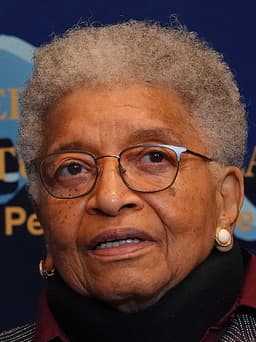
Ellen Johnson Sirleaf
Politician · Modern
60.9Total

Mahmoud El Nokrashy Pasha
Politician · Modern
49.3Total
Basic Information
Born
1938
1888
Died
—
1948
Era
Modern
Modern
Nationality
Liberia
Egypt
Occupation
Politician
Politician
Civilization
Other
Middle Eastern
Score Comparison
Military (10%)
50.0
39.9
Political (20%)
65.0
68.0
Influence (20%)
72.0
49.4
Legacy (20%)
52.0
41.7
Leadership (15%)
72.0
55.3
Strategy (15%)
43.7
40.6
TOTAL
60.9
49.3
Ellen Johnson Sirleaf — Complete Timeline
2005 AD
Election as President of LiberiaPolitical Action
Sirleaf won the 2005 Liberian presidential election, defeating George Weah in a runoff. She became the first elected female head of state in Africa. Her victory was seen as a new beginning for Liberia after years of civil war.
ElectionWomen's LeadershipDemocracy
Impact: globalprogressive
2006 AD
Establishment of the Truth and Reconciliation CommissionPolitical Action◆ Major
Sirleaf's government established the Truth and Reconciliation Commission (TRC) to investigate human rights abuses during Liberia's civil wars. The TRC aimed to promote national healing and accountability, though its recommendations were not fully implemented.
Truth CommissionReconciliationHuman Rights
Impact: nationalconstructive
2011 AD
Receipt of the Nobel Peace PrizeCultural◆ Major
Sirleaf was awarded the Nobel Peace Prize jointly with Leymah Gbowee and Tawakkol Karman for their non-violent struggle for the safety of women and for women's rights to full participation in peace-building work. The prize recognized her efforts to promote peace and reconciliation in Liberia.
Nobel PrizePeaceWomen's Rights
Impact: globalprogressive
2018 AD
Completion of two presidential termsPolitical Action◆ Major
Sirleaf completed her second term as president and peacefully transferred power to George Weah, who won the 2017 election. This marked the first peaceful democratic transition in Liberia in over 70 years, solidifying her legacy as a champion of democracy.
DemocracyTransitionLegacy
Impact: nationalconstructive
Mahmoud El Nokrashy Pasha — Complete Timeline
1948 AD
Served as Prime Minister during the 1948 WarWar◆ Major
El Nokrashy Pasha was prime minister during the 1948 Arab-Israeli War. His government managed Egypt's war effort, which ended in military defeat and the signing of armistice agreements with Israel in 1949.
Arab-Israeli WarMilitaryDefeat
Impact: regionaltragic
Assassinated by the Muslim BrotherhoodPolitical Action◆ Major
Prime Minister Mahmoud El Nokrashy Pasha was assassinated by a member of the Muslim Brotherhood on December 28, 1948. The assassination was in retaliation for his government's crackdown on the Brotherhood, including the dissolution of the organization.
AssassinationMuslim BrotherhoodPolitical Violence
Impact: nationaltragic
Dissolved the Muslim BrotherhoodPolitical Action◆ Major
El Nokrashy Pasha ordered the dissolution of the Muslim Brotherhood and the seizure of its assets after the organization was implicated in violence and political unrest. This action escalated tensions between the government and the Brotherhood.
CrackdownMuslim BrotherhoodPolitical Conflict
Impact: nationaldestructive
Expert Analysis
Origins
Ellen Johnson Sirleaf was born on October 29, 1938, in Monrovia, Liberia, to a Gola father and a Kru-German mother. She was educated at the College of West Africa in Monrovia and later earned a degree in accounting from Madison Business College in Wisconsin, USA. She also studied economics at the University of Colorado Boulder and Harvard University, where she earned a Master of Public Administration in 1971. Her early career included work as a minister of finance under President William Tolbert in the 1970s.
Mahmoud El Nokrashy Pasha was born in 1888 in Alexandria, Egypt, into a prominent Egyptian family. He studied law and became a lawyer. He entered politics early, joining the Wafd Party, Egypt's leading nationalist movement. He served in various ministerial positions before becoming prime minister.
Rise to Power
Sirleaf's political rise was marked by opposition to authoritarian regimes. She served as Minister of Finance from 1979 to 1980, but after Samuel Doe's coup, she fled Liberia. She worked for the World Bank and Citibank, building an international reputation. In 1997, she ran for president against Charles Taylor but lost. She returned to Liberia after Taylor's exile in 2003 and served as head of the Governance Reform Commission. In 2005, she won the presidential election, defeating George Weah in a runoff, becoming Africa's first elected female head of state.
El Nokrashy Pasha rose within the Wafd Party and served as Minister of Education in 1937. He became prime minister for the first time in 1945, during a period of political instability. He was known for his strong stance against the Muslim Brotherhood, which he viewed as a threat to state stability. In 1948, he ordered the dissolution of the Brotherhood and the seizure of its assets after the organization was implicated in violence and assassination attempts.
Leadership & Governance
Sirleaf's leadership focused on post-conflict reconstruction and reconciliation. She established the Truth and Reconciliation Commission to investigate human rights abuses during Liberia's civil wars. She implemented economic reforms, including debt relief and investment in infrastructure. Under her leadership, Liberia saw peace and stability, though progress was slow. Her political score of 65.0 reflects her ability to navigate a fractured political landscape.
El Nokrashy Pasha's governance was marked by a confrontational approach to political Islam. He dissolved the Muslim Brotherhood and cracked down on its activities. During his tenure, Egypt fought in the 1948 Arab-Israeli War, which ended in military defeat. His strategy score of 40.6 indicates limited effectiveness in handling the war. He ruled during a turbulent period, facing opposition from both the Brotherhood and nationalist factions.
Triumph & Tragedy
Sirleaf's greatest success was winning the Nobel Peace Prize in 2011 for her non-violent struggle for women's safety and rights. She completed two presidential terms and peacefully transferred power in 2017, a landmark for Liberia. However, her legacy is mixed: the Truth and Reconciliation Commission recommended her be barred from public office for supporting Charles Taylor in the 1990s, a recommendation she ignored. She scored 52.0 in legacy, acknowledging both her achievements and controversies.
El Nokrashy Pasha's triumph was his firm stance against the Muslim Brotherhood, which he dissolved. However, his assassination on December 28, 1948, by a Brotherhood member was a tragedy that underscored the deep divisions in Egyptian society. His defeat in the 1948 war also marred his record. He scored 41.7 in legacy, reflecting his limited lasting impact.
Character & Destiny
Sirleaf was pragmatic and resilient. She survived exile and imprisonment to become president. Her leadership score of 72.0 reflects her ability to inspire and manage a post-conflict nation. However, her association with Charles Taylor damaged her credibility. Her destiny was to be a trailblazer for women in African politics.
El Nokrashy Pasha was decisive but confrontational. His dissolution of the Brotherhood made him a target. He was assassinated before he could fully implement his policies. His political score of 68.0 indicates competence, but his strategy shortcomings and assassination cut his career short.
Legacy
Sirleaf's legacy as Africa's first elected female head of state endures. She paved the way for women in politics and helped stabilize Liberia. Her influence score of 72.0 reflects her global impact. El Nokrashy Pasha is remembered as a staunch nationalist who clashed with the Muslim Brotherhood, but his legacy is overshadowed by his assassination and Egypt's subsequent political turmoil.
Conclusion
Ellen Johnson Sirleaf had a greater impact than Mahmoud El Nokrashy Pasha. With a total score of 60.9 compared to 49.3, she outperformed him in influence, leadership, and legacy. Her peaceful transfer of power and Nobel Peace Prize are enduring achievements, while El Nokrashy's assassination and war defeat limit his historical significance. Sirleaf's role in Liberia's reconstruction and her global advocacy for women's rights secure her place as a more consequential leader.
Rankings
🥇
Ellen Johnson SirleafLeader
Mil: 50.0Pol: 65.0Inf: 72.0
60.9
🥈
Mahmoud El Nokrashy Pasha
Mil: 39.9Pol: 68.0Inf: 49.4
49.3
+11.6 behind
How This Comparison Works
Algorithm
Each figure is scored on 6 dimensions (0—100 scale) based on structured historical data: Military (10%), Political (20%), Influence (20%), Legacy (20%), Leadership (15%), Strategy (15%). The weighted total produces the final ranking.
Data Sources
Scores are computed from structured sub-indicators in the database. Scale factors adjust for era (Ancient ×0.85, Modern ×1.0) and civilization size (Eastern ×1.05, Other ×0.80) to account for differences in population and military scale.
Maximum 3 Figures
Comparisons are limited to 2—3 figures to ensure readability and statistical meaningfulness.
Error Margins
±5 points per dimension — Sub-scores are derived from historical records with inherent uncertainty. Two figures within 5 points on a dimension should be considered roughly equivalent in that area.
Total Score Accuracy
±3 points overall — The weighted combination of 6 dimensions produces a total score with approximately ±3 points of uncertainty. Differences of less than 3 points are not statistically significant— the figures are effectively tied.
Known Limitations
- Historical records are incomplete and uneven across civilizations
- Figures from oral-tradition societies may be underrepresented
- Occupation labels can misclassify multi-role figures
- Scores measure capability and impact, not moral character
- Quantitative scoring is a comparison tool, not absolute truth
Capability Radar
Military (10%) — Battles & Warfare
Battles
24
23
Win Rate
25
25
Expansion
30
25
Political (20%) — Governance & Reform
Reform
70
40
Diplomacy
75
50
Economy
60
35
Influence (20%) — Cultural & Global Reach
Cultural
60
10
Global
65
15
Legacy (20%) — Historical Impact
Historical
65
25
Longevity
55
15
Leadership (15%) — Power & Stability
Tenure
65
30
Stability
55
20
Strategy (15%) — Tactics & Innovation
Strategy
30
28
Tactics
35
31
Reform
35
36
Similar Comparisons
Comments & Discussion
No comments yet. Be the first to share your thoughts!