Loading...
This comparison has not been analyzed yet.
One-time AI generation (~1 minute). Scores and timeline are already available below.
Emil Welti vs Kevin Rudd
Kevin Rudd leads by 8.4 pts · 2 figures compared
…

Emil Welti
Politician · Modern
47.6Total
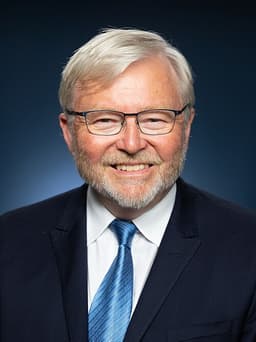
Kevin Rudd
Politician · Modern
56.0Total
Basic Information
Born
1825
1957
Died
1899
—
Era
Modern
Modern
Nationality
Switzerland
Australia
Occupation
Politician
Politician
Civilization
Western
Western
Score Comparison
Military (10%)
18.1
47.3
Political (20%)
45.0
68.0
Influence (20%)
51.8
60.0
Legacy (20%)
43.3
47.5
Leadership (15%)
80.0
67.0
Strategy (15%)
32.8
41.9
TOTAL
47.6
56.0
Emil Welti — Complete Timeline
1866 AD
Elected to the Swiss Federal CouncilPolitical Action◆ Major
Emil Welti was elected to the Swiss Federal Council, the seven-member executive council governing Switzerland. He served as a Federal Councillor for over 25 years, representing the canton of Aargau and the Radical Party.
Swiss Federal CouncilExecutiveRadical Party
Impact: nationalconstructive
1869 AD
First Term as President of the Swiss ConfederationPolitical Action◆ Major
Welti served his first of six terms as President of the Swiss Confederation. The presidency rotates annually among Federal Councillors; Welti held the office in 1869, 1872, 1876, 1880, 1884, and 1891.
Swiss PresidencyRotating OfficeExecutive
Impact: nationalconstructive
1871 AD
Negotiated the Gotthard Railway TreatyPolitical Action◆ Major
Welti negotiated the treaty with Italy and the German states for the construction of the Gotthard Railway through the Swiss Alps. The treaty secured Swiss sovereignty over the route and financing from foreign powers, completed in 1882.
Gotthard RailwayInfrastructureInternational Treaty
Impact: regionalconstructive
1872 AD
Led the Revision of the Swiss Federal ConstitutionReform
As President and head of the Federal Department of Justice, Welti played a key role in the total revision of the Swiss Federal Constitution. The new constitution, adopted in 1874, centralized powers, introduced direct democracy through referendums, and unified civil law.
Constitutional RevisionCentralizationDirect Democracy
Impact: nationalconstructive
1891 AD
Resigned from the Federal CouncilPolitical Action
Welti resigned from the Federal Council after failing to secure approval for the nationalization of the Swiss railways. His resignation marked the end of his 25-year tenure, during which he had been a dominant figure in Swiss politics.
ResignationRailway NationalizationEnd of Career
Impact: national
Kevin Rudd — Complete Timeline
2007 AD
Ratification of the Kyoto ProtocolPolitical Action◆ Major
Rudd's government ratified the Kyoto Protocol to the UN Framework Convention on Climate Change, reversing the Howard government's refusal. This committed Australia to reducing greenhouse gas emissions, though targets were later criticized as insufficient.
Climate ChangeEnvironment
Impact: globalconstructive
2008 AD
Global Financial Crisis stimulus packageReform◆ Major
Rudd's government implemented a $42 billion stimulus package in response to the Global Financial Crisis, including cash payments to households and infrastructure spending. Australia avoided recession, but the package increased national debt.
EconomyStimulus
Impact: nationalconstructive
Apology to the Stolen GenerationsPolitical Action◆ Major
Prime Minister Kevin Rudd delivered a formal apology in Parliament to Indigenous Australians affected by the forced removal of children, known as the Stolen Generations. The apology was a landmark moment in reconciliation, though it did not include compensation.
Indigenous RightsReconciliation
Impact: nationalconstructive
2009 AD
Defeat of the Carbon Pollution Reduction SchemePolitical Action◆ Major
Rudd's proposed Carbon Pollution Reduction Scheme, a cap-and-trade system, was rejected by the Senate twice. The failure to pass climate legislation damaged his political standing and contributed to his removal as Labor leader in 2010.
Climate ChangeLegislative Failure
Impact: nationaldestructive
This comparison has not been analyzed yet.
One-time AI generation (~1 minute). Scores and timeline are already available below.
Rankings
🥇
Kevin RuddLeader
Mil: 47.3Pol: 68.0Inf: 60.0
56.0
🥈
Emil Welti
Mil: 18.1Pol: 45.0Inf: 51.8
47.6
+8.4 behind
How This Comparison Works
Algorithm
Each figure is scored on 6 dimensions (0—100 scale) based on structured historical data: Military (10%), Political (20%), Influence (20%), Legacy (20%), Leadership (15%), Strategy (15%). The weighted total produces the final ranking.
Data Sources
Scores are computed from structured sub-indicators in the database. Scale factors adjust for era (Ancient ×0.85, Modern ×1.0) and civilization size (Eastern ×1.05, Other ×0.80) to account for differences in population and military scale.
Maximum 3 Figures
Comparisons are limited to 2—3 figures to ensure readability and statistical meaningfulness.
Error Margins
±5 points per dimension — Sub-scores are derived from historical records with inherent uncertainty. Two figures within 5 points on a dimension should be considered roughly equivalent in that area.
Total Score Accuracy
±3 points overall — The weighted combination of 6 dimensions produces a total score with approximately ±3 points of uncertainty. Differences of less than 3 points are not statistically significant— the figures are effectively tied.
Known Limitations
- Historical records are incomplete and uneven across civilizations
- Figures from oral-tradition societies may be underrepresented
- Occupation labels can misclassify multi-role figures
- Scores measure capability and impact, not moral character
- Quantitative scoring is a comparison tool, not absolute truth
Capability Radar
Military (10%) — Battles & Warfare
Battles
22
31
Win Rate
27
34
Expansion
30
36
Political (20%) — Governance & Reform
Reform
65
55
Diplomacy
60
60
Economy
55
45
Influence (20%) — Cultural & Global Reach
Cultural
30
40
Global
20
50
Legacy (20%) — Historical Impact
Historical
40
55
Longevity
30
30
Leadership (15%) — Power & Stability
Tenure
70
30
Stability
65
40
Strategy (15%) — Tactics & Innovation
Strategy
32
35
Tactics
34
42
Reform
37
43
Similar Comparisons
Comments & Discussion
No comments yet. Be the first to share your thoughts!