Loading...
Emiliano Zapata vs Theobald Wolfe Tone
Emiliano Zapata leads by 8.5 pts · 2 figures compared
…
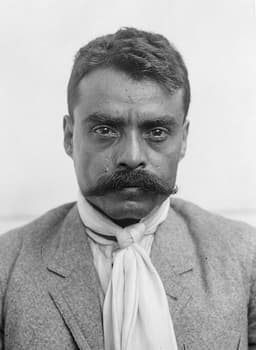
Emiliano Zapata
Revolutionary · Modern
56.3Total
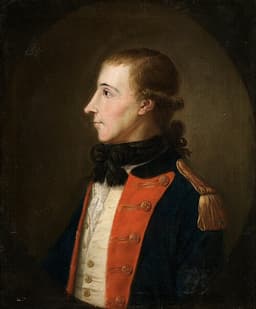
Theobald Wolfe Tone
Revolutionary · Modern
47.8Total
Basic Information
Born
1879
1763
Died
1919
1798
Era
Modern
Modern
Nationality
Mexico
Ireland
Occupation
Revolutionary
Revolutionary
Civilization
Western
Western
Score Comparison
Military (10%)
40.0
39.9
Political (20%)
68.0
27.9
Influence (20%)
58.0
57.2
Legacy (20%)
54.0
49.2
Leadership (15%)
54.2
57.1
Strategy (15%)
60.0
45.0
TOTAL
56.3
47.8
Emiliano Zapata — Complete Timeline
1911 AD
Plan of AyalaPolitical Action
Zapata issued the Plan of Ayala, denouncing Francisco I. Madero for failing to implement land reform. The plan called for the return of land to peasants and became the ideological foundation of the Zapatista movement.
Land ReformAgrarian MovementRevolution
Impact: nationalprogressive
1914 AD
Occupation of Mexico CityWar◆ Major
Zapata's forces, allied with Villa's Division of the North, occupied Mexico City. They held the capital for several weeks but failed to establish lasting control, highlighting the limits of their coalition.
Military OccupationRevolutionary AllianceCapital
Impact: national
Convention of AguascalientesPolitical Action◆ Major
Zapata attended the Convention of Aguascalientes, where revolutionary factions attempted to unify. He allied with Pancho Villa against Venustiano Carranza, but the convention failed to produce a stable government.
Revolutionary AlliancePolitical DivisionCivil War
Impact: national
1919 AD
Assassination at ChinamecaPolitical Action
Zapata was lured to the Hacienda de Chinameca by Colonel Jesus Guajardo, who pretended to defect. Guajardo's troops ambushed and killed Zapata, ending his leadership of the agrarian rebellion.
AssassinationBetrayalEnd of Leadership
Impact: nationaltragic
Theobald Wolfe Tone — Complete Timeline
1791 AD
Founding of the United IrishmenPolitical Action◆ Major
Tone co-founded the Society of United Irishmen in Belfast, a revolutionary organization seeking parliamentary reform and Catholic emancipation. The society later became a secret republican movement aiming for Irish independence.
Irish RepublicanismFoundingReform
Impact: nationalprogressive
Publication of 'An Argument on Behalf of the Catholics of Ireland'Cultural
Tone published a pamphlet arguing for the inclusion of Catholics in Irish political life. It helped bridge the gap between Protestant radicals and the Catholic majority, broadening the base of the United Irishmen.
PamphletCatholic EmancipationPolitical Thought
Impact: nationalprogressive
1796 AD
Expédition d'IrlandeWar◆ Major
Tone accompanied a French fleet of 43 ships carrying 15,000 troops to invade Ireland. The expedition was scattered by storms off Bantry Bay and failed to land, a major setback for the republican cause.
French InvasionNavalFailure
Impact: nationaltragic
Mission to FrancePolitical Action◆ Major
Tone traveled to France to secure French military support for an Irish rebellion. He persuaded the French Directory to launch an invasion of Ireland, leading to the dispatch of a large expeditionary force.
DiplomacyFrench RevolutionInvasion
Impact: national
1798 AD
Battle of Tory IslandWar◆ Major
Tone was captured aboard a French ship at the Battle of Tory Island, part of a second French invasion attempt. The French squadron was defeated by the Royal Navy, ending French hopes of aiding the Irish Rebellion.
1798 RebellionNaval BattleCapture
Impact: nationaltragic
Trial and SuicidePolitical Action◆ Major
Tone was tried for treason in Dublin and sentenced to death by hanging. Before execution, he cut his own throat to deny the British the spectacle of his hanging, dying from the wound a week later.
TrialSuicideMartyrdom
Impact: nationaltragic
Expert Analysis
Theobald Wolfe Tone vs Emiliano Zapata
# The Revolutionary’s Crossroads: Emiliano Zapata and Theobald Wolfe Tone
On a dusty November morning in 1914, Emiliano Zapata rode into Mexico City at the head of his peasant army, men in white cotton shirts and wide-brimmed sombreros, carrying machetes alongside rifles. They had come not to seize power, but to prove a point — that land belonged to those who worked it. Just over a century earlier and an ocean away, Theobald Wolfe Tone stood before the French Directory in Paris, a lawyer turned revolutionary, pleading for warships and soldiers to liberate Ireland. Both men would die violently, betrayed by the very forces they sought to harness. Yet one would become a living symbol whose name still echoes in peasant uprisings, while the other would remain a martyr known mostly to historians and Irish nationalists. What separates a revolutionary who reshapes history from one who becomes its footnote?
Origins
Emiliano Zapata was born in 1879 in Anenecuilco, a small village in the state of Morelos, Mexico. His family were mestizo peasants who had lost their communal lands to the expanding sugar haciendas under Porfirio Díaz’s dictatorship. From childhood, Zapata watched his neighbors displaced, their cornfields swallowed by cane. He learned to read and write, but his real education came from the village elders who kept alive the memory of communal land rights. His world was local, rooted in soil and survival.
Theobald Wolfe Tone was born in 1763 in Dublin, the son of a Protestant coachmaker. He was educated at Trinity College, where he studied law and absorbed the ideas of the French Enlightenment. Tone moved in circles of educated Protestants who chafed under British rule but also feared Catholic rebellion. Unlike Zapata, whose grievance was immediate and material, Tone’s radicalism was ideological — he read Rousseau, admired the American Revolution, and dreamed of a republic where Catholic, Protestant, and Dissenter could unite under the common name of Irishman.
Rise to Power
Zapata’s path was forged by betrayal. In 1910, he supported Francisco I. Madero’s uprising against Díaz, believing Madero would deliver land reform. When Madero became president and did nothing, Zapata broke with him in 1911 by issuing the Plan of Ayala, a document that declared “Land and Liberty” and called for the expropriation of hacienda lands. This was not a bid for national power — it was a declaration of war on a system. Zapata’s army grew organically, village by village, as peasants flocked to a man who spoke their language and shared their hunger.
Tone’s rise was intellectual and diplomatic. In 1791, he co-founded the Society of United Irishmen in Belfast, a group that began by demanding parliamentary reform but quickly radicalized. His 1791 pamphlet, “An Argument on Behalf of the Catholics of Ireland,” was a masterstroke of political bridge-building — he convinced Protestants that Catholic emancipation was not a threat but an ally against British domination. Where Zapata mobilized through land, Tone mobilized through ideas. His great gamble was to seek foreign intervention, traveling to France in 1796 to persuade the revolutionary government to launch an invasion of Ireland.
Leadership & Governance
Zapata never wanted to govern Mexico. He wanted to transform it. After occupying Mexico City in 1914 alongside Pancho Villa, he refused to sit in the presidential chair, reportedly saying, “I did not come to govern, but to free the people.” Instead, he returned to Morelos and implemented land reform by decree, dividing haciendas among villages, establishing local councils, and creating a peasant-controlled economy. His military strategy was defensive and guerrilla-based — he knew his army could not hold national power, but he could protect his home region. His political wisdom lay in knowing his limits.
Tone, by contrast, was a man of committees and constitutions. He dreamed of a centralized Irish republic modeled on France, with universal male suffrage and religious equality. But he never governed anything. His leadership was exercised in exile, writing letters, petitioning foreign ministers, and waiting on French tides. When the French fleet finally sailed in December 1796 with 15,000 troops, Tone watched from the deck as storms scattered the ships before they could land. His greatest moment of command was on a ship he did not pilot, leading an army he did not control.
Triumph & Tragedy
Zapata’s triumph was the Plan of Ayala itself — a document that outlived him. It became the moral compass of the Mexican Revolution, forcing every subsequent leader to address land reform. His tragedy came in 1919, when he was lured to the Hacienda de Chinameca by Colonel Jesús Guajardo, a man pretending to defect. As Zapata stepped through the doorway, Guajardo’s troops fired. He was 39 years old. His body was displayed to prove he was dead, but his image — mustachioed, sombrero-clad, eyes burning — became immortal.
Tone’s triumph was intellectual. He invented Irish republicanism as a secular, inclusive ideology. His tragedy was its execution. Captured in 1798 at the Battle of Tory Island during a second, smaller French invasion, he was taken to Dublin, tried for treason, and sentenced to hang. On the morning of his execution, he cut his own throat with a razor, dying days later in agony. He denied the British their spectacle but died alone in a prison cell, his revolution crushed.
Character & Destiny
Zapata was suspicious, stubborn, and deeply practical. He trusted only his villagers and refused alliances that required compromise. This caution kept him alive for years but also isolated him — he could not build the national coalition needed to sustain his revolution. His character was forged by betrayal: first by Madero, later by Venustiano Carranza. When Guajardo offered to defect, Zapata’s desperation outweighed his instinct.
Tone was optimistic, eloquent, and tragically naïve about foreign intervention. He believed that French arms could liberate Ireland without understanding that France’s interests were not Ireland’s. His character was shaped by the Enlightenment faith that reason could overcome history — that Catholic and Protestant could unite, that a foreign power could act altruistically. The storms that scattered the French fleet were not bad luck; they were the universe reminding him that revolutions are not made by pamphlets alone.
Legacy
Zapata is a global icon. His face appears on murals, T-shirts, and protest banners from Chiapas to Cairo. The Zapatista Army of National Liberation, which rose in 1994, took his name and his cause. In Mexico, land reform was enshrined in the 1917 Constitution, partly because Zapata made it impossible to ignore. His total score of 60.2 reflects a man whose military and political achievements were modest but whose influence and legacy — 72.8 and 67.6 — transformed a nation.
Tone’s legacy is narrower but deeper in its own soil. He is the father of Irish republicanism, invoked by every generation from the Easter Rising of 1916 to the Good Friday Agreement of 1998. His total score of 48.7 is lower, but his influence score of 73.2 rivals Zapata’s. In Ireland, he is remembered as the man who first imagined a nation that included everyone — even if he could not build it.
Conclusion
The difference between Zapata and Tone is not one of courage or conviction. Both died for their beliefs. It is a difference of soil and scale. Zapata’s revolution was rooted in a single crop, a single state, a single cry for land. Tone’s was rooted in a library, a constitution, a dream of unity. Zapata succeeded because he asked for less — land for his people — and failed because he could not ask for more. Tone failed because he asked for everything — a nation, an army, a foreign savior — and succeeded only in planting a seed. In the end, the peasant who would not leave his village changed his country more than the lawyer who crossed oceans. But both remind us that revolutions are not won by the living. They are won by the dead who refuse to be forgotten.
Rankings
🥇
Emiliano ZapataLeader
Mil: 40.0Pol: 68.0Inf: 58.0
56.3
🥈
Theobald Wolfe Tone
Mil: 39.9Pol: 27.9Inf: 57.2
47.8
+8.5 behind
How This Comparison Works
Algorithm
Each figure is scored on 6 dimensions (0—100 scale) based on structured historical data: Military (10%), Political (20%), Influence (20%), Legacy (20%), Leadership (15%), Strategy (15%). The weighted total produces the final ranking.
Data Sources
Scores are computed from structured sub-indicators in the database. Scale factors adjust for era (Ancient ×0.85, Modern ×1.0) and civilization size (Eastern ×1.05, Other ×0.80) to account for differences in population and military scale.
Maximum 3 Figures
Comparisons are limited to 2—3 figures to ensure readability and statistical meaningfulness.
Error Margins
±5 points per dimension — Sub-scores are derived from historical records with inherent uncertainty. Two figures within 5 points on a dimension should be considered roughly equivalent in that area.
Total Score Accuracy
±3 points overall — The weighted combination of 6 dimensions produces a total score with approximately ±3 points of uncertainty. Differences of less than 3 points are not statistically significant— the figures are effectively tied.
Known Limitations
- Historical records are incomplete and uneven across civilizations
- Figures from oral-tradition societies may be underrepresented
- Occupation labels can misclassify multi-role figures
- Scores measure capability and impact, not moral character
- Quantitative scoring is a comparison tool, not absolute truth
Capability Radar
Military (10%) — Battles & Warfare
Battles
45
5
Win Rate
50
5
Expansion
35
5
Political (20%) — Governance & Reform
Reform
70
30
Diplomacy
40
25
Economy
35
5
Influence (20%) — Cultural & Global Reach
Cultural
65
45
Global
55
40
Legacy (20%) — Historical Impact
Historical
70
50
Longevity
65
55
Leadership (15%) — Power & Stability
Tenure
30
10
Stability
25
5
Strategy (15%) — Tactics & Innovation
Strategy
50
15
Tactics
55
10
Reform
60
20
Similar Comparisons
Comments & Discussion
LandReaper6/16/2026
Wolfe Tone was doomed from the start—a lawyer playing soldier, begging France for scraps. Zapata had 20,000 campesinos ready to die for “Tierra y Libertad.” Tone’s borrowed guillotine couldn’t match that. Real revolution needs roots in dirt, not debates in Parisian salons.
DustyMartyr6/16/2026
Zapata’s Plan de Ayala wasn’t just words—it was a land registry burned into memory. Tone’s United Irishmen were pamphlets and oaths, gone with a noose. One fed villages, the other fed archives. That’s the gap between a symbol and a ghost.
红土预言家6/16/2026
萨帕塔的牛车碾过庄园铁门时,托恩还在法国人面前背启蒙运动课表;1891年托恩尸骨未寒,爱尔兰土地同盟已经用竹竿刺穿地契——农民不等人写请愿书,他们直接种地。理论家算债务,实干家算收成。
铜像守望者6/16/2026
托恩的佩剑葬在波特兰石矿,萨帕塔的玉米种在安内库伊尔科;一个让都柏林人每年用鲜花祭奠,另一个让恰帕斯州的土著用犁沟书写宪法。当托恩的签名在书信里褪色时,萨帕塔的“土地归还”条款还在埃希多公地上刻着—有些名字是墓碑,有些是田埂。
档案管理员6/16/2026
比较这两人就像拿墨水瓶碰花岗岩。托恩的日记精美得能进都柏林图书馆,但萨帕塔的农民战士根本不识字——他们用弹孔和甘蔗渣做政治纲领。你可以用10年研究托恩的演讲稿,但只要到莫雷洛斯州喝口水,就能懂萨帕塔到底要什么。