Loading...
Emperor Jimmu vs John Hyrcanus
John Hyrcanus leads by 13.9 pts · 2 figures compared
…
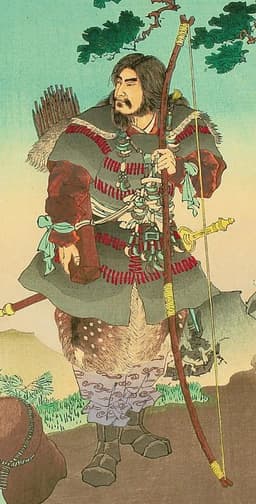
Emperor Jimmu
Emperor · Ancient
45.7Total
John Hyrcanus
Emperor · Ancient
59.6Total
Basic Information
Born
-711
-164
Died
-585
-104
Era
Ancient
Ancient
Nationality
Japan
Judea
Occupation
Emperor
Emperor
Civilization
Eastern
Middle Eastern
Score Comparison
Military (10%)
50.0
67.5
Political (20%)
27.9
68.0
Influence (20%)
54.9
55.7
Legacy (20%)
48.3
48.3
Leadership (15%)
45.0
74.0
Strategy (15%)
39.6
55.0
TOTAL
45.7
59.6
Emperor Jimmu — Complete Timeline
660 BC
The Eastern Expedition (Tōsei)War◆ Major
Jimmu led the Eastern Expedition from Hyuga (southern Kyushu) eastward, conquering territories through battles such as the Battle of Usa and the Battle of Takachiho. This campaign is described in the Nihon Shoki and Kojiki as the founding military conquest of Japan.
Military CampaignConquestMythology
Impact: national
Legendary founding of the Japanese imperial dynastyPolitical Action◆ Major
According to Japanese mythology, Emperor Jimmu became the first emperor of Japan in 660 BC after leading a military campaign from Kyushu to Yamato. He is said to have established the imperial dynasty at Kashihara, unifying the warring clans under his rule.
FoundingImperial DynastyMythology
Impact: national
Enthronement at KashiharaPolitical Action◆ Major
After his conquest, Jimmu was enthroned as emperor at the Kashihara Palace in Yamato (present-day Nara Prefecture) on the first day of the first month of 660 BC. This event is considered the traditional founding date of the Japanese imperial line.
EnthronementImperial LineMythology
Impact: national
Establishment of the Three Sacred TreasuresPolitical Action◆ Major
According to legend, Jimmu received the Three Sacred Treasures (the sword Kusanagi, the mirror Yata no Kagami, and the jewel Yasakani no Magatama) from the gods, which became the imperial regalia symbolizing the emperor's divine right to rule Japan.
Imperial RegaliaMythologySymbolism
Impact: national
585 BC
Death and deificationOther◆ Major
Emperor Jimmu died in 585 BC at the age of 126 according to traditional accounts. He was later deified as a kami (spirit) in Shinto, and his tomb is traditionally located in the Unebiyama area of Nara Prefecture. His legacy as the founder of Japan's imperial line continues to be celebrated.
DeathDeificationImperial Legacy
Impact: national
John Hyrcanus — Complete Timeline
134 BC
Accession as High Priest and Ruler of JudeaPolitical Action◆ Major
John Hyrcanus succeeded his father Simon Thassi as High Priest and ethnarch of Judea. He consolidated Hasmonean rule, combining religious and political authority. His reign marked the peak of Hasmonean power and territorial expansion.
AccessionHasmonean DynastyHigh Priest
Impact: regionalconstructive
129 BC
Alliance with the Roman RepublicPolitical Action
John Hyrcanus renewed the alliance with the Roman Republic, which had been established by his predecessors. This alliance provided diplomatic support against the Seleucid Empire and helped secure Judean independence.
AllianceRomeDiplomacy
Impact: regionalconstructive
110 BC
Conquest of Samaria and IdumeaWar◆ Major
John Hyrcanus led military campaigns that conquered Samaria and Idumea. He destroyed the Samaritan temple on Mount Gerizim and forced the Idumeans to convert to Judaism. These conquests expanded the Jewish state and solidified Hasmonean control.
ConquestExpansionForced Conversion
Impact: regionaldestructive
108 BC
Destruction of the Samaritan TempleWar◆ Major
John Hyrcanus destroyed the Samaritan temple on Mount Gerizim, which had been a rival to the Jerusalem Temple. This act deepened the schism between Jews and Samaritans and asserted the primacy of the Jerusalem Temple.
Temple DestructionSamaritansReligious Schism
Impact: regionaldestructive
Expert Analysis
Origins
Emperor Jimmu is a legendary figure in Japanese mythology, said to have been born in 711 BC (traditional date) in Hyuga (southern Kyushu). He is a descendant of the sun goddess Amaterasu, according to the Kojiki and Nihon Shoki. His early life is steeped in myth; he is said to have been raised in the imperial court of the heavenly deities before setting out on his conquest. No historical records confirm his existence, and modern scholars view him as a symbolic founder.
John Hyrcanus was born around 164 BC in Judea, the son of Simon Thassi, the Hasmonean leader who secured Jewish independence from the Seleucid Empire. His family was priestly (Hasmonean), and he grew up during the Maccabean revolt. He received a Jewish education and military training, preparing him for leadership. Unlike Jimmu, Hyrcanus is attested in contemporary sources like Josephus and 1 Maccabees.
Rise to Power
Jimmu's rise is described in the Eastern Expedition (Tōsei), a campaign from Kyushu to Yamato (central Honshu). He led his forces eastward, winning battles at Usa and in the Yamato region. According to legend, he was guided by a golden kite sent by Amaterasu. After subduing local chieftains, he was enthroned at Kashihara Palace on February 11, 660 BC (traditional date). This event is considered the founding of the Japanese imperial dynasty, but no archaeological evidence supports it.
John Hyrcanus succeeded his father Simon as High Priest and ethnarch in 134 BC after Simon's assassination. He faced an immediate challenge from the Seleucid king Antiochus VII Sidetes, who besieged Jerusalem. Hyrcanus negotiated a truce, paying tribute and accepting Seleucid suzerainty temporarily. However, after Antiochus's death in 129 BC, Hyrcanus resumed expansion, exploiting the decline of Seleucid power. He allied with the Roman Republic, renewing treaties that provided diplomatic backing.
Leadership & Governance
Jimmu's leadership is mythological: he is depicted as a divinely guided warrior-king who established the imperial cult and the Three Sacred Treasures (sword, mirror, jewel) as symbols of authority. His governance model centered on divine right and hereditary rule, which became the foundation of Japan's political system for millennia. However, his historical impact is intangible, as no contemporaneous records exist.
John Hyrcanus combined religious and political authority as High Priest and ethnarch. He implemented policies that strengthened Jewish identity: he destroyed the Samaritan temple on Mount Gerizim (128 BC), deepening the schism between Jews and Samaritans, and forced the Idumeans to convert to Judaism. He also expanded Judea's borders, conquering Samaria and Idumea, and minted coins with Hebrew inscriptions. His rule saw economic growth and centralized governance, but his forced conversions alienated some groups.
Triumph & Tragedy
Jimmu's greatest success is the legendary founding of Japan's imperial dynasty, which remains unbroken to this day, giving Japan a sense of continuity. His triumph is symbolic. His tragedy is the lack of historical evidence; many scholars dismiss him as a myth, and his supposed reign (660-585 BC) is anachronistic given Japan's actual development.
John Hyrcanus's triumphs include expanding Judea to its largest size since the united monarchy, securing independence, and establishing the Hasmonean dynasty's dominance. His military score of 67.5 reflects his successful campaigns. However, his tragedy was the destruction of the Samaritan temple and forced conversions, which created lasting religious divisions. His rule also set a precedent for combining priestly and secular power, leading to later conflicts within the Hasmonean family.
Character & Destiny
Jimmu's character is that of a mythical hero: brave, divinely favored, and destined to unite Japan. His destiny was to become a deity (kami) in Shinto. His story reflects Japan's desire for a unified origin.
John Hyrcanus was pragmatic and ambitious. He balanced diplomacy with the Seleucids and Romans while pursuing aggressive expansion. His decision to destroy the Samaritan temple shows a ruthless streak. His character shaped his fate: he died peacefully in 104 BC, leaving a strong state, but his policies sowed seeds for internal strife that erupted after his death. He scored 74.0 in leadership, the highest in this comparison.
Legacy
Jimmu's legacy is immense in Japanese culture: the imperial family traces its lineage to him, and his enthronement date (February 11) is a national holiday (National Foundation Day). He symbolizes the divine origin of Japan. However, his legacy is purely mythological, scoring 48.3 in legacy.
John Hyrcanus's legacy is concrete: he expanded the Jewish state, solidified the Hasmonean dynasty, and influenced Jewish religious boundaries. The destruction of the Samaritan temple ended the Samaritan sect's influence. His alliance with Rome set the stage for later dependence on Rome. His legacy score is 48.3, tied with Jimmu, but based on real historical impact.
Conclusion
John Hyrcanus had a greater impact than Emperor Jimmu. Jimmu's total score is 45.7, while Hyrcanus scored 59.6, a gap of 13.9 points. Jimmu is a mythological figure with no verifiable achievements, whereas Hyrcanus's military conquests, political maneuvers, and religious policies shaped Judea's history. Hyrcanus's leadership (74.0 vs 45.0) and political skill (68.0 vs 27.9) demonstrate his effectiveness. While Jimmu's symbolic role is culturally significant, Hyrcanus's tangible accomplishments in state-building and expansion make him the more influential historical figure.
Rankings
🥇
John HyrcanusLeader
Mil: 67.5Pol: 68.0Inf: 55.7
59.6
🥈
Emperor Jimmu
Mil: 50.0Pol: 27.9Inf: 54.9
45.7
+13.9 behind
How This Comparison Works
Algorithm
Each figure is scored on 6 dimensions (0—100 scale) based on structured historical data: Military (10%), Political (20%), Influence (20%), Legacy (20%), Leadership (15%), Strategy (15%). The weighted total produces the final ranking.
Data Sources
Scores are computed from structured sub-indicators in the database. Scale factors adjust for era (Ancient ×0.85, Modern ×1.0) and civilization size (Eastern ×1.05, Other ×0.80) to account for differences in population and military scale.
Maximum 3 Figures
Comparisons are limited to 2—3 figures to ensure readability and statistical meaningfulness.
Error Margins
±5 points per dimension — Sub-scores are derived from historical records with inherent uncertainty. Two figures within 5 points on a dimension should be considered roughly equivalent in that area.
Total Score Accuracy
±3 points overall — The weighted combination of 6 dimensions produces a total score with approximately ±3 points of uncertainty. Differences of less than 3 points are not statistically significant— the figures are effectively tied.
Known Limitations
- Historical records are incomplete and uneven across civilizations
- Figures from oral-tradition societies may be underrepresented
- Occupation labels can misclassify multi-role figures
- Scores measure capability and impact, not moral character
- Quantitative scoring is a comparison tool, not absolute truth
Capability Radar
Military (10%) — Battles & Warfare
Battles
10
55
Win Rate
10
60
Expansion
15
65
Political (20%) — Governance & Reform
Reform
15
55
Diplomacy
10
50
Economy
10
50
Influence (20%) — Cultural & Global Reach
Cultural
40
55
Global
30
40
Legacy (20%) — Historical Impact
Historical
40
60
Longevity
50
50
Leadership (15%) — Power & Stability
Tenure
20
60
Stability
15
45
Strategy (15%) — Tactics & Innovation
Strategy
10
55
Tactics
10
50
Reform
5
45
Similar Comparisons
Comments & Discussion
No comments yet. Be the first to share your thoughts!