Loading...
This comparison has not been analyzed yet.
One-time AI generation (~1 minute). Scores and timeline are already available below.
Emperor Suinin vs Tullus Hostilius
Tullus Hostilius leads by 5.0 pts · 2 figures compared
…
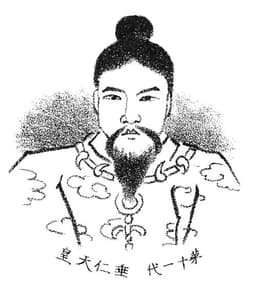
Emperor Suinin
Emperor · Ancient
36.9Total

Tullus Hostilius
Emperor · Ancient
41.9Total
Basic Information
Born
69
-673
Died
70
-642
Era
Ancient
Ancient
Nationality
Japan
Roman Kingdom
Occupation
Emperor
Emperor
Civilization
Eastern
Western
Score Comparison
Military (10%)
10.2
45.0
Political (20%)
32.1
27.9
Influence (20%)
44.8
46.3
Legacy (20%)
36.7
38.3
Leadership (15%)
41.5
51.9
Strategy (15%)
45.0
43.3
TOTAL
36.9
41.9
Emperor Suinin — Complete Timeline
29 AD
Reign of Emperor SuininPolitical Action
Emperor Suinin is recorded in the Nihon Shoki as having reigned for nearly 100 years, though modern historians consider this legendary. His reign is primarily known for the story of his son, Yamato Takeru, and the establishment of the Grand Shrine of Ise.
Legendary ReignYamato Period
Impact: national
50 AD
Commissioned the Story of Yamato TakeruCultural
Emperor Suinin is associated with the legendary exploits of his son, Yamato Takeru, a heroic prince who subdued rebellious tribes. This story, recorded in the Kojiki and Nihon Shoki, became a foundational myth of Japanese martial valor and imperial authority.
MythologyHeroic LegendYamato
Impact: national
Tullus Hostilius — Complete Timeline
670 BC
Destruction of Alba LongaWar◆ Major
Tullus Hostilius ordered the destruction of Alba Longa after a war between Rome and Alba Longa. The Alban population was forcibly relocated to Rome, and the city was razed, ending the rivalry between the two cities and increasing Rome's population and territory.
Roman ExpansionCity DestructionEarly Rome
Impact: regionaldestructive
Battle of the Horatii and CuriatiiWar◆ Major
To decide the war between Rome and Alba Longa, Tullus Hostilius agreed to a combat between the Roman Horatii triplets and the Alban Curiatii triplets. The sole surviving Horatius killed the three Curiatii, giving Rome victory and dominance over Alba Longa.
Legendary BattleRoman-Alban WarSingle Combat
Impact: regional
660 BC
War with the SabinesWar
Tullus Hostilius led a war against the Sabines, expanding Roman territory. The war resulted in the annexation of Sabine lands and the incorporation of the Sabine population into the Roman state, strengthening Rome's military and economic position.
Roman ExpansionSabine WarTerritorial Gain
Impact: regional
Construction of the Curia HostiliaCultural◆ Major
Tullus Hostilius is credited with building the Curia Hostilia, the original Senate house in Rome. This building served as the meeting place for the Roman Senate for centuries, becoming a central institution of Roman government.
Roman ArchitectureSenate HouseGovernment Building
Impact: nationalconstructive
642 BC
Death by LightningOther
According to Roman tradition, Tullus Hostilius was killed by a lightning bolt sent by Jupiter after he neglected religious rites and attempted to perform a forbidden ritual. His death ended his reign and was seen as divine punishment for his impiety.
Divine PunishmentKing's DeathReligious Neglect
Impact: nationaltragic
This comparison has not been analyzed yet.
One-time AI generation (~1 minute). Scores and timeline are already available below.
Rankings
🥇
Tullus HostiliusLeader
Mil: 45.0Pol: 27.9Inf: 46.3
41.9
🥈
Emperor Suinin
Mil: 10.2Pol: 32.1Inf: 44.8
36.9
+5.0 behind
How This Comparison Works
Algorithm
Each figure is scored on 6 dimensions (0—100 scale) based on structured historical data: Military (10%), Political (20%), Influence (20%), Legacy (20%), Leadership (15%), Strategy (15%). The weighted total produces the final ranking.
Data Sources
Scores are computed from structured sub-indicators in the database. Scale factors adjust for era (Ancient ×0.85, Modern ×1.0) and civilization size (Eastern ×1.05, Other ×0.80) to account for differences in population and military scale.
Maximum 3 Figures
Comparisons are limited to 2—3 figures to ensure readability and statistical meaningfulness.
Error Margins
±5 points per dimension — Sub-scores are derived from historical records with inherent uncertainty. Two figures within 5 points on a dimension should be considered roughly equivalent in that area.
Total Score Accuracy
±3 points overall — The weighted combination of 6 dimensions produces a total score with approximately ±3 points of uncertainty. Differences of less than 3 points are not statistically significant— the figures are effectively tied.
Known Limitations
- Historical records are incomplete and uneven across civilizations
- Figures from oral-tradition societies may be underrepresented
- Occupation labels can misclassify multi-role figures
- Scores measure capability and impact, not moral character
- Quantitative scoring is a comparison tool, not absolute truth
Capability Radar
Military (10%) — Battles & Warfare
Battles
5
45
Win Rate
5
50
Expansion
5
45
Political (20%) — Governance & Reform
Reform
10
25
Diplomacy
10
20
Economy
10
20
Influence (20%) — Cultural & Global Reach
Cultural
20
20
Global
5
15
Legacy (20%) — Historical Impact
Historical
20
30
Longevity
20
20
Leadership (15%) — Power & Stability
Tenure
30
40
Stability
20
25
Strategy (15%) — Tactics & Innovation
Strategy
5
35
Tactics
5
40
Reform
5
30
Similar Comparisons
Comments & Discussion
No comments yet. Be the first to share your thoughts!