Loading...
Emperor Wu of Jin vs Shi Le
Shi Le leads by 3.6 pts · 2 figures compared
…
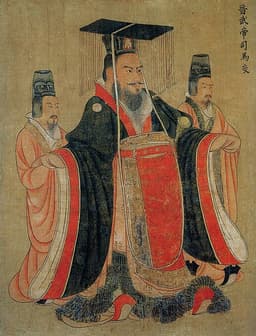
Emperor Wu of Jin
Emperor · Ancient
54.9Total
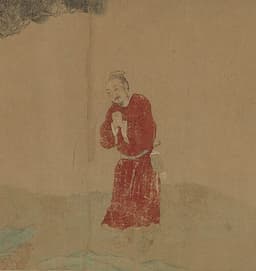
Shi Le
Emperor · Ancient
58.5Total
Basic Information
Born
236
274
Died
290
333
Era
Ancient
Ancient
Nationality
China
China
Occupation
Emperor
Emperor
Civilization
Eastern
Eastern
Score Comparison
Military (10%)
74.7
78.0
Political (20%)
68.0
55.0
Influence (20%)
52.5
51.8
Legacy (20%)
44.2
46.7
Leadership (15%)
48.8
72.0
Strategy (15%)
57.5
70.0
TOTAL
54.9
58.5
Emperor Wu of Jin — Complete Timeline
265 AD
Enfeoffment of Imperial PrincesPolitical Action◆ Major
Emperor Wu enfeoffed 27 of his sons as princes with military commands and territories, hoping to strengthen the imperial family. This policy backfired, as the princes later rebelled in the War of the Eight Princes, leading to the dynasty's collapse.
EnfeoffmentFeudal PolicyWar of the Eight Princes
Impact: nationaldestructive
266 AD
Establishment of the Western Jin DynastyPolitical Action
Sima Yan forced the abdication of Cao Huan, the last emperor of Cao Wei, and proclaimed himself Emperor Wu of Jin. He established the Western Jin dynasty with Luoyang as its capital. This ended the Cao Wei dynasty and began a new imperial line.
Dynasty FoundingAbdicationCao Wei
Impact: national
280 AD
Conquest of Eastern WuWar
Emperor Wu of Jin launched a six-pronged invasion of Eastern Wu, the last of the Three Kingdoms. Wu's capital Jianye fell, and its emperor Sun Hao surrendered. This conquest unified China under the Western Jin dynasty, ending the Three Kingdoms period after 60 years.
ConquestUnificationThree Kingdoms End
Impact: national
Abolition of Military ColoniesReform◆ Major
After unifying China, Emperor Wu abolished the military agricultural colonies (tuntian) that had sustained the Three Kingdoms' armies. He demobilized many soldiers and returned them to civilian farming. This reduced military spending but weakened the dynasty's defensive capacity.
DemobilizationAgricultural ReformTuntian
Impact: nationalconstructive
Extravagance and DeclineCultural◆ Major
After unification, Emperor Wu indulged in luxury, building palaces and accumulating concubines. He neglected governance, leading to corruption and factionalism at court. This decadence contributed to the dynasty's instability and the later War of the Eight Princes.
DecadenceGovernance FailureWestern Jin Decline
Impact: nationaldestructive
Shi Le — Complete Timeline
311 AD
Battle of LuoyangWar◆ Major
Shi Le's forces captured the Western Jin capital Luoyang, taking Emperor Huai prisoner. This event effectively ended Western Jin rule in the north.
Sixteen KingdomsBattleWestern Jin
Impact: regionaldestructive
319 AD
Founded Later Zhao dynastyPolitical Action◆ Major
Shi Le declared himself emperor of Later Zhao after breaking from the Han Zhao kingdom. He established his capital at Xiangguo, creating a powerful state in northern China.
Sixteen KingdomsLater ZhaoFounding
Impact: regional
328 AD
Defeated Liu Yao at Battle of XiangguoWar◆ Major
Shi Le defeated and captured Liu Yao, the emperor of Han Zhao, at the Battle of Xiangguo. This victory eliminated his main rival and consolidated Later Zhao control over northern China.
Sixteen KingdomsBattleLater Zhao
Impact: regional
Expert Analysis
Origins
Emperor Wu of Jin, born Sima Yan in 236 AD, was the grandson of Sima Yi, the powerful regent of Cao Wei. His father, Sima Zhao, had already paved the way for a dynastic takeover. Sima Yan grew up in the privileged, politically charged environment of the Wei court, receiving an elite education in statecraft and military strategy. In contrast, Shi Le (274-333 AD) was born a Jie slave in northern China. His early life was marked by poverty and oppression; he worked in the fields and was often sold by his masters. His formative experiences included witnessing the brutality of the late Western Jin regime and the chaos of the War of the Eight Princes, which radicalized him. While Sima Yan inherited power, Shi Le had to fight for every inch of his rise.
Rise to Power
Sima Yan's path was smooth: in 265 AD, he forced the abdication of Cao Huan, the last Wei emperor, and declared himself Emperor Wu of Jin. His key turning point was the conquest of Eastern Wu in 280 AD, completing the unification of the Three Kingdoms. He launched a six-pronged invasion of Eastern Wu, capturing its capital Jianye and its emperor Sun Hao. Shi Le's rise was far more turbulent. He began as a bandit leader, then served under various warlords. In 311 AD, his forces captured the Western Jin capital Luoyang, taking Emperor Huai prisoner—a blow that effectively ended Western Jin rule in the north. He later broke from the Han Zhao kingdom and founded the Later Zhao dynasty in 319 AD, with his capital at Xiangguo. His defeat of Liu Yao at the Battle of Xiangguo in 328 AD eliminated his main rival and consolidated his empire.
Leadership & Governance
Emperor Wu's governance was marked by short-sighted policies. After unification, he abolished the military agricultural colonies (tuntian) that had sustained the armies, demobilizing troops without a long-term plan. He also enfeoffed 27 of his sons as princes with military commands and territories, hoping to strengthen the imperial family—a policy that backfired spectacularly. His reign saw corruption and factionalism, as he indulged in luxury, building palaces and accumulating thousands of concubines. Shi Le, on the other hand, ruled with a pragmatic and often harsh hand. He maintained a strong military but also encouraged agriculture and trade, reducing taxes and promoting stability in his realm. He appointed both Chinese and non-Chinese officials, showing a degree of multicultural governance. However, his regime was also brutal, with frequent executions and suppression of dissent. In terms of leadership scores, Shi Le scored 72.0 in leadership compared to Emperor Wu's 48.8, reflecting his more hands-on and decisive style.
Triumph & Tragedy
Emperor Wu's greatest triumph was undoubtedly the unification of China in 280 AD, ending the Three Kingdoms period. His tragedy was the rapid collapse of the Jin dynasty after his death. The enfeoffment of princes led directly to the War of the Eight Princes (291-306 AD), a devastating civil war that weakened the Jin and paved the way for the Wu Hu uprisings. By 316 AD, Western Jin had fallen. Shi Le's triumph was building a powerful empire from nothing. He defeated the Han Zhao, expanded Later Zhao's territory, and maintained a stable rule for 15 years. His tragedy was the fragility of his dynasty; after his death, his son Shi Hong was quickly overthrown by Shi Hu, leading to internal strife. Shi Le's military score of 78.0 and strategy score of 70.0 reflect his battlefield prowess, but his legacy score of 46.7 indicates the short-lived nature of his dynasty.
Character & Destiny
Emperor Wu was characterized by complacency and poor judgment. After unification, he lacked the foresight to secure the dynasty's future. His indulgence in luxury and neglect of governance led to corruption and factional infighting. He scored only 44.2 in legacy, reflecting his failure to build enduring institutions. Shi Le was shrewd, ruthless, and adaptable. He knew how to inspire loyalty among his followers but also how to eliminate threats. His character shaped his destiny: his slave background drove him to seek power and security, but his paranoia led to purges. Historical assessments note that Shi Le was a more effective ruler than Emperor Wu in terms of immediate impact, but his methods were cruder.
Legacy
Emperor Wu's legacy is mixed: he unified China but his policies caused the collapse of the Western Jin within decades. The enfeoffment system and abolition of military colonies are blamed for the dynasty's fall. His dynasty's brief unity is often seen as a prelude to the chaotic Sixteen Kingdoms period. Shi Le's legacy is more straightforward: he founded the Later Zhao, one of the most powerful of the Sixteen Kingdoms, and demonstrated that a slave could become emperor. His rule provided a model for other non-Chinese rulers. However, his dynasty also fell quickly, and his impact on Chinese civilization was limited. In terms of total score, Shi Le scored 58.5 to Emperor Wu's 54.9, a gap of 3.6 points.
Conclusion
Shi Le had a greater immediate impact as a military leader and empire-builder, overcoming immense odds to found a dynasty. His leadership and strategy scores are higher (72.0 vs 48.8 in leadership; 70.0 vs 57.5 in strategy). Emperor Wu's unification was a major achievement, but his governance failures led to a swift collapse, undermining his legacy. While both left flawed dynasties, Shi Le's journey from slave to emperor and his effective rule make him the more impactful figure. Therefore, Shi Le is the greater historical figure.
Rankings
🥇
Shi LeLeader
Mil: 78.0Pol: 55.0Inf: 51.8
58.5
🥈
Emperor Wu of Jin
Mil: 74.7Pol: 68.0Inf: 52.5
54.9
+3.6 behind
How This Comparison Works
Algorithm
Each figure is scored on 6 dimensions (0—100 scale) based on structured historical data: Military (10%), Political (20%), Influence (20%), Legacy (20%), Leadership (15%), Strategy (15%). The weighted total produces the final ranking.
Data Sources
Scores are computed from structured sub-indicators in the database. Scale factors adjust for era (Ancient ×0.85, Modern ×1.0) and civilization size (Eastern ×1.05, Other ×0.80) to account for differences in population and military scale.
Maximum 3 Figures
Comparisons are limited to 2—3 figures to ensure readability and statistical meaningfulness.
Error Margins
±5 points per dimension — Sub-scores are derived from historical records with inherent uncertainty. Two figures within 5 points on a dimension should be considered roughly equivalent in that area.
Total Score Accuracy
±3 points overall — The weighted combination of 6 dimensions produces a total score with approximately ±3 points of uncertainty. Differences of less than 3 points are not statistically significant— the figures are effectively tied.
Known Limitations
- Historical records are incomplete and uneven across civilizations
- Figures from oral-tradition societies may be underrepresented
- Occupation labels can misclassify multi-role figures
- Scores measure capability and impact, not moral character
- Quantitative scoring is a comparison tool, not absolute truth
Capability Radar
Military (10%) — Battles & Warfare
Battles
65
85
Win Rate
70
80
Expansion
75
85
Political (20%) — Governance & Reform
Reform
40
70
Diplomacy
55
75
Economy
50
70
Influence (20%) — Cultural & Global Reach
Cultural
40
40
Global
35
30
Legacy (20%) — Historical Impact
Historical
55
60
Longevity
30
40
Leadership (15%) — Power & Stability
Tenure
60
75
Stability
45
65
Strategy (15%) — Tactics & Innovation
Strategy
60
80
Tactics
55
85
Reform
30
70
Similar Comparisons
Comments & Discussion
No comments yet. Be the first to share your thoughts!