Loading...
Emperor Wu of Liang vs King Solomon
King Solomon leads by 9.4 pts · 2 figures compared
…

Emperor Wu of Liang
Emperor · Ancient
55.4Total
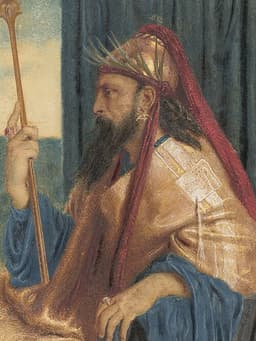
King Solomon
Emperor · Ancient
64.8Total
Basic Information
Born
464
-970
Died
549
-931
Era
Ancient
Ancient
Nationality
China
Israel
Occupation
Emperor
Emperor
Civilization
Eastern
Middle Eastern
Score Comparison
Military (10%)
30.0
45.0
Political (20%)
60.0
72.0
Influence (20%)
55.0
65.0
Legacy (20%)
58.0
70.0
Leadership (15%)
72.0
72.0
Strategy (15%)
43.3
50.0
TOTAL
55.4
64.8
Emperor Wu of Liang — Complete Timeline
502 AD
Founding of the Liang DynastyPolitical Action
Emperor Wu of Liang, then a general of the Southern Qi dynasty, overthrew the Qi emperor and established the Liang dynasty. He became its first emperor, ruling for 47 years and ushering in a period of cultural and religious flourishing.
Dynasty FoundingCoup
Impact: regionalconstructive
504 AD
Patronage of BuddhismCultural◆ Major
Emperor Wu became a devout Buddhist and promoted Buddhism throughout the Liang dynasty. He built temples, sponsored translations of Buddhist texts, and even took monastic vows multiple times, though he was ransomed back by his court. This patronage made Buddhism a dominant force in southern China.
ReligionCultural Patronage
Impact: regionalconstructive
505 AD
Establishment of the Imperial UniversityCultural
Emperor Wu established an Imperial University to promote Confucian learning and scholarship. This institution helped foster a cultural renaissance in the Liang dynasty, attracting scholars and poets to the court.
EducationCultural Patronage
Impact: nationalconstructive
548 AD
Siege of Jiankang by Hou JingWar
The rebel general Hou Jing besieged the Liang capital Jiankang (modern Nanjing). Emperor Wu was trapped in the palace and died of starvation during the siege. This event marked the beginning of the Liang dynasty's decline and led to widespread devastation.
RebellionSiegeDeath
Impact: regionaltragic
King Solomon — Complete Timeline
960 BC
Establishment of the Kingdom's AdministrationReform◆ Major
Solomon reorganized Israel into twelve administrative districts, each responsible for providing provisions for the royal court for one month. This system centralized power and increased tax revenue but also created regional disparities.
AdministrationTaxationReform
Impact: national
957 BC
Construction of the First TempleCultural
Solomon built the First Temple in Jerusalem on Mount Moriah, using materials and craftsmen provided by King Hiram of Tyre. The temple housed the Ark of the Covenant and became the central place of worship for the Israelites.
TempleJerusalemWorship
Impact: globalconstructive
950 BC
Visit of the Queen of ShebaPolitical Action◆ Major
The Queen of Sheba visited Solomon in Jerusalem, bringing spices, gold, and precious stones. She tested his wisdom with riddles and was impressed by his wealth and court. This visit established trade relations between Israel and Sheba.
DiplomacyTradeSheba
Impact: regionalconstructive
Marriage to Foreign WivesPolitical Action◆ Major
Solomon married many foreign women, including Pharaoh's daughter and Moabite, Ammonite, Edomite, Sidonian, and Hittite princesses. These marriages secured political alliances but also introduced foreign religious practices into Israel.
MarriageAlliancesIdolatry
Impact: nationaldestructive
Expert Analysis
Origins
Emperor Wu of Liang (born Xiao Yan, 464 CE) was the son of a Southern Qi general. He received a Confucian education and rose through military ranks, eventually serving as a general. His early life was marked by political instability during the Southern and Northern Dynasties period. King Solomon (born c. 990 BCE) was the son of King David and Bathsheba. He inherited a united kingdom of Israel and was known for his wisdom, which he reportedly requested from God. His upbringing in the royal court prepared him for kingship.
Rise to Power
Emperor Wu seized power in 502 CE after the Southern Qi emperor was assassinated. He led a revolt, defeated rival generals, and established the Liang dynasty with its capital at Jiankang. His rise was a military coup, scoring 30.0 in military but 60.0 in political acumen. Solomon ascended the throne peacefully after David's death, securing his position by eliminating rivals like Adonijah. He consolidated power through diplomacy and marriages, scoring 72.0 in political skill.
Leadership & Governance
Emperor Wu governed with a focus on Buddhism and Confucian scholarship. He built the Imperial University and sponsored Buddhist translations, but his religious devotion led to neglect of state affairs. He personally lectured on Buddhist sutras and spent heavily on temples. Solomon reorganized Israel into 12 administrative districts, established trade routes, and built the First Temple. His governance was pragmatic, with a score of 72.0 in leadership. However, his heavy taxation and forced labor for building projects caused resentment.
Triumph & Tragedy
Emperor Wu's triumph was the cultural flourishing of the Liang dynasty, with advances in literature and Buddhism. His tragedy came in 548 CE when the rebel Hou Jing besieged Jiankang; Wu died of starvation at age 85, his empire crumbling. Solomon's triumph was the construction of the First Temple and the wealth from trade, including the visit of the Queen of Sheba. His tragedy was his fall into idolatry due to foreign wives, leading to the division of the kingdom after his death. Both leaders saw their achievements undone by their own actions.
Character & Destiny
Emperor Wu was deeply devout but impractical, prioritizing Buddhism over governance. His decision to trust Hou Jing proved fatal. Solomon was wise but indulgent; his wisdom did not prevent personal failings. Historical assessments note Wu's piety but poor judgment, while Solomon's wisdom is legendary but marred by his later apostasy. Wu scored 55.4 total, Solomon 64.8, reflecting Solomon's broader impact.
Legacy
Emperor Wu's patronage of Buddhism permanently shaped Chinese Buddhism, with many temples and texts surviving. His Imperial University influenced education. However, his political legacy was short-lived. Solomon's Temple became the center of Jewish worship; his wisdom literature (Proverbs, Ecclesiastes) influenced Western thought. His administrative reforms set precedents. Solomon's legacy scores 70.0, Wu's 58.0, showing greater endurance.
Conclusion
King Solomon had greater impact than Emperor Wu of Liang. Solomon's total score of 64.8 versus Wu's 55.4 reflects his wider influence on religion, literature, and governance. While Wu's Buddhist patronage was significant, it was limited to China, whereas Solomon's Temple and wisdom texts shaped Judaism, Christianity, and Islam globally. Wu's empire collapsed soon after his death; Solomon's legacy endured millennia. Thus, Solomon's contributions were more transformative.
Rankings
🥇
King SolomonLeader
Mil: 45.0Pol: 72.0Inf: 65.0
64.8
🥈
Emperor Wu of Liang
Mil: 30.0Pol: 60.0Inf: 55.0
55.4
+9.4 behind
How This Comparison Works
Algorithm
Each figure is scored on 6 dimensions (0—100 scale) based on structured historical data: Military (10%), Political (20%), Influence (20%), Legacy (20%), Leadership (15%), Strategy (15%). The weighted total produces the final ranking.
Data Sources
Scores are computed from structured sub-indicators in the database. Scale factors adjust for era (Ancient ×0.85, Modern ×1.0) and civilization size (Eastern ×1.05, Other ×0.80) to account for differences in population and military scale.
Maximum 3 Figures
Comparisons are limited to 2—3 figures to ensure readability and statistical meaningfulness.
Error Margins
±5 points per dimension — Sub-scores are derived from historical records with inherent uncertainty. Two figures within 5 points on a dimension should be considered roughly equivalent in that area.
Total Score Accuracy
±3 points overall — The weighted combination of 6 dimensions produces a total score with approximately ±3 points of uncertainty. Differences of less than 3 points are not statistically significant— the figures are effectively tied.
Known Limitations
- Historical records are incomplete and uneven across civilizations
- Figures from oral-tradition societies may be underrepresented
- Occupation labels can misclassify multi-role figures
- Scores measure capability and impact, not moral character
- Quantitative scoring is a comparison tool, not absolute truth
Capability Radar
Military (10%) — Battles & Warfare
Battles
45
20
Win Rate
40
25
Expansion
35
20
Political (20%) — Governance & Reform
Reform
70
75
Diplomacy
65
80
Economy
75
85
Influence (20%) — Cultural & Global Reach
Cultural
75
90
Global
55
85
Legacy (20%) — Historical Impact
Historical
70
95
Longevity
65
95
Leadership (15%) — Power & Stability
Tenure
85
70
Stability
60
70
Strategy (15%) — Tactics & Innovation
Strategy
40
25
Tactics
35
30
Reform
30
15
Similar Comparisons
Comments & Discussion
No comments yet. Be the first to share your thoughts!