Loading...
Emperor Xuanzong of Tang vs Louis XI
Louis XI leads by 6.9 pts · 2 figures compared
…
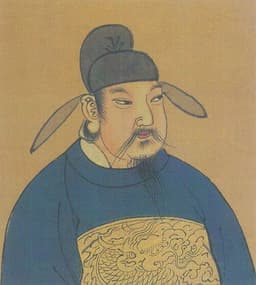
Emperor Xuanzong of Tang
Emperor · Medieval
60.8Total
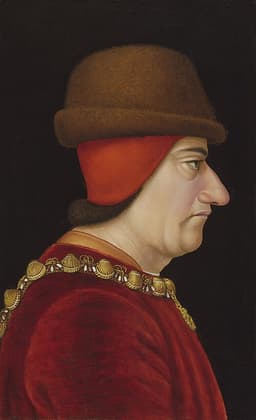
Louis XI
Emperor · Medieval
67.7Total
Basic Information
Born
685
1423
Died
762
1483
Era
Medieval
Medieval
Nationality
China
France
Occupation
Emperor
Emperor
Civilization
Eastern
Western
Score Comparison
Military (10%)
65.0
45.0
Political (20%)
82.0
78.0
Influence (20%)
40.0
68.0
Legacy (20%)
65.0
65.0
Leadership (15%)
68.0
85.0
Strategy (15%)
55.0
55.0
TOTAL
60.8
67.7
Emperor Xuanzong of Tang — Complete Timeline
713 AD
Kaiyuan Golden AgeCultural
Emperor Xuanzong initiated the Kaiyuan era, a period of political stability, economic prosperity, and cultural flourishing. He appointed capable ministers, reformed the bureaucracy, and promoted the arts. This era is considered the peak of the Tang dynasty.
Golden AgeProsperity
Impact: globalconstructive
720 AD
Reform of the Equal-Field SystemReform
Emperor Xuanzong implemented reforms to the Equal-Field System to address land concentration and tax evasion. These reforms temporarily stabilized the agrarian economy and increased state revenue, but they could not reverse the long-term decline of the system.
Land ReformEconomic Policy
Impact: nationalconstructive
755 AD
An Lushan RebellionWar
The general An Lushan launched a rebellion against Emperor Xuanzong, capturing the capital Chang'an. Xuanzong fled to Sichuan and was forced to abdicate. The rebellion lasted eight years, devastating the Tang empire and leading to its decline.
RebellionCivil War
Impact: globaltragic
756 AD
Abdication and Death of Yang GuifeiPolitical Action◆ Major
During the flight from Chang'an, Emperor Xuanzong's troops mutinied and forced him to order the execution of his beloved consort Yang Guifei, whom they blamed for the rebellion. Xuanzong then abdicated in favor of his son, Emperor Suzong.
AbdicationExecution
Impact: nationaltragic
Louis XI — Complete Timeline
1464 AD
Established the Postal SystemReform
Louis XI created a royal postal system with relay stations across France, enabling faster communication between the crown and provincial officials. This administrative reform improved governance and intelligence gathering.
AdministrationCommunicationReform
Impact: nationalconstructive
1465 AD
Defeated the League of the Public WealWar◆ Major
Louis XI faced a coalition of powerful nobles, the League of the Public Weal, led by Charles the Bold of Burgundy. Although the Battle of Montlh
Civil WarNoble RebellionBurgundy
Impact: national
1475 AD
Treaty of PicquignyPolitical Action◆ Major
Louis XI negotiated the Treaty of Picquigny with Edward IV of England, ending English military intervention in France. Louis paid a large pension to Edward in exchange for English withdrawal, avoiding a costly war and securing his northern border.
TreatyDiplomacyEngland
Impact: regionalconstructive
1477 AD
Acquired BurgundyPolitical Action
After Charles the Bold's death at the Battle of Nancy, Louis XI seized the Duchy of Burgundy and other Burgundian territories, including Picardy and the Somme towns. This expansion significantly increased royal domain and weakened the Burgundian state.
Territorial ExpansionBurgundyRoyal Domain
Impact: regionalconstructive
1481 AD
Annexed Anjou and MainePolitical Action
Louis XI annexed the counties of Anjou and Maine after the death of Charles of Anjou, incorporating them into the royal domain. This further consolidated French territory and reduced the power of the Angevin nobility.
Territorial ExpansionAnjouMaine
Impact: nationalconstructive
Expert Analysis
Origins
Emperor Xuanzong of Tang (born Li Longji, 685 CE) was the third son of Emperor Ruizong and a grandson of Empress Wu Zetian. Raised in the Tang court, he experienced the political turmoil of Wu Zetian's reign and the subsequent coups. His early education emphasized Confucian classics and military strategy, preparing him for leadership. In contrast, Louis XI (born 1423) was the son of Charles VII of France and Marie of Anjou. He grew up during the Hundred Years' War, witnessing his father's struggles against the English and rebellious nobles. Louis's youth was marked by conflict with his father, leading him to rebel and seek refuge with Philip the Good of Burgundy. These formative years shaped his distrust of nobles and his reliance on cunning rather than military force.
Rise to Power
Xuanzong rose to power through a coup in 710 CE, when he and his aunt Princess Taiping overthrew Empress Wei, who had poisoned Emperor Zhongzong. He placed his father on the throne and became crown prince, then ascended in 712 after his father abdicated. His early reign focused on consolidating power, removing corrupt officials, and appointing capable ministers like Yao Chong and Song Jing. Louis XI's path was more turbulent. He became king in 1461 after his father's death, but immediately faced opposition from the League of the Public Weal, a coalition of nobles led by Charles the Bold of Burgundy. Louis's military performance was poor; at the Battle of Montlhéry (1465), he failed to defeat the league. However, he used diplomacy to divide his enemies, making treaties and promising concessions to undermine the coalition. His political score of 78.0 reflects this cunning, while Xuanzong's 82.0 indicates more effective governance.
Leadership & Governance
Xuanzong's early rule (Kaiyuan era, 713-741) was marked by political stability, economic prosperity, and cultural flourishing. He reformed the equal-field system to curb land concentration, reduced taxes, and promoted meritocratic appointments. The Tang empire expanded its borders and trade flourished along the Silk Road. However, his later years saw decline as he became infatuated with his consort Yang Guifei and neglected governance, allowing corrupt officials like Li Linfu and Yang Guozhong to gain power. Louis XI, with a leadership score of 85.0, was a master of political manipulation. He centralized royal authority by breaking the power of feudal lords, acquiring Burgundy, Anjou, Maine, and Provence through inheritance, purchase, and force. He established a royal postal system for efficient communication, fostered trade, and promoted industry. Unlike Xuanzong, Louis's focus remained on state-building throughout his reign, though his methods were often devious, earning him the nickname "the Universal Spider." His military score of 45.0 is low, but he avoided costly wars, preferring negotiation and bribery.
Triumph & Tragedy
Xuanzong's greatest triumph was the Kaiyuan Golden Age, a period of prosperity and cultural achievement that saw the flourishing of poetry (Li Bai, Du Fu), art, and music. The Tang empire reached its zenith under his rule. His greatest tragedy was the An Lushan Rebellion (755-763), which shattered the empire. His misjudgment in trusting An Lushan, coupled with his neglect of military defenses, led to the rebellion. During his flight from Chang'an, his troops forced him to execute Yang Guifei, a moment of profound personal loss. He abdicated in 756 and died in 762, heartbroken. Louis XI's triumph was the unification of France. By acquiring Burgundy after Charles the Bold's death (1477) and other territories, he nearly doubled the royal domain. He also ended English interference through the Treaty of Picquigny (1475), paying a pension to Edward IV. His tragedy was his inability to secure a lasting peace with the Habsburgs; his marriage alliances led to conflicts that continued after his death. He also faced rebellions from his own son, the future Charles VIII, and died in 1483, fearing divine judgment.
Character & Destiny
Xuanzong was initially a capable and energetic ruler, but his character changed dramatically in later years. His love for Yang Guifei led to indulgence and neglect, while his trust in corrupt officials caused his downfall. His destiny was shaped by his inability to adapt to changing circumstances. Louis XI remained consistent: shrewd, suspicious, and calculating. He surrounded himself with low-born advisors, avoided grand displays, and focused on the minutiae of governance. His character led him to outmaneuver enemies but also earned him a reputation for cruelty and deceit. Historical assessments vary: Xuanzong is seen as a tragic figure who ruined his own legacy, while Louis is viewed as a founder of modern France.
Legacy
Xuanzong's legacy is mixed. The Kaiyuan era is celebrated as a golden age, but the An Lushan rebellion marked the beginning of the Tang decline. His cultural patronage left a lasting impact on Chinese literature and art, but his political failures weakened the dynasty. Louis XI's legacy is more concrete: he centralized the French state, laying the groundwork for absolutism. His administrative reforms, including the postal system, strengthened royal control. He is remembered as a key figure in the transition from medieval to early modern France. In scores, Louis XI totals 67.7, while Xuanzong scores 60.8, reflecting greater overall impact.
Conclusion
Louis XI had a greater impact on history than Emperor Xuanzong of Tang. While Xuanzong presided over a golden age, his legacy was undone by his own failures, and the Tang dynasty never recovered. Louis XI, despite lower military scores (45.0 vs 65.0), achieved lasting state-building that shaped France for centuries. His political cunning and administrative reforms created a unified kingdom, whereas Xuanzong's reign ended in fragmentation. The 6.9-point score gap accurately reflects this: Louis XI's influence endures, while Xuanzong's golden age is a memory of what could have been.
Rankings
🥇
Louis XILeader
Mil: 45.0Pol: 78.0Inf: 68.0
67.7
🥈
Emperor Xuanzong of Tang
Mil: 65.0Pol: 82.0Inf: 40.0
60.8
+6.9 behind
How This Comparison Works
Algorithm
Each figure is scored on 6 dimensions (0—100 scale) based on structured historical data: Military (10%), Political (20%), Influence (20%), Legacy (20%), Leadership (15%), Strategy (15%). The weighted total produces the final ranking.
Data Sources
Scores are computed from structured sub-indicators in the database. Scale factors adjust for era (Ancient ×0.85, Modern ×1.0) and civilization size (Eastern ×1.05, Other ×0.80) to account for differences in population and military scale.
Maximum 3 Figures
Comparisons are limited to 2—3 figures to ensure readability and statistical meaningfulness.
Error Margins
±5 points per dimension — Sub-scores are derived from historical records with inherent uncertainty. Two figures within 5 points on a dimension should be considered roughly equivalent in that area.
Total Score Accuracy
±3 points overall — The weighted combination of 6 dimensions produces a total score with approximately ±3 points of uncertainty. Differences of less than 3 points are not statistically significant— the figures are effectively tied.
Known Limitations
- Historical records are incomplete and uneven across civilizations
- Figures from oral-tradition societies may be underrepresented
- Occupation labels can misclassify multi-role figures
- Scores measure capability and impact, not moral character
- Quantitative scoring is a comparison tool, not absolute truth
Capability Radar
Military (10%) — Battles & Warfare
Battles
65
45
Win Rate
60
40
Expansion
70
65
Political (20%) — Governance & Reform
Reform
90
80
Diplomacy
80
95
Economy
95
70
Influence (20%) — Cultural & Global Reach
Cultural
90
55
Global
75
60
Legacy (20%) — Historical Impact
Historical
85
75
Longevity
80
70
Leadership (15%) — Power & Stability
Tenure
85
75
Stability
40
65
Strategy (15%) — Tactics & Innovation
Strategy
70
70
Tactics
55
55
Reform
75
60
Similar Comparisons
Comments & Discussion
No comments yet. Be the first to share your thoughts!