Loading...
This comparison has not been analyzed yet.
One-time AI generation (~1 minute). Scores and timeline are already available below.
Empress Dowager Xiao vs Mihira Bhoja
Empress Dowager Xiao leads by 0.8 pts · 2 figures compared
…
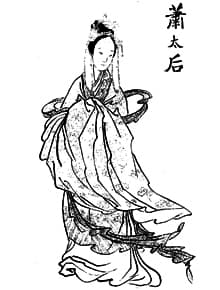
Empress Dowager Xiao
Emperor · Medieval
64.4Total

Mihira Bhoja
Emperor · Medieval
63.6Total
Basic Information
Born
932
836
Died
1009
885
Era
Medieval
Medieval
Nationality
Khitan Empire
India
Occupation
Emperor
Emperor
Civilization
Eastern
Indian
Score Comparison
Military (10%)
80.0
82.0
Political (20%)
72.0
55.0
Influence (20%)
56.7
58.3
Legacy (20%)
52.0
56.0
Leadership (15%)
78.0
80.0
Strategy (15%)
67.2
65.4
TOTAL
64.4
63.6
Empress Dowager Xiao — Complete Timeline
982 AD
Regency for Yelu LongxuPolitical Action
Empress Dowager Xiao became regent for her young son, Yelu Longxu, after the death of her husband, Yelu Xian. She effectively ruled the Liao dynasty for over 20 years, directing military campaigns and administrative reforms.
Liao dynastyRegencyFemale ruler
Impact: regional
990 AD
Implementation of Administrative ReformsReform◆ Major
Empress Dowager Xiao implemented administrative reforms that strengthened the Liao bureaucracy, including the promotion of Chinese-style governance and the integration of Khitan and Chinese officials. These reforms improved state efficiency and stability.
Liao dynastyReformAdministration
Impact: regionalconstructive
1004 AD
Leadership in the Liao-Song WarWar◆ Major
Empress Dowager Xiao personally led Liao forces in a major invasion of Song territory, reaching the outskirts of the Song capital. The campaign ended with the Treaty of Shanyuan, which she negotiated, securing Liao's dominance in the north.
Liao-Song warMilitary campaignTreaty
Impact: regional
Mihira Bhoja — Complete Timeline
836 AD
Conquest of KannaujWar◆ Major
Mihira Bhoja captured Kannauj, the former capital of the Vardhana dynasty, and made it the capital of the Pratihara Empire. This established the Pratiharas as the dominant power in northern India for the next century.
ConquestKannaujCapital
Impact: national
840 AD
Defense Against Arab InvasionsWar◆ Major
Mihira Bhoja successfully repelled multiple Arab invasions from the Sindh region. He strengthened the Pratihara defenses and prevented Arab forces from advancing into the Gangetic plain, earning the title of 'Mihira' (sun) for his valor.
DefenseArab InvasionsPratihara
Impact: national
845 AD
Patronage of VaishnavismCultural
Mihira Bhoja was a devout Vaishnava and adopted the title 'Adivaraha' (primordial boar). He patronized the construction of Vishnu temples and promoted Vaishnavism across his empire, influencing religious practices in northern India.
PatronageVaishnavismReligion
Impact: nationalconstructive
850 AD
Expansion of the Pratihara EmpireWar◆ Major
Mihira Bhoja expanded the Pratihara Empire to its greatest extent, controlling territories from Gujarat to Bengal and from the Himalayas to the Narmada River. His empire became the largest in India after the Gupta period.
ExpansionPratihara EmpireNorthern India
Impact: national
This comparison has not been analyzed yet.
One-time AI generation (~1 minute). Scores and timeline are already available below.
Rankings
🥇
Empress Dowager XiaoLeader
Mil: 80.0Pol: 72.0Inf: 56.7
64.4
🥈
Mihira Bhoja
Mil: 82.0Pol: 55.0Inf: 58.3
63.6
+0.8 behind
How This Comparison Works
Algorithm
Each figure is scored on 6 dimensions (0—100 scale) based on structured historical data: Military (10%), Political (20%), Influence (20%), Legacy (20%), Leadership (15%), Strategy (15%). The weighted total produces the final ranking.
Data Sources
Scores are computed from structured sub-indicators in the database. Scale factors adjust for era (Ancient ×0.85, Modern ×1.0) and civilization size (Eastern ×1.05, Other ×0.80) to account for differences in population and military scale.
Maximum 3 Figures
Comparisons are limited to 2—3 figures to ensure readability and statistical meaningfulness.
Error Margins
±5 points per dimension — Sub-scores are derived from historical records with inherent uncertainty. Two figures within 5 points on a dimension should be considered roughly equivalent in that area.
Total Score Accuracy
±3 points overall — The weighted combination of 6 dimensions produces a total score with approximately ±3 points of uncertainty. Differences of less than 3 points are not statistically significant— the figures are effectively tied.
Known Limitations
- Historical records are incomplete and uneven across civilizations
- Figures from oral-tradition societies may be underrepresented
- Occupation labels can misclassify multi-role figures
- Scores measure capability and impact, not moral character
- Quantitative scoring is a comparison tool, not absolute truth
Capability Radar
Military (10%) — Battles & Warfare
Battles
75
75
Win Rate
80
80
Expansion
75
70
Political (20%) — Governance & Reform
Reform
80
70
Diplomacy
85
75
Economy
75
70
Influence (20%) — Cultural & Global Reach
Cultural
60
60
Global
55
50
Legacy (20%) — Historical Impact
Historical
70
65
Longevity
65
55
Leadership (15%) — Power & Stability
Tenure
85
80
Stability
80
75
Strategy (15%) — Tactics & Innovation
Strategy
85
75
Tactics
70
70
Reform
65
65
Similar Comparisons
Comments & Discussion
No comments yet. Be the first to share your thoughts!