Loading...
Engelbert Dollfuss vs Joao Goulart
Engelbert Dollfuss leads by 0.8 pts · 2 figures compared
…
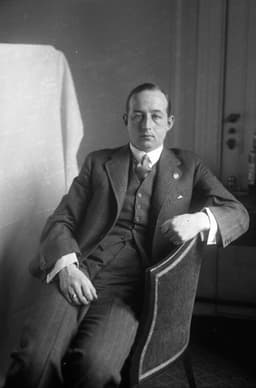
Engelbert Dollfuss
Politician · Modern
47.6Total
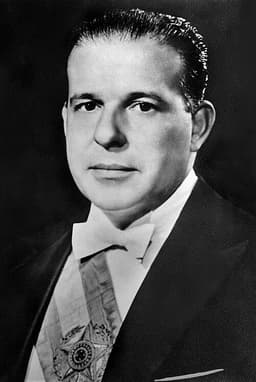
Joao Goulart
Politician · Modern
46.8Total
Basic Information
Born
1892
1918
Died
1934
1976
Era
Modern
Modern
Nationality
Austria
Brazil
Occupation
Politician
Politician
Civilization
Western
Western
Score Comparison
Military (10%)
49.3
49.8
Political (20%)
45.1
42.3
Influence (20%)
51.0
50.2
Legacy (20%)
41.7
40.8
Leadership (15%)
55.3
51.9
Strategy (15%)
44.1
49.2
TOTAL
47.6
46.8
Engelbert Dollfuss — Complete Timeline
1933 AD
Establishment of the Austrofascist regimePolitical Action◆ Major
In March 1933, Dollfuss used a parliamentary procedural crisis to suspend the National Council and rule by emergency decree. He banned the Communist Party, the Nazi Party, and eventually the Social Democratic Party, establishing a one-party authoritarian state known as the Austrofascist regime.
AustrofascismAuthoritarianismDemocracy Suspended
Impact: nationaldestructive
1934 AD
Austrian Civil WarWar◆ Major
In February 1934, Dollfuss ordered the military and police to attack Social Democratic Party strongholds in Vienna and other cities. The conflict lasted several days, resulting in hundreds of deaths and the outlawing of the Social Democratic Party and its paramilitary organization, the Republikanischer Schutzbund.
Civil WarSocial DemocratsRepression
Impact: nationaldestructive
Assassination in the July PutschPolitical Action
On July 25, 1934, Austrian Nazis, with support from Germany, stormed the Federal Chancellery in Vienna. Dollfuss was shot and died from his wounds. The coup attempt failed to seize power, but Dollfuss's death marked a major escalation in Nazi pressure on Austria.
AssassinationNazi CoupAnschluss Prelude
Impact: nationaltragic
Joao Goulart — Complete Timeline
1960 AD
Elected Vice President of BrazilPolitical Action◆ Major
João Goulart was elected vice president of Brazil in 1960 on the ticket of the Brazilian Labor Party (PTB), alongside President Jânio Quadros. He assumed office on January 31, 1961.
Vice PresidencyElectionBrazil
Impact: nationalconstructive
1961 AD
Assumed the Presidency After Quadros' ResignationPolitical Action
After Quadros resigned in August 1961, Goulart assumed the presidency on September 7, 1961, following a political crisis and a compromise that established a parliamentary system. He was the first president from the PTB.
PresidencyPolitical CrisisBrazil
Impact: nationalconstructive
1962 AD
Nationalized the American-owned ITT and CSN CompaniesPolitical Action
Goulart nationalized the International Telephone and Telegraph (ITT) company and the Companhia Sider
NationalizationEconomic PolicyBrazil
Impact: national
1963 AD
Proposed the Basic ReformsReform◆ Major
Goulart proposed a series of 'Basic Reforms' (Reformas de Base) in 1963, including land reform, tax reform, educational reform, and the nationalization of foreign-owned utilities. These proposals faced strong opposition from conservative sectors and the military.
ReformLand ReformBrazil
Impact: nationalprogressive
1964 AD
Overthrown in the 1964 Military CoupPolitical Action
Goulart was overthrown by a military coup on April 1, 1964, which established a military dictatorship that lasted until 1985. He fled to Uruguay and later to Argentina, where he lived in exile until his death.
CoupExileMilitary Dictatorship
Impact: nationaltragic
Expert Analysis
Origins
Engelbert Dollfuss was born on October 4, 1892, in Texing, Austria-Hungary, into a peasant family. He studied law at the University of Vienna and later became a farmer. His humble origins shaped his conservative, Catholic worldview. He served in World War I, earning several medals, and entered politics in the 1920s as a member of the Christian Social Party. His rise was facilitated by his role as president of the Federal Railways and later as Minister of Agriculture.
João Goulart was born on March 1, 1919, in São Borja, Rio Grande do Sul, Brazil, into a wealthy ranching family. He studied law but never practiced, instead managing family estates. He entered politics under the mentorship of Getúlio Vargas, serving as his Minister of Labor in the 1950s. Goulart's background as a landowner and his ties to labor unions positioned him as a left-leaning populist.
Rise to Power
Dollfuss became Chancellor of Austria on May 20, 1932, leading a coalition government. In March 1933, he exploited a procedural crisis to suspend parliament and rule by emergency decree, marking the beginning of the Austrofascist regime. He banned the Communist Party and the Nazi Party, and in February 1934, he crushed the Social Democratic opposition in the Austrian Civil War, bombing workers' housing in Vienna. This consolidation of power relied on the Heimwehr, a paramilitary group, and the support of Mussolini's Italy.
Goulart was elected Vice President in 1960 under Jânio Quadros. When Quadros resigned unexpectedly in August 1961, Goulart was abroad but returned to assume the presidency on September 7, 1961, after a political crisis. The military initially opposed him, but a compromise established a parliamentary system that reduced his powers. In a 1963 plebiscite, Goulart restored presidential powers, allowing him to pursue his agenda.
Leadership & Governance
Dollfuss governed as a dictator, suppressing all opposition. He banned political parties, established a one-party state under the Fatherland Front, and aligned with fascist Italy. His regime was characterized by authoritarianism, Catholic corporatism, and opposition to both socialism and Nazism. Dollfuss scored 55.3 in leadership and 44.1 in strategy, reflecting his decisive but ultimately fatal approach. He failed to secure broad support, relying on force and foreign backing.
Goulart's leadership was democratic but increasingly confrontational. He proposed the 'Basic Reforms' in 1963, including land reform, tax reform, and nationalization of foreign utilities. He nationalized the American-owned ITT and CSN companies in 1962, provoking conservative opposition. His political score of 42.3 indicates his inability to build consensus; he faced fierce resistance from landowners, the military, and the United States. His strategy score of 49.2 suggests a more calculated approach than Dollfuss, but he lacked the ruthlessness to enforce his will.
Triumph & Tragedy
Dollfuss's greatest triumph was the suppression of the Social Democrats and the establishment of a stable, though authoritarian, regime. He successfully resisted Nazi infiltration until his death. His tragedy was his assassination on July 25, 1934, during the July Putsch, when Austrian Nazis stormed the Chancellery and shot him. His death left Austria vulnerable, leading to the Anschluss in 1938. Dollfuss's military score of 49.3 reflects his role in the civil war but also his failure to secure the state.
Goulart's triumph was his ambitious reform program, which aimed to reduce inequality and promote national development. He increased wages and expanded social benefits. His tragedy was the 1964 military coup, which overthrew him on April 1, 1964, and established a 21-year dictatorship. He fled to Uruguay, where he died in exile in 1976. Goulart's legacy score of 40.8 is low because his reforms were undone by the military regime.
Character & Destiny
Dollfuss was determined, devoutly Catholic, and authoritarian. His small stature (4'11") earned him the nickname 'Millimetternich.' He trusted Mussolini but underestimated Hitler. His decision to crush the Social Democrats alienated the working class, and his reliance on the Heimwehr made him dependent on right-wing factions. His character shaped his fate: he was a dictator who could not compromise, and his death was a direct result of his defiance of the Nazis.
Goulart was charismatic but indecisive. He was a populist who sought to please both labor and the elite, but his reforms alienated the powerful. He failed to control the military and hesitated to confront the coup plotters. His character—conciliatory yet provocative—led to his downfall. He scored 51.9 in leadership but lacked the strategic foresight to secure his position.
Legacy
Dollfuss's legacy is mixed. In Austria, he is viewed as a dictator who destroyed democracy, but also as a defender of Austrian independence. The Austrofascist regime he founded was short-lived, but his memory is honored by some conservative circles. His influence score of 51.0 reflects his impact on Austrian history, but his regime was overshadowed by the Nazi era.
Goulart's legacy is that of a reformer whose ideas were later adopted by subsequent governments. Land reform and social policies he proposed became central to Brazilian politics after the return to democracy. However, his overthrow is seen as a failure of his leadership. His influence score of 50.2 is similar to Dollfuss's, but his policies had a longer-term impact on Brazilian political discourse.
Conclusion
Engelbert Dollfuss and João Goulart were both leaders who faced crises and were overthrown. Dollfuss scored 47.6 overall, slightly higher than Goulart's 46.8. Dollfuss had a greater immediate impact by establishing a dictatorship that resisted Nazism, but his regime was short-lived. Goulart's long-term influence is more significant, as his reform ideas resurfaced in later decades. However, in terms of concrete achievements and the ability to shape events, Dollfuss had a greater impact. He crushed a civil war, built a regime, and died resisting the Nazis. Goulart, despite his good intentions, was unable to implement lasting change. Therefore, Dollfuss had a more decisive, albeit tragic, impact on history.
Rankings
🥇
Engelbert DollfussLeader
Mil: 49.3Pol: 45.1Inf: 51.0
47.6
🥈
Joao Goulart
Mil: 49.8Pol: 42.3Inf: 50.2
46.8
+0.8 behind
How This Comparison Works
Algorithm
Each figure is scored on 6 dimensions (0—100 scale) based on structured historical data: Military (10%), Political (20%), Influence (20%), Legacy (20%), Leadership (15%), Strategy (15%). The weighted total produces the final ranking.
Data Sources
Scores are computed from structured sub-indicators in the database. Scale factors adjust for era (Ancient ×0.85, Modern ×1.0) and civilization size (Eastern ×1.05, Other ×0.80) to account for differences in population and military scale.
Maximum 3 Figures
Comparisons are limited to 2—3 figures to ensure readability and statistical meaningfulness.
Error Margins
±5 points per dimension — Sub-scores are derived from historical records with inherent uncertainty. Two figures within 5 points on a dimension should be considered roughly equivalent in that area.
Total Score Accuracy
±3 points overall — The weighted combination of 6 dimensions produces a total score with approximately ±3 points of uncertainty. Differences of less than 3 points are not statistically significant— the figures are effectively tied.
Known Limitations
- Historical records are incomplete and uneven across civilizations
- Figures from oral-tradition societies may be underrepresented
- Occupation labels can misclassify multi-role figures
- Scores measure capability and impact, not moral character
- Quantitative scoring is a comparison tool, not absolute truth
Capability Radar
Military (10%) — Battles & Warfare
Battles
27
31
Win Rate
33
30
Expansion
36
34
Political (20%) — Governance & Reform
Reform
45
40
Diplomacy
30
35
Economy
35
25
Influence (20%) — Cultural & Global Reach
Cultural
15
20
Global
20
20
Legacy (20%) — Historical Impact
Historical
30
30
Longevity
20
15
Leadership (15%) — Power & Stability
Tenure
40
30
Stability
10
15
Strategy (15%) — Tactics & Innovation
Strategy
40
37
Tactics
41
40
Reform
46
44
Similar Comparisons
Comments & Discussion
No comments yet. Be the first to share your thoughts!