Loading...
Enomoto Takeaki vs Gustavus Adolphus
Gustavus Adolphus leads by 22.5 pts · 2 figures compared
…
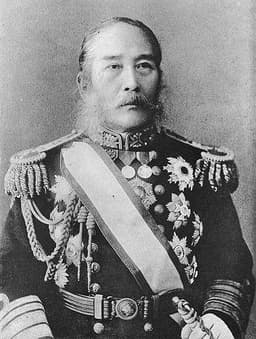
Enomoto Takeaki
General · Modern
51.6Total

Gustavus Adolphus
General · Modern
74.1Total
Basic Information
Born
1836
1594
Died
1908
1632
Era
Modern
Modern
Nationality
Japan
Sweden
Occupation
General
General
Civilization
Eastern
Western
Score Comparison
Military (10%)
25.0
76.4
Political (20%)
54.7
78.0
Influence (20%)
54.1
70.8
Legacy (20%)
46.7
65.0
Leadership (15%)
68.0
85.0
Strategy (15%)
55.0
80.6
TOTAL
51.6
74.1
Enomoto Takeaki — Complete Timeline
1868 AD
Led the Shogunate Fleet to HokkaidoWar
Enomoto commanded the shogunate's remaining naval forces, including eight warships, and sailed to Hokkaido. This fleet formed the core of the Republic of Ezo's military and allowed the loyalists to establish a base.
Naval CommandBoshin WarShogunate Loyalist
Impact: regional
Founded the Republic of EzoPolitical Action
After the shogunate's defeat, Enomoto led loyalist forces to Hokkaido and established the Republic of Ezo, an independent state with a Western-style government. He was elected president and organized a defense against imperial forces.
Boshin WarSeparatist StateShogunate Loyalist
Impact: national
1869 AD
Surrendered at the Battle of HakodateWar◆ Major
Enomoto's forces were defeated by the imperial army at the Battle of Hakodate. He surrendered the Republic of Ezo and was taken prisoner, ending the last organized resistance to the Meiji Restoration.
Boshin WarDefeatEnd of Resistance
Impact: nationaltragic
1885 AD
Served as Minister of Foreign Affairs in the Meiji GovernmentPolitical Action◆ Major
After being pardoned, Enomoto served as Japan's Minister of Foreign Affairs. He negotiated treaties with Western powers and worked to revise the unequal treaties imposed on Japan, contributing to Japan's diplomatic modernization.
DiplomacyTreaty RevisionMeiji Government
Impact: nationalconstructive
Gustavus Adolphus — Complete Timeline
1620 AD
Military Reforms: Combined-Arms TacticsReform◆ Major
Gustavus Adolphus reformed the Swedish army, introducing lighter muskets, mobile artillery, and integrated infantry-cavalry-artillery tactics. These innovations increased battlefield flexibility and firepower, setting a new standard for European warfare.
Military ReformTacticsInnovation
Impact: globalconstructive
1631 AD
Battle of BreitenfeldWar
Gustavus Adolphus led the Swedish-Saxon army to a decisive victory over the Imperial forces under Count Tilly at Breitenfeld. This battle demonstrated the effectiveness of his combined-arms tactics and established Sweden as a major European power.
BattleThirty Years' WarMilitary Innovation
Impact: global
1632 AD
Battle of LützenWar◆ Major
Gustavus Adolphus was killed leading a cavalry charge at the Battle of L
BattleDeath in BattleThirty Years' War
Impact: globaltragic
Expert Analysis
Origins
Enomoto Takeaki (1836–1908) was born into a samurai family in the Edo period, a time of feudal stability under the Tokugawa shogunate. He studied Western military science and naval technology at the Nagasaki Naval Training Center, where he learned from Dutch instructors. His early career was shaped by loyalty to the shogunate, and he rose to command the shogunate's navy, witnessing the modernization pressures that would ultimately destroy the old order.
Gustavus Adolphus (1594–1632) was born into the Vasa dynasty, son of King Charles IX of Sweden. From a young age, he was groomed for kingship, receiving a thorough education in military affairs, politics, and languages. He ascended the throne at 16 in 1611, inheriting a kingdom embroiled in wars with Denmark, Russia, and Poland. His formative experiences included leading campaigns against these neighbors, honing his tactical skills and strategic vision.
Rise to Power
Enomoto's rise came through his naval expertise and loyalty. During the Boshin War (1868–1869), after the shogunate's collapse, he refused to surrender to the imperial forces. In 1868, he led the shogunate's fleet—eight warships—to Hokkaido, where he founded the Republic of Ezo, a short-lived independent state with a Western-style government. He was elected president, but his power was fragile, relying on a small force of former shogunate troops and local allies.
Gustavus Adolphus's rise was meteoric. He inherited a war with Denmark in 1611 and secured a favorable peace. He then reformed Sweden's military and administration, turning the kingdom into a major European power. His intervention in the Thirty Years' War (1618–1648) began in 1630, when he landed in Pomerania. His decisive victory at Breitenfeld in 1631 over Count Tilly's imperial forces established him as the leading Protestant commander and the "Lion of the North."
Leadership & Governance
Enomoto's governance of the Ezo Republic was pragmatic. He introduced Western-style reforms, including a constitution, a parliament, and universal male suffrage (limited to samurai and farmers). He sought diplomatic recognition from foreign powers, but failed due to Japan's isolationist legacy. His leadership was cautious and defensive, focused on survival rather than expansion. After his surrender in 1869, he was imprisoned but later pardoned and served in the Meiji government as Minister of Foreign Affairs (1880–1885), where he negotiated treaty revisions with Western powers.
Gustavus Adolphus's leadership was transformative. He centralized Sweden's government, improved tax collection, and built a modern bureaucracy. His military reforms were revolutionary: he introduced lighter muskets, mobile artillery, and combined-arms tactics that integrated infantry, cavalry, and artillery. He also standardized training and discipline, creating a professional army. As a commander, he led from the front, inspiring his troops but also exposing himself to danger. His political score of 78.0 reflects his ability to manage a diverse kingdom and forge alliances.
Triumph & Tragedy
Enomoto's greatest success was founding the Republic of Ezo, which demonstrated his administrative skills and commitment to modernization. He also later contributed to Japan's foreign policy as a minister, helping to revise unequal treaties. His greatest failure was the defeat at the Battle of Hakodate (1869), where his outnumbered forces surrendered after a six-month siege. His political score of 54.7 and military score of 25.0 indicate his limitations as a combat commander.
Gustavus Adolphus's greatest triumph was the Battle of Breitenfeld (1631), where his army destroyed Tilly's forces, securing Protestant ascendancy in Germany. He also won at Lützen (1632) against Wallenstein, but at the cost of his life. His military score of 76.4 and strategy score of 80.6 reflect his tactical brilliance. His tragedy was his death at 37, which prevented him from fully consolidating Sweden's gains and led to a prolonged war. His legacy score of 65.0 shows lasting impact, but his early death limited his political achievements.
Character & Destiny
Enomoto was pragmatic and resilient. His loyalty to the shogunate led him to rebel, but he adapted to defeat, serving the Meiji government later. His character was cautious, and his destiny was to be a transitional figure between old and new Japan. Historical assessments note his administrative competence but lack of strategic military vision.
Gustavus Adolphus was bold, charismatic, and innovative. His willingness to take risks—leading charges, adopting new tactics—defined his success and led to his death. Historians like Michael Roberts credit him with creating the modern art of war. His character shaped his destiny: he died a warrior king, leaving a legacy of military reform but an unfinished war.
Legacy
Enomoto's legacy is mixed. He is remembered as a symbol of shogunate loyalty and a pioneer of Western-style governance in Japan. The Ezo Republic was a brief experiment, but his later diplomatic work helped Japan become a modern state. His influence score of 54.1 and legacy score of 46.7 reflect his moderate but significant impact.
Gustavus Adolphus's legacy is immense. He is considered one of history's greatest military commanders, with his tactical innovations influencing warfare for centuries. Sweden became a major power during his reign, and his reforms laid the foundation for its later empire. His influence score of 70.8 and legacy score of 65.0 underscore his enduring impact. He is celebrated as the "Lion of the North" and a symbol of Swedish greatness.
Conclusion
Gustavus Adolphus had a greater impact by any measure. His military reforms changed warfare, his political skill built a modern state, and his leadership shaped European history. Enomoto Takeaki was a capable administrator and a loyal samurai, but his achievements were limited to a brief rebellion and later diplomatic work. With a total score of 74.1 against Enomoto's 51.6, the gap of 22.5 points reflects the difference in scale and lasting influence. Gustavus Adolphus stands as a transformative figure, while Enomoto remains a footnote in Japan's modernization.
Rankings
🥇
Gustavus AdolphusLeader
Mil: 76.4Pol: 78.0Inf: 70.8
74.1
🥈
Enomoto Takeaki
Mil: 25.0Pol: 54.7Inf: 54.1
51.6
+22.5 behind
How This Comparison Works
Algorithm
Each figure is scored on 6 dimensions (0—100 scale) based on structured historical data: Military (10%), Political (20%), Influence (20%), Legacy (20%), Leadership (15%), Strategy (15%). The weighted total produces the final ranking.
Data Sources
Scores are computed from structured sub-indicators in the database. Scale factors adjust for era (Ancient ×0.85, Modern ×1.0) and civilization size (Eastern ×1.05, Other ×0.80) to account for differences in population and military scale.
Maximum 3 Figures
Comparisons are limited to 2—3 figures to ensure readability and statistical meaningfulness.
Error Margins
±5 points per dimension — Sub-scores are derived from historical records with inherent uncertainty. Two figures within 5 points on a dimension should be considered roughly equivalent in that area.
Total Score Accuracy
±3 points overall — The weighted combination of 6 dimensions produces a total score with approximately ±3 points of uncertainty. Differences of less than 3 points are not statistically significant— the figures are effectively tied.
Known Limitations
- Historical records are incomplete and uneven across civilizations
- Figures from oral-tradition societies may be underrepresented
- Occupation labels can misclassify multi-role figures
- Scores measure capability and impact, not moral character
- Quantitative scoring is a comparison tool, not absolute truth
Capability Radar
Military (10%) — Battles & Warfare
Battles
40
85
Win Rate
35
88
Expansion
30
85
Political (20%) — Governance & Reform
Reform
30
80
Diplomacy
40
78
Economy
25
70
Influence (20%) — Cultural & Global Reach
Cultural
25
75
Global
20
78
Legacy (20%) — Historical Impact
Historical
40
85
Longevity
30
80
Leadership (15%) — Power & Stability
Tenure
35
75
Stability
20
65
Strategy (15%) — Tactics & Innovation
Strategy
50
90
Tactics
55
95
Reform
45
95
Similar Comparisons
Comments & Discussion
No comments yet. Be the first to share your thoughts!