Loading...
This comparison has not been analyzed yet.
One-time AI generation (~1 minute). Scores and timeline are already available below.
Enomoto Takeaki vs Lord Wavell
Lord Wavell leads by 9.3 pts · 2 figures compared
…
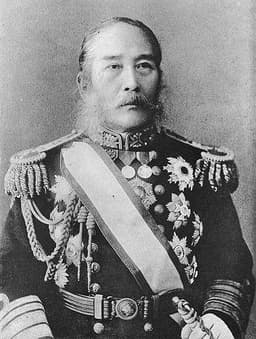
Enomoto Takeaki
General · Modern
51.6Total

Lord Wavell
General · Modern
60.9Total
Basic Information
Born
1836
1883
Died
1908
1950
Era
Modern
Modern
Nationality
Japan
United Kingdom
Occupation
General
General
Civilization
Eastern
Western
Score Comparison
Military (10%)
25.0
70.0
Political (20%)
54.7
68.0
Influence (20%)
54.1
58.3
Legacy (20%)
46.7
52.0
Leadership (15%)
68.0
71.0
Strategy (15%)
55.0
55.0
TOTAL
51.6
60.9
Enomoto Takeaki — Complete Timeline
1868 AD
Led the Shogunate Fleet to HokkaidoWar
Enomoto commanded the shogunate's remaining naval forces, including eight warships, and sailed to Hokkaido. This fleet formed the core of the Republic of Ezo's military and allowed the loyalists to establish a base.
Naval CommandBoshin WarShogunate Loyalist
Impact: regional
Founded the Republic of EzoPolitical Action
After the shogunate's defeat, Enomoto led loyalist forces to Hokkaido and established the Republic of Ezo, an independent state with a Western-style government. He was elected president and organized a defense against imperial forces.
Boshin WarSeparatist StateShogunate Loyalist
Impact: national
1869 AD
Surrendered at the Battle of HakodateWar◆ Major
Enomoto's forces were defeated by the imperial army at the Battle of Hakodate. He surrendered the Republic of Ezo and was taken prisoner, ending the last organized resistance to the Meiji Restoration.
Boshin WarDefeatEnd of Resistance
Impact: nationaltragic
1885 AD
Served as Minister of Foreign Affairs in the Meiji GovernmentPolitical Action◆ Major
After being pardoned, Enomoto served as Japan's Minister of Foreign Affairs. He negotiated treaties with Western powers and worked to revise the unequal treaties imposed on Japan, contributing to Japan's diplomatic modernization.
DiplomacyTreaty RevisionMeiji Government
Impact: nationalconstructive
Lord Wavell — Complete Timeline
1940 AD
World War II Campaigns in North AfricaWar◆ Major
As Commander-in-Chief of British forces in the Middle East, Lord Wavell led successful campaigns against Italian forces in North Africa, including the capture of Tobruk and the advance into Cyrenaica in 1940-1941. However, he was later outmaneuvered by German forces under Rommel and was replaced in 1941.
World War IINorth AfricaMilitary Campaign
Impact: regional
1943 AD
Viceroyalty of IndiaPolitical Action◆ Major
Lord Wavell served as Viceroy of India from 1943 to 1947, a period marked by World War II, the Bengal Famine of 1943, and the final push for Indian independence. He attempted to negotiate a political settlement between the British, Indian National Congress, and Muslim League.
IndiaWorld War IIIndependence
Impact: national
Bengal Famine of 1943Other
During Lord Wavell's viceroyalty, the Bengal Famine killed an estimated 2-3 million people. Wavell criticized the British government's inadequate response and pushed for more food aid. The famine exposed the failures of colonial administration and wartime policies.
IndiaFamineWorld War II
Impact: nationaltragic
1945 AD
Wavell Plan and Simla ConferencePolitical Action◆ Major
Lord Wavell proposed the Wavell Plan, which aimed to form an interim government in India with equal representation for Hindus and Muslims. The Simla Conference in June 1945 failed due to disagreements between the Congress and the Muslim League over the selection of Muslim representatives.
IndiaNegotiationPartition
Impact: national
1946 AD
Cabinet Mission PlanPolitical Action
Lord Wavell facilitated the Cabinet Mission to India in 1946, which proposed a federal plan for a united India. The plan was initially accepted by both the Congress and Muslim League but later broke down due to mutual distrust, leading to the eventual partition of India.
IndiaPartitionNegotiation
Impact: national
This comparison has not been analyzed yet.
One-time AI generation (~1 minute). Scores and timeline are already available below.
Rankings
🥇
Lord WavellLeader
Mil: 70.0Pol: 68.0Inf: 58.3
60.9
🥈
Enomoto Takeaki
Mil: 25.0Pol: 54.7Inf: 54.1
51.6
+9.3 behind
How This Comparison Works
Algorithm
Each figure is scored on 6 dimensions (0—100 scale) based on structured historical data: Military (10%), Political (20%), Influence (20%), Legacy (20%), Leadership (15%), Strategy (15%). The weighted total produces the final ranking.
Data Sources
Scores are computed from structured sub-indicators in the database. Scale factors adjust for era (Ancient ×0.85, Modern ×1.0) and civilization size (Eastern ×1.05, Other ×0.80) to account for differences in population and military scale.
Maximum 3 Figures
Comparisons are limited to 2—3 figures to ensure readability and statistical meaningfulness.
Error Margins
±5 points per dimension — Sub-scores are derived from historical records with inherent uncertainty. Two figures within 5 points on a dimension should be considered roughly equivalent in that area.
Total Score Accuracy
±3 points overall — The weighted combination of 6 dimensions produces a total score with approximately ±3 points of uncertainty. Differences of less than 3 points are not statistically significant— the figures are effectively tied.
Known Limitations
- Historical records are incomplete and uneven across civilizations
- Figures from oral-tradition societies may be underrepresented
- Occupation labels can misclassify multi-role figures
- Scores measure capability and impact, not moral character
- Quantitative scoring is a comparison tool, not absolute truth
Capability Radar
Military (10%) — Battles & Warfare
Battles
40
65
Win Rate
35
60
Expansion
30
40
Political (20%) — Governance & Reform
Reform
30
45
Diplomacy
40
50
Economy
25
40
Influence (20%) — Cultural & Global Reach
Cultural
25
40
Global
20
50
Legacy (20%) — Historical Impact
Historical
40
55
Longevity
30
45
Leadership (15%) — Power & Stability
Tenure
35
55
Stability
20
35
Strategy (15%) — Tactics & Innovation
Strategy
50
75
Tactics
55
70
Reform
45
55
Similar Comparisons
Comments & Discussion
No comments yet. Be the first to share your thoughts!