Loading...
Enomoto Takeaki vs Ulysses S. Grant
Ulysses S. Grant leads by 15.2 pts · 2 figures compared
…
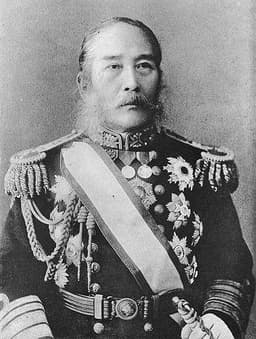
Enomoto Takeaki
General · Modern
51.6Total
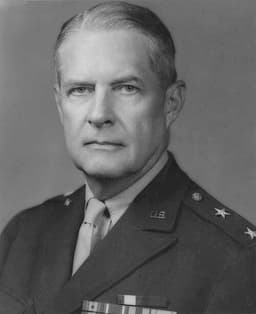
Ulysses S. Grant
General · Modern
66.8Total
Basic Information
Born
1836
1822
Died
1908
1885
Era
Modern
Modern
Nationality
Japan
United States
Occupation
General
General
Civilization
Eastern
Western
Score Comparison
Military (10%)
25.0
72.0
Political (20%)
54.7
45.0
Influence (20%)
54.1
72.0
Legacy (20%)
46.7
68.0
Leadership (15%)
68.0
72.0
Strategy (15%)
55.0
70.0
TOTAL
51.6
66.8
Enomoto Takeaki — Complete Timeline
1868 AD
Led the Shogunate Fleet to HokkaidoWar
Enomoto commanded the shogunate's remaining naval forces, including eight warships, and sailed to Hokkaido. This fleet formed the core of the Republic of Ezo's military and allowed the loyalists to establish a base.
Naval CommandBoshin WarShogunate Loyalist
Impact: regional
Founded the Republic of EzoPolitical Action
After the shogunate's defeat, Enomoto led loyalist forces to Hokkaido and established the Republic of Ezo, an independent state with a Western-style government. He was elected president and organized a defense against imperial forces.
Boshin WarSeparatist StateShogunate Loyalist
Impact: national
1869 AD
Surrendered at the Battle of HakodateWar◆ Major
Enomoto's forces were defeated by the imperial army at the Battle of Hakodate. He surrendered the Republic of Ezo and was taken prisoner, ending the last organized resistance to the Meiji Restoration.
Boshin WarDefeatEnd of Resistance
Impact: nationaltragic
1885 AD
Served as Minister of Foreign Affairs in the Meiji GovernmentPolitical Action◆ Major
After being pardoned, Enomoto served as Japan's Minister of Foreign Affairs. He negotiated treaties with Western powers and worked to revise the unequal treaties imposed on Japan, contributing to Japan's diplomatic modernization.
DiplomacyTreaty RevisionMeiji Government
Impact: nationalconstructive
Ulysses S. Grant — Complete Timeline
1863 AD
Battle of VicksburgWar◆ Major
Grant led Union forces to capture Vicksburg, Mississippi, after a lengthy siege. This victory gave the Union control of the Mississippi River, splitting the Confederacy and marking a turning point in the Civil War.
Civil WarVicksburgUnion Victory
Impact: regional
1865 AD
Surrender at Appomattox Court HouseWar
Grant accepted the surrender of Confederate General Robert E. Lee at Appomattox Court House, effectively ending the Civil War. Grant's generous terms allowed Confederate soldiers to return home, promoting reconciliation.
Civil WarAppomattoxReconciliation
Impact: nationalconstructive
1868 AD
Election as 18th President of the United StatesPolitical Action◆ Major
Grant was elected president as a Republican, winning the popular vote. His presidency focused on Reconstruction, but was marred by corruption scandals and economic depression.
PresidencyReconstructionUS Politics
Impact: national
1870 AD
Signing of the Enforcement ActsPolitical Action◆ Major
Grant signed the Enforcement Acts, which aimed to protect African American voting rights and combat the Ku Klux Klan. These laws were used to prosecute Klan members and enforce the 14th and 15th Amendments.
ReconstructionCivil RightsKu Klux Klan
Impact: nationalprogressive
1873 AD
Panic of 1873 and Economic DepressionOther◆ Major
The Panic of 1873, a financial crisis triggered by the collapse of Jay Cooke & Company, led to a severe economic depression during Grant's presidency. Grant's policies, including the Specie Resumption Act, were criticized for worsening the downturn.
Economic DepressionPanic of 1873Financial Crisis
Impact: nationaldestructive
Expert Analysis
Origins
Enomoto Takeaki was born on August 25, 1836, in Edo (modern Tokyo), into a samurai family serving the Tokugawa shogunate. He studied Dutch and Western naval science at the Nagasaki Naval Training Center and later in the Netherlands, where he gained expertise in modern naval warfare. His education was sponsored by the shogunate, shaping his loyalty to the Tokugawa regime.
Ulysses S. Grant was born on April 27, 1822, in Point Pleasant, Ohio, to a family of modest means. His father, Jesse Grant, was a tanner and businessman. Grant attended the United States Military Academy at West Point, graduating in 1843. He served in the Mexican-American War (1846-1848) and later struggled in civilian life, working various jobs before the Civil War revived his military career.
Rise to Power
Enomoto's rise came through his naval expertise. He served as a captain in the shogunate's navy and was sent to the Netherlands to study naval tactics. As the shogunate weakened, he commanded its fleet. After the Meiji Restoration in 1868, Enomoto refused to surrender to imperial forces. He led eight warships and 2,000 loyalists to Hokkaido, where he established the Republic of Ezo in December 1868, becoming its first and only president. This was a unique attempt to create a Western-style republic in Japan.
Grant's rise began with the Civil War. He re-enlisted in the Union Army in 1861 and quickly rose through the ranks after victories at Fort Donelson (February 1862) and Shiloh (April 1862). His capture of Vicksburg in July 1863, after a 47-day siege, split the Confederacy and gave the Union control of the Mississippi River. President Abraham Lincoln appointed Grant as General-in-Chief in March 1864. Grant then orchestrated a coordinated campaign against the Confederacy, culminating in Lee's surrender at Appomattox Court House on April 9, 1865.
Leadership & Governance
Enomoto's leadership in the Republic of Ezo was democratic and reform-minded. He established a government with elected officials, a constitution, and a Western-style military. However, his governance was short-lived due to military defeat. After his surrender in June 1869, he was imprisoned but later pardoned. He then served in the Meiji government as Minister of Foreign Affairs (1885-1888) and Minister of Education (1889-1890), where he worked to revise unequal treaties with Western powers.
Grant's leadership as a general was characterized by relentless aggression and willingness to accept high casualties. His strategy of total war aimed to destroy Confederate resources and morale. As president (1869-1877), Grant focused on Reconstruction, signing the Enforcement Acts (1870-1871) to combat the Ku Klux Klan and protect African American voting rights. However, his administration was plagued by corruption scandals, such as the Whiskey Ring (1875), and he failed to stabilize the economy during the Panic of 1873.
Triumph & Tragedy
Enomoto's greatest triumph was founding the Republic of Ezo, a bold experiment in self-government. He also succeeded in negotiating treaties as foreign minister. His tragedy was the inevitable defeat at the Battle of Hakodate (June 1869), where his forces were overwhelmed by the imperial army. He lost his fleet and was captured, ending the last organized samurai resistance.
Grant's greatest triumph was winning the Civil War and preserving the Union. His terms at Appomattox were generous, allowing Confederate soldiers to return home. His tragedies include the corruption during his presidency and his inability to prevent the economic depression. He also failed to protect African American rights in the long term, as Reconstruction collapsed after his term.
Character & Destiny
Enomoto was pragmatic and adaptable. Despite his initial resistance, he integrated into the Meiji government and used his expertise to modernize Japan. His destiny was shaped by the changing times; he could not stop the imperial restoration but contributed to Japan's rise as a modern state. Grant was determined and tenacious, but also trusting to a fault, which led to corruption in his administration. His destiny was to be the hero of the Union, but his presidency diminished his reputation.
Legacy
Enomoto's legacy is mixed. He is remembered as a symbol of samurai loyalty and as a modernizer who helped Japan negotiate with the West. The Republic of Ezo is a footnote in history. Grant's legacy is more substantial. He is ranked among the greatest American generals, with a military score of 72.0 compared to Enomoto's 25.0. His presidency, while flawed, advanced civil rights. The Enforcement Acts laid groundwork for future legislation. Grant's influence score of 72.0 reflects his impact on American history.
Conclusion
Ulysses S. Grant had a far greater impact than Enomoto Takeaki. Grant's total score of 66.8 surpasses Enomoto's 51.6 by 15.2 points. Grant's military achievements changed the course of the United States, ending the Civil War and preserving the Union. His presidency, though troubled, advanced Reconstruction. Enomoto's role was limited to a brief rebellion and later diplomatic service. While both demonstrated adaptability, Grant's actions affected millions and shaped a nation's future. Enomoto's influence was confined to Japan's transition period. Therefore, Grant's legacy is more enduring and significant.
Rankings
🥇
Ulysses S. GrantLeader
Mil: 72.0Pol: 45.0Inf: 72.0
66.8
🥈
Enomoto Takeaki
Mil: 25.0Pol: 54.7Inf: 54.1
51.6
+15.2 behind
How This Comparison Works
Algorithm
Each figure is scored on 6 dimensions (0—100 scale) based on structured historical data: Military (10%), Political (20%), Influence (20%), Legacy (20%), Leadership (15%), Strategy (15%). The weighted total produces the final ranking.
Data Sources
Scores are computed from structured sub-indicators in the database. Scale factors adjust for era (Ancient ×0.85, Modern ×1.0) and civilization size (Eastern ×1.05, Other ×0.80) to account for differences in population and military scale.
Maximum 3 Figures
Comparisons are limited to 2—3 figures to ensure readability and statistical meaningfulness.
Error Margins
±5 points per dimension — Sub-scores are derived from historical records with inherent uncertainty. Two figures within 5 points on a dimension should be considered roughly equivalent in that area.
Total Score Accuracy
±3 points overall — The weighted combination of 6 dimensions produces a total score with approximately ±3 points of uncertainty. Differences of less than 3 points are not statistically significant— the figures are effectively tied.
Known Limitations
- Historical records are incomplete and uneven across civilizations
- Figures from oral-tradition societies may be underrepresented
- Occupation labels can misclassify multi-role figures
- Scores measure capability and impact, not moral character
- Quantitative scoring is a comparison tool, not absolute truth
Capability Radar
Military (10%) — Battles & Warfare
Battles
40
85
Win Rate
35
80
Expansion
30
75
Political (20%) — Governance & Reform
Reform
30
55
Diplomacy
40
60
Economy
25
50
Influence (20%) — Cultural & Global Reach
Cultural
25
60
Global
20
65
Legacy (20%) — Historical Impact
Historical
40
80
Longevity
30
70
Leadership (15%) — Power & Stability
Tenure
35
65
Stability
20
45
Strategy (15%) — Tactics & Innovation
Strategy
50
90
Tactics
55
70
Reform
45
75
Similar Comparisons
Comments & Discussion
No comments yet. Be the first to share your thoughts!