Loading...
Analysis will be generated on first visit.
Scores and timeline are available below. The page will refresh automatically when ready.
Enrico Berlinguer vs Napoleon Bonaparte
Napoleon Bonaparte leads by 21.4 pts · 2 figures compared
…

Enrico Berlinguer
Politician · Modern
61.0Total
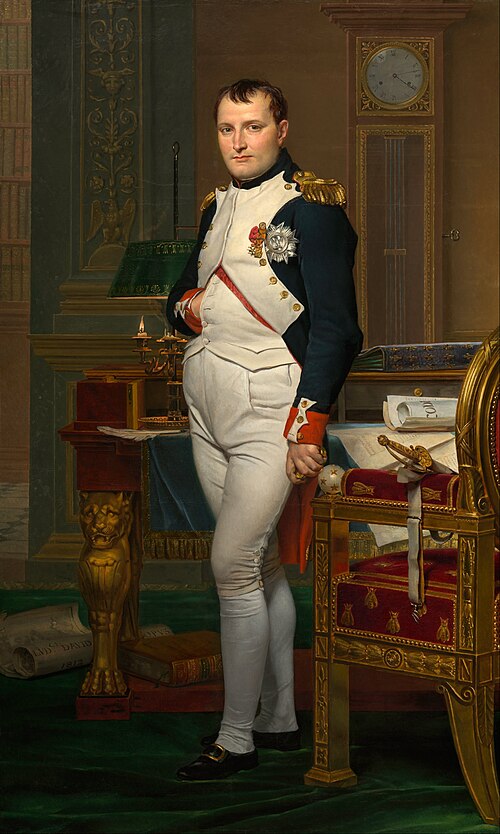
Napoleon Bonaparte
General · Modern
82.4Total
Basic Information
Born
1922
1769
Died
—
1821
Era
Modern
Modern
Nationality
Italy
France
Occupation
Politician
General
Civilization
Western
Western
Score Comparison
Military (10%)
30.9
94.0
Political (20%)
72.0
75.0
Influence (20%)
70.2
82.0
Legacy (20%)
66.4
78.0
Leadership (15%)
72.4
80.0
Strategy (15%)
35.3
93.0
TOTAL
61.0
82.4
Rankings
🥇
Napoleon BonaparteLeader
Mil: 94.0Pol: 75.0Inf: 82.0
82.4
🥈
Enrico Berlinguer
Mil: 30.9Pol: 72.0Inf: 70.2
61.0
+21.4 behind
How This Comparison Works
Algorithm
Each figure is scored on 6 dimensions (0—100 scale) based on structured historical data: Military (10%), Political (20%), Influence (20%), Legacy (20%), Leadership (15%), Strategy (15%). The weighted total produces the final ranking.
Data Sources
Scores are computed from structured sub-indicators in the database. Scale factors adjust for era (Ancient ×0.85, Modern ×1.0) and civilization size (Eastern ×1.05, Other ×0.80) to account for differences in population and military scale.
Maximum 3 Figures
Comparisons are limited to 2—3 figures to ensure readability and statistical meaningfulness.
Error Margins
±5 points per dimension — Sub-scores are derived from historical records with inherent uncertainty. Two figures within 5 points on a dimension should be considered roughly equivalent in that area.
Total Score Accuracy
±3 points overall — The weighted combination of 6 dimensions produces a total score with approximately ±3 points of uncertainty. Differences of less than 3 points are not statistically significant— the figures are effectively tied.
Known Limitations
- Historical records are incomplete and uneven across civilizations
- Figures from oral-tradition societies may be underrepresented
- Occupation labels can misclassify multi-role figures
- Scores measure capability and impact, not moral character
- Quantitative scoring is a comparison tool, not absolute truth
Capability Radar
Military (10%) — Battles & Warfare
Battles
22
95
Win Rate
27
90
Expansion
29
95
Political (20%) — Governance & Reform
Reform
60
95
Diplomacy
65
80
Economy
55
85
Influence (20%) — Cultural & Global Reach
Cultural
55
85
Global
55
90
Legacy (20%) — Historical Impact
Historical
60
95
Longevity
50
90
Leadership (15%) — Power & Stability
Tenure
45
85
Stability
50
70
Strategy (15%) — Tactics & Innovation
Strategy
30
95
Tactics
32
98
Reform
35
92
Analysis will be generated on first visit.
Scores and timeline are available below. The page will refresh automatically when ready.
Enrico Berlinguer — Complete Timeline
1972 AD
Secretary of the Italian Communist PartyPolitical Action◆ Major
Berlinguer was elected Secretary of the Italian Communist Party (PCI) in 1972. He led the party through a period of significant growth and ideological evolution, advocating for Eurocommunism and a break from Soviet orthodoxy.
Italian CommunismParty LeadershipEurocommunism
Impact: nationalconstructive
1973 AD
Historic CompromisePolitical Action◆ Major
Berlinguer proposed the Historic Compromise, a strategy of cooperation between the PCI and the Christian Democracy party to address Italy's economic and social crises. This policy aimed to integrate the PCI into the democratic system but faced opposition from both the left and the right.
Italian PoliticsCoalition StrategyDemocratic Integration
Impact: nationalconstructive
1975 AD
Break with the Soviet UnionPolitical Action◆ Major
Berlinguer publicly criticized the Soviet Union for its human rights violations and lack of democracy, leading to a formal break between the PCI and the Communist Party of the Soviet Union. This move solidified the PCI's independent Eurocommunist stance.
EurocommunismSoviet RelationsIdeological Split
Impact: globalconstructive
1976 AD
PCI electoral peakPolitical Action◆ Major
Under Berlinguer's leadership, the PCI achieved its highest ever electoral result in the 1976 general election, winning 34.4% of the vote. This made the PCI the second-largest party in Italy and a major force in national politics.
Italian ElectionsCommunist PartyElectoral Success
Impact: nationalconstructive
1978 AD
Aldo Moro kidnappingPolitical Action◆ Major
During the kidnapping of Aldo Moro by the Red Brigades, Berlinguer refused to negotiate with the terrorists, maintaining a hard line against political violence. This stance contributed to the collapse of the Historic Compromise and strained relations with the Christian Democracy.
TerrorismPolitical CrisisMoro Affair
Impact: nationaltragic
1984 AD
DeathOther◆ Major
Berlinguer died suddenly on June 11, 1984, after collapsing during a speech in Padua. His death triggered an unprecedented outpouring of public grief, with millions attending his funeral, marking the end of an era for the Italian Communist Party.
Italian PoliticsCommunist PartyDeath
Impact: nationaltragic
Similar Comparisons
Comments & Discussion
No comments yet. Be the first to share your thoughts!