Loading...
This comparison has not been analyzed yet.
One-time AI generation (~1 minute). Scores and timeline are already available below.
Eriba-Adad I vs Taejo of Goguryeo
Taejo of Goguryeo leads by 11.1 pts · 2 figures compared
…
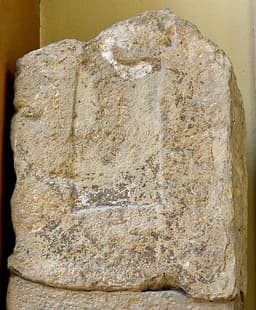
Eriba-Adad I
Emperor · Ancient
45.4Total

Taejo of Goguryeo
Emperor · Ancient
56.5Total
Basic Information
Born
-1380
53
Died
-1353
146
Era
Ancient
Ancient
Nationality
Assyria
Goguryeo
Occupation
Emperor
Emperor
Civilization
Middle Eastern
Eastern
Score Comparison
Military (10%)
50.0
50.0
Political (20%)
39.4
62.7
Influence (20%)
47.9
51.8
Legacy (20%)
41.7
45.8
Leadership (15%)
51.9
78.0
Strategy (15%)
43.3
60.0
TOTAL
45.4
56.5
Eriba-Adad I — Complete Timeline
1375 BC
Break from Mitanni DominationWar
Eriba-Adad I led a successful rebellion against Mitanni suzerainty, exploiting internal conflicts within the Mitanni kingdom. This victory restored Assyrian independence and initiated a period of Assyrian revival and expansion.
IndependenceRebellionAssyrian Revival
Impact: regionalconstructive
1365 BC
Consolidation of Assyrian ControlPolitical Action◆ Major
Eriba-Adad I reasserted Assyrian authority over the region around Ashur, reestablishing trade networks and tribute systems. His reign laid the foundation for the Middle Assyrian Empire's later expansion.
State ConsolidationEconomic Recovery
Impact: regionalconstructive
Taejo of Goguryeo — Complete Timeline
56 AD
Centralization of royal authorityReform
Taejo implemented administrative reforms to centralize power under the monarchy. He reduced the influence of regional clan leaders, established a more structured bureaucracy, and created a standing army loyal to the king.
Administrative ReformCentralization
Impact: nationalconstructive
68 AD
Conquest of the Galsa and Gae-ma tribesWar
Taejo led military campaigns to subjugate the Galsa and Gae-ma tribal confederations in the northern regions. These conquests expanded Goguryeo's territory and brought additional resources and manpower under royal control.
Territorial ExpansionTribal Conquest
Impact: regional
100 AD
Establishment of the Jinsa systemReform◆ Major
Taejo introduced the Jinsa system, a grain loan program to aid farmers during lean seasons. This stabilized the agricultural economy, reduced the power of local moneylenders, and increased the crown's popularity among the peasantry.
Economic ReformAgricultural Policy
Impact: nationalprogressive
146 AD
Longest reign in Goguryeo historyPolitical Action◆ Major
Taejo reigned for 93 years, the longest of any Goguryeo monarch. His extended rule provided stability, allowed for the implementation of long-term reforms, and solidified the centralized state structure that would endure for centuries.
Long ReignStability
Impact: nationalconstructive
This comparison has not been analyzed yet.
One-time AI generation (~1 minute). Scores and timeline are already available below.
Rankings
🥇
Taejo of GoguryeoLeader
Mil: 50.0Pol: 62.7Inf: 51.8
56.5
🥈
Eriba-Adad I
Mil: 50.0Pol: 39.4Inf: 47.9
45.4
+11.1 behind
How This Comparison Works
Algorithm
Each figure is scored on 6 dimensions (0—100 scale) based on structured historical data: Military (10%), Political (20%), Influence (20%), Legacy (20%), Leadership (15%), Strategy (15%). The weighted total produces the final ranking.
Data Sources
Scores are computed from structured sub-indicators in the database. Scale factors adjust for era (Ancient ×0.85, Modern ×1.0) and civilization size (Eastern ×1.05, Other ×0.80) to account for differences in population and military scale.
Maximum 3 Figures
Comparisons are limited to 2—3 figures to ensure readability and statistical meaningfulness.
Error Margins
±5 points per dimension — Sub-scores are derived from historical records with inherent uncertainty. Two figures within 5 points on a dimension should be considered roughly equivalent in that area.
Total Score Accuracy
±3 points overall — The weighted combination of 6 dimensions produces a total score with approximately ±3 points of uncertainty. Differences of less than 3 points are not statistically significant— the figures are effectively tied.
Known Limitations
- Historical records are incomplete and uneven across civilizations
- Figures from oral-tradition societies may be underrepresented
- Occupation labels can misclassify multi-role figures
- Scores measure capability and impact, not moral character
- Quantitative scoring is a comparison tool, not absolute truth
Capability Radar
Military (10%) — Battles & Warfare
Battles
40
40
Win Rate
45
45
Expansion
45
45
Political (20%) — Governance & Reform
Reform
35
70
Diplomacy
40
55
Economy
30
60
Influence (20%) — Cultural & Global Reach
Cultural
25
40
Global
20
30
Legacy (20%) — Historical Impact
Historical
40
50
Longevity
30
45
Leadership (15%) — Power & Stability
Tenure
30
85
Stability
35
75
Strategy (15%) — Tactics & Innovation
Strategy
40
40
Tactics
35
35
Reform
30
50
Similar Comparisons
Comments & Discussion
No comments yet. Be the first to share your thoughts!