Loading...
This comparison has not been analyzed yet.
One-time AI generation (~1 minute). Scores and timeline are already available below.
Eric Williams vs Hussein Onn
Eric Williams leads by 3.6 pts · 2 figures compared
…
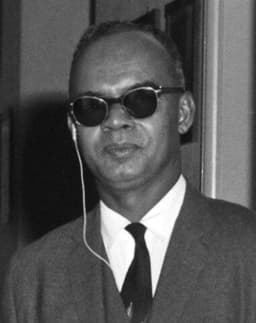
Eric Williams
Politician · Modern
57.8Total

Hussein Onn
Politician · Modern
54.2Total
Basic Information
Born
1911
1922
Died
1981
—
Era
Modern
Modern
Nationality
Trinidad
Malaysia
Occupation
Politician
Politician
Civilization
Western
Eastern
Score Comparison
Military (10%)
50.0
12.8
Political (20%)
72.0
65.0
Influence (20%)
56.7
58.3
Legacy (20%)
52.0
56.0
Leadership (15%)
72.0
78.0
Strategy (15%)
40.3
28.9
TOTAL
57.8
54.2
Eric Williams — Complete Timeline
1944 AD
Published 'Capitalism and Slavery'Cultural◆ Major
Williams published his seminal historical work 'Capitalism and Slavery', arguing that the abolition of the slave trade was driven by economic factors rather than humanitarian motives. The book became a foundational text in Caribbean historiography and Atlantic studies.
HistoriographyScholarshipSlaveryEconomics
Impact: global
1956 AD
Founded the People's National MovementPolitical Action◆ Major
Williams founded the People's National Movement (PNM), a political party that would dominate Trinidad and Tobago's politics for decades. The PNM won the 1956 general election, making Williams Chief Minister.
Political PartyFoundingElection Victory
Impact: nationalconstructive
1961 AD
Declared 'Massa Day Done'Political Action◆ Major
In a famous speech at Woodford Square, Williams declared 'Massa Day Done', signaling the end of colonial-era elite dominance and the rise of a new nationalist, working-class political order. The phrase became a rallying cry for decolonization.
SpeechNationalismDecolonization
Impact: nationalprogressive
1962 AD
Led Trinidad and Tobago to IndependencePolitical Action
As Premier and leader of the People's National Movement, Williams successfully negotiated Trinidad and Tobago's independence from the United Kingdom on August 31, 1962. He became the first Prime Minister of the newly sovereign nation.
IndependenceNation-buildingDecolonization
Impact: nationalconstructive
1974 AD
Nationalized Oil and Sugar IndustriesReform◆ Major
Williams' government nationalized the oil and sugar industries, taking control of key economic sectors from foreign companies. This policy aimed to increase national ownership and revenue, but also led to inefficiencies and economic challenges.
NationalizationEconomic PolicyOilSugar
Impact: nationalconstructive
1981 AD
Resigned as Prime MinisterPolitical Action◆ Major
After 25 years as Prime Minister, Williams resigned on March 30, 1981, citing health reasons. He died later that year. His resignation marked the end of an era in Trinidad and Tobago's political history.
ResignationEnd of Era
Impact: national
Hussein Onn — Complete Timeline
1976 AD
Appointment as Prime Minister (1976)Political Action◆ Major
Hussein Onn became the third Prime Minister of Malaysia after the sudden death of Abdul Razak Hussein. He continued the NEP and Barisan Nasional policies, focusing on national unity and stability during a period of economic uncertainty.
Prime MinisterSuccessionContinuity
Impact: nationalconstructive
Promotion of National Unity (1976-1981)Political Action◆ Major
Hussein Onn emphasized national unity through policies that promoted inter-ethnic harmony. He established the National Unity Department and encouraged dialogue between ethnic groups, earning him the title 'Father of Unity' for his efforts to reduce racial tensions.
National UnityEthnic HarmonyPolicy
Impact: nationalconstructive
1981 AD
Resignation Due to Health (1981)Political Action
Hussein Onn resigned as Prime Minister due to declining health. He was succeeded by Mahathir Mohamad. His resignation marked the end of a short but stable tenure, and he remained a respected elder statesman until his death in 1990.
ResignationHealthPolitical Transition
Impact: national
This comparison has not been analyzed yet.
One-time AI generation (~1 minute). Scores and timeline are already available below.
Rankings
🥇
Eric WilliamsLeader
Mil: 50.0Pol: 72.0Inf: 56.7
57.8
🥈
Hussein Onn
Mil: 12.8Pol: 65.0Inf: 58.3
54.2
+3.6 behind
How This Comparison Works
Algorithm
Each figure is scored on 6 dimensions (0—100 scale) based on structured historical data: Military (10%), Political (20%), Influence (20%), Legacy (20%), Leadership (15%), Strategy (15%). The weighted total produces the final ranking.
Data Sources
Scores are computed from structured sub-indicators in the database. Scale factors adjust for era (Ancient ×0.85, Modern ×1.0) and civilization size (Eastern ×1.05, Other ×0.80) to account for differences in population and military scale.
Maximum 3 Figures
Comparisons are limited to 2—3 figures to ensure readability and statistical meaningfulness.
Error Margins
±5 points per dimension — Sub-scores are derived from historical records with inherent uncertainty. Two figures within 5 points on a dimension should be considered roughly equivalent in that area.
Total Score Accuracy
±3 points overall — The weighted combination of 6 dimensions produces a total score with approximately ±3 points of uncertainty. Differences of less than 3 points are not statistically significant— the figures are effectively tied.
Known Limitations
- Historical records are incomplete and uneven across civilizations
- Figures from oral-tradition societies may be underrepresented
- Occupation labels can misclassify multi-role figures
- Scores measure capability and impact, not moral character
- Quantitative scoring is a comparison tool, not absolute truth
Capability Radar
Military (10%) — Battles & Warfare
Battles
27
12
Win Rate
31
20
Expansion
37
21
Political (20%) — Governance & Reform
Reform
80
70
Diplomacy
75
75
Economy
70
60
Influence (20%) — Cultural & Global Reach
Cultural
60
60
Global
55
50
Legacy (20%) — Historical Impact
Historical
70
65
Longevity
55
55
Leadership (15%) — Power & Stability
Tenure
85
65
Stability
65
80
Strategy (15%) — Tactics & Innovation
Strategy
35
26
Tactics
39
28
Reform
42
30
Similar Comparisons
Comments & Discussion
No comments yet. Be the first to share your thoughts!